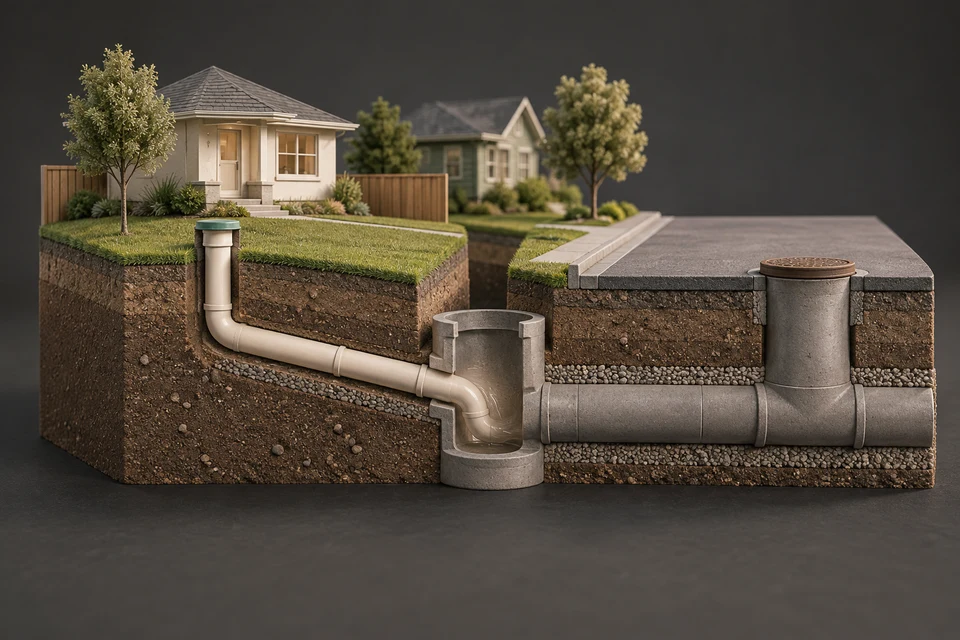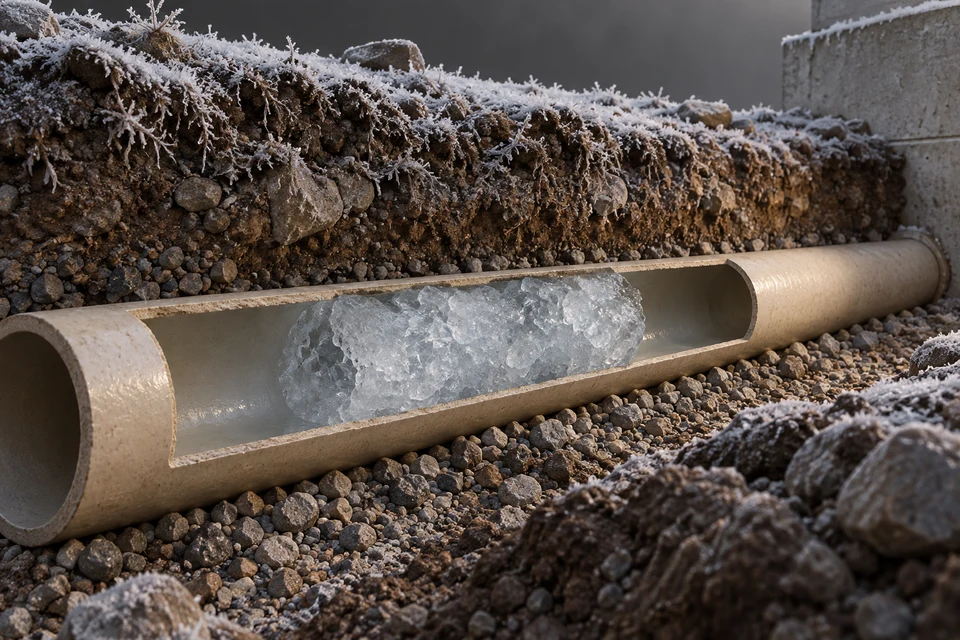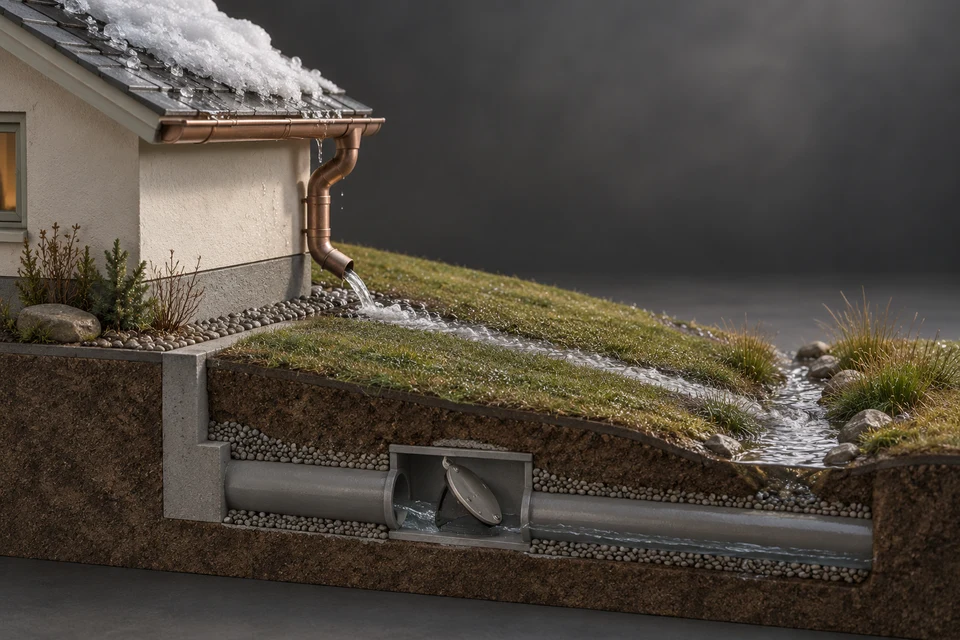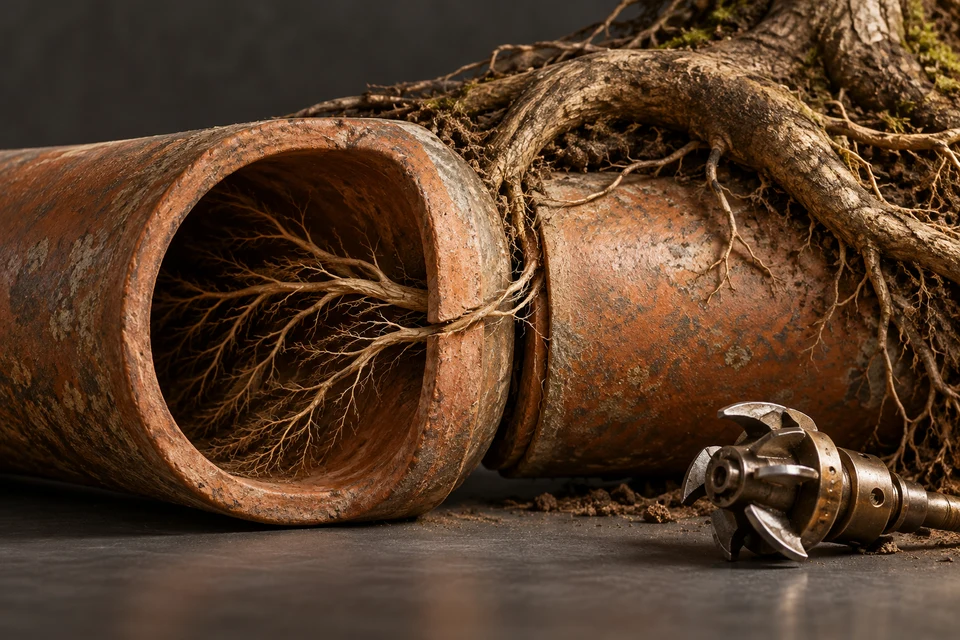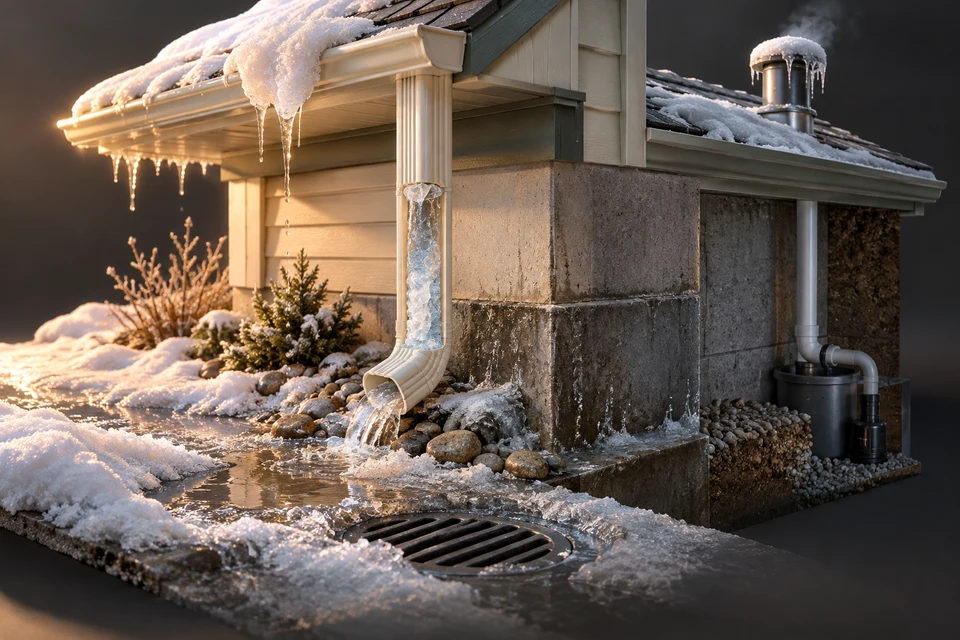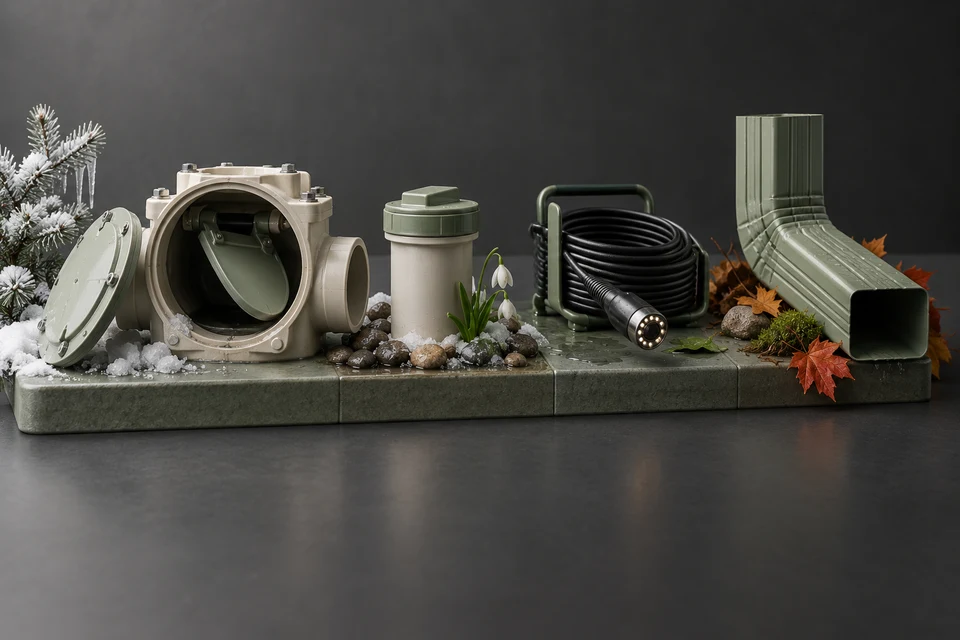
The Calgary Sewer Season Calendar lays out sewer and drainage tasks for all 12 months, grouped the way Calgary's weather arrives: cold snaps and chinooks, snowmelt, storm season, peak storm and hail, fall freeze-up and the holidays. It highlights the current month and adds personal items based on your home's era, whether a backwater valve or sump pump is fitted, and whether large trees grow near the sewer line.
- Twelve months, six Calgary seasons, one base task list; the current month is highlighted.
- Four personal inputs: home era, backwater valve, sump pump, and big trees near the line.
- Personal items are added on top of the base items, such as a root cut in late spring or summer when trees are near the line, or a camera baseline for an older home.
- The calendar is a planning rhythm, not an inspection; camera findings should adjust it.
- Each month links the task to the reason, so you know what you are preventing.
Calgary Sewer Season Calendar
01 /What does the Calgary Sewer Season Calendar do?
It gives you a month-by-month maintenance rhythm built around the way Calgary's year actually treats a sewer line. Generic maintenance lists say check the backwater valve in spring; this calendar ties each task to the Calgary conditions that make it matter, from January cold snaps and chinook thaws to the July hail and the November holiday grease.
It shows all 12 months, highlights the one you are in, and layers personal items on top of a base list that applies to every house. The result is something you can print, stick on the furnace room door, or copy into your phone calendar.
- Choose your home era
Pre-1960, 1960–1979, 1980–1999, or 2000 and newer.
- Answer three yes-or-no questions
Do you have a backwater valve? A sump pump? Big trees near the sewer line?
- Read the current month
It is highlighted, with the base items and any personal items for your house.
- Plan ahead
Scan the next two or three months for anything you need to book, such as a spring camera or a fall main-line clean.
02 /What are the base items in each season?
Every house gets these base items. They are grouped in two-month blocks because Calgary's sewer risks shift by season rather than by calendar date.
| Months | Calgary season | Base items |
|---|---|---|
| January–February | Cold snaps and chinooks | Cold snaps: frozen shallow lines; keep water moving if a line is prone. Chinook thaw: check the floor drain. |
| March–April | Snowmelt | Downspouts away from the house; clear the drain grate; test the backwater valve; test the sump. |
| May–June | Storm season begins | Know your cleanout; roots start growing — camera if you are on a cycle. |
| July–August | Peak storm and hail season | Backwater valve; the root cutting window; good dig season for replacement. |
| September–October | Before freeze-up | Book the main-line clean before freeze-up; schedule repairs before frost. |
| November–December | Early winter and holidays | Holiday grease; winter excavation costs more; keep the cleanout accessible. |
Each item points at a specific Calgary mechanism. A chinook turns snow to meltwater in hours, so the floor drain is where a problem shows first. Spring melt raises groundwater and loads drains for weeks, so the valve and sump get tested before the storms. Roots pick up growth as trees leaf out, so a line on a cutting cycle gets a camera look in late spring and a cut in summer. Frozen ground makes digging slower and dearer, so repairs are booked before frost.
03 /How do your answers personalize the calendar?
Your four answers add personal items on top of the base list. The base items never disappear; the personal ones fill in what your particular house needs.
| Input | Options | Why the calendar asks |
|---|---|---|
| Home era | Pre-1960; 1960–1979; 1980–1999; 2000+ | Era predicts pipe material and age. An older home, for example one built before 1980, gets a camera baseline added. |
| Backwater valve | Yes; no | A valve needs regular checks and changes what you do in a storm; the calendar tailors the valve items to your answer. |
| Sump pump | Yes; no | A pump needs testing before melt and storm season and a clear discharge in winter; the calendar tailors the sump items to your answer. |
| Big trees near the line | Yes; no | Roots are the most seasonal sewer problem. Yes adds a root cut in late spring or summer. |
Why does era carry so much weight? The City of Calgary publishes the material and installed date of the City-owned portion of each residential sanitary service line. In HAUSE's analysis of that data, lines installed in the 1960s and 1970s are dominated by the City's TIL code, generally read as clay tile, while PVC takes over in the 1980s. In communities the City classifies as 1960s/1970s, 77.5 percent of City-side lines are coded TIL; in the 2000s class, 95.7 percent are PVC. That record covers only the City's portion from the main to the property line; your private portion can be a different material and age. But it is a sound reason to treat an older house as unscoped until a camera says otherwise.
04 /How should you use the highlighted month?
Treat the highlighted month as this month's short list and the next month as your booking reminder. Most calendar items take minutes; a few need a contractor, and contractors in Calgary are busiest exactly when everyone else remembers the same task.
- Do now: homeowner checks such as the floor drain after a chinook, the storm drain grate, downspout extensions, and a look at the backwater valve.
- Book now for next month: a spring camera if you are on a root cycle, a summer root cut, a fall main-line clean before freeze-up.
- Plan for the season: if a repair is coming, the calendar's summer dig season and its note that winter excavation costs more tell you when to aim for.
- Log it: write the date and what you found. Next year's calendar is more useful with this year's notes.
If you are in a cold snap right now, the January–February items and the frozen sewer line guide go together. If a storm is forecast, the storm season plan has the storm-day routine.
05 /What does the calendar not do?
- It does not inspect your line or read the City's records for your address. For the City-side material of your service line, use the lookup at CalgarySewers.ca.
- It does not set a cleaning interval from camera findings. Once you have footage, let what the camera found adjust the timing of root cuts and cleanings.
- It does not replace the manufacturer's instructions for your backwater valve or sump pump; for the valve, see backwater valve maintenance in Calgary.
- It does not tell you whether a problem is the City's or yours. Use the City or Owner triage tool for that.
- It is not an emergency plan. For a backup in progress, see what to do in a Calgary sewer backup.
Weather does not follow the calendar exactly. A February chinook can bring March conditions for a week, and a June hailstorm can arrive before the calendar's peak season. Use the calendar as the default rhythm and let the forecast move individual tasks.
06 /Why a Calgary-specific calendar?
Because the order of risks here is unusual. Few cities combine deep winter cold, repeated chinook thaws in the middle of winter, a concentrated spring melt, a summer thunderstorm and hail season, and a housing stock whose sewer materials shift sharply by decade. A national checklist puts spring cleanup in April and storm prep in September; in Calgary, the storms come in summer and freeze-up can arrive in October.
For the reasoning behind each season in more depth, read the Calgary sewer seasons overview. For what each seasonal service typically costs, see Calgary service call costs. When the calendar says it is time to book, request a quote.
FAQQuestions people ask
When is the best time to have a Calgary sewer line cleaned?
For lines with roots, late spring and summer, when root growth picks up; the calendar puts the root cutting window in July and August. For everyone else, September or October, before freeze-up, is a good time to book a main-line clean.
Why does the calendar ask when my house was built?
Era is a good proxy for pipe material. City data on the City-owned portion of service lines shows clay tile dominating 1960s and 1970s installs and PVC from the 1980s on. Older homes get a camera baseline added.
When should I test my backwater valve in Calgary?
The base calendar puts it in March and April, during snowmelt and before storm season, and the valve comes up again in July and August at peak storm season.
Is winter a bad time for sewer repairs in Calgary?
Repairs can be done in winter, but excavation in frozen ground costs more and restoration may be temporary until spring. The calendar marks summer as good dig season and says to schedule repairs before frost.
Why is December on a sewer calendar?
Holiday cooking puts more fats, oils and grease down kitchen drains, and the City names grease as usually the main cause of sewage backups. The calendar also reminds you to keep the cleanout accessible through winter.
NETWORKGo deeper across the HAUSE Sewer network
Sewer Maintenance Planner
Sewer Maintenance Planner: a suggested cleaning and camera inspection interval plus a 12-month checklist based on your house, pipes, trees and history.
SewerRoots.caHow serious are roots in a sewer line, and what happens if you leave them?
How serious are roots in a sewer line? Whether roots are normal, how intrusion moves from fine roots to backups, sags and breaks, and how urgent yours is.
SewerInspector.caScope the sewer before you renovate, finish the basement or landscape
Why to get a sewer inspection before renovation, basement development, a suite or landscaping: what to check, when to book it, and how findings change plans.