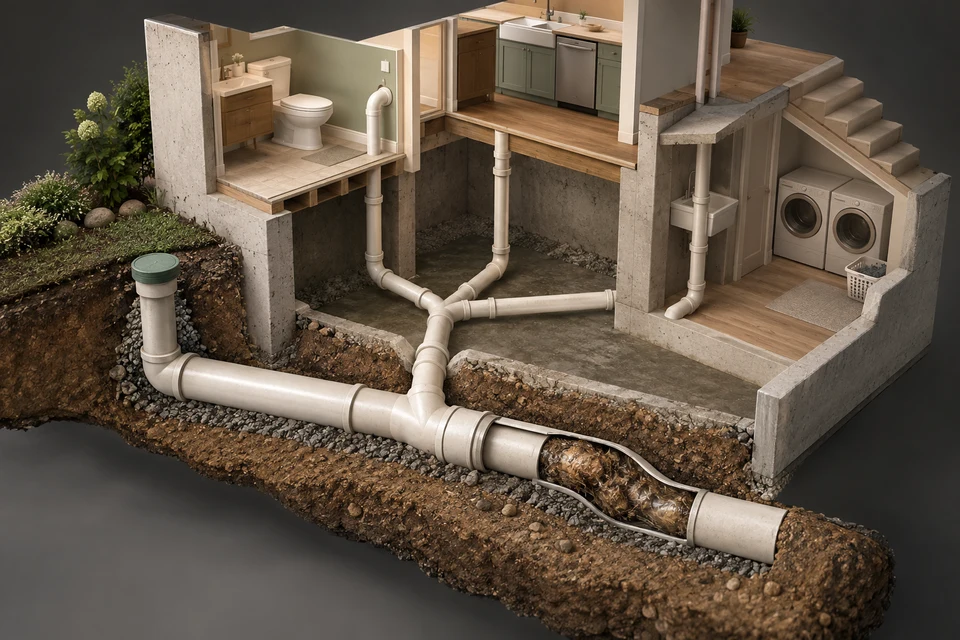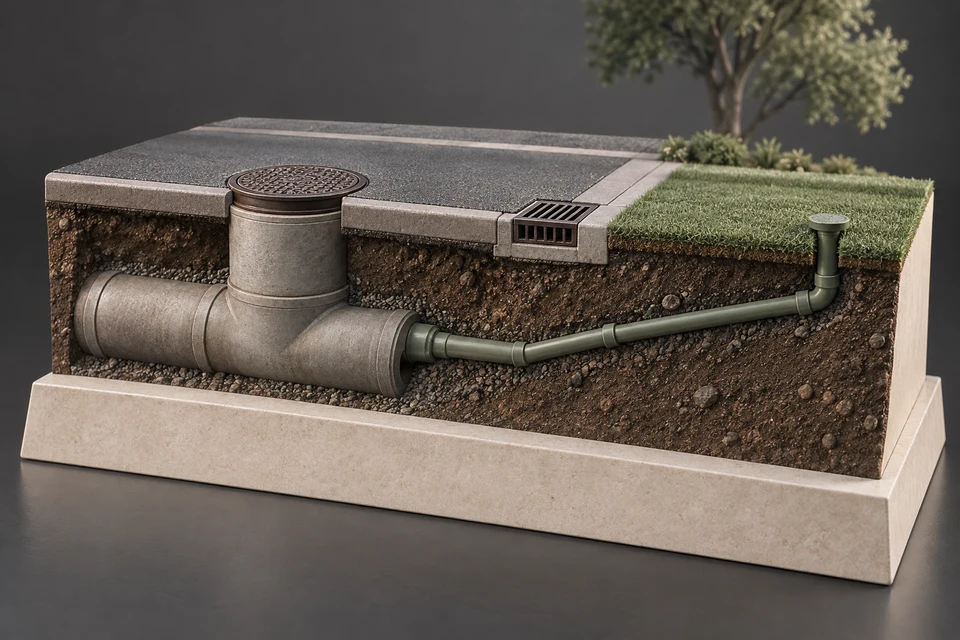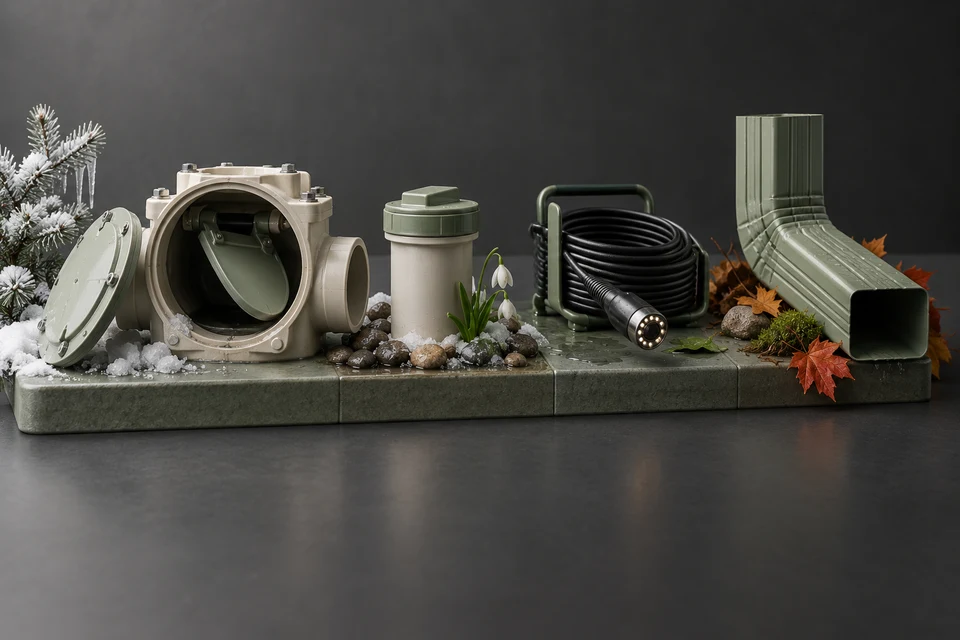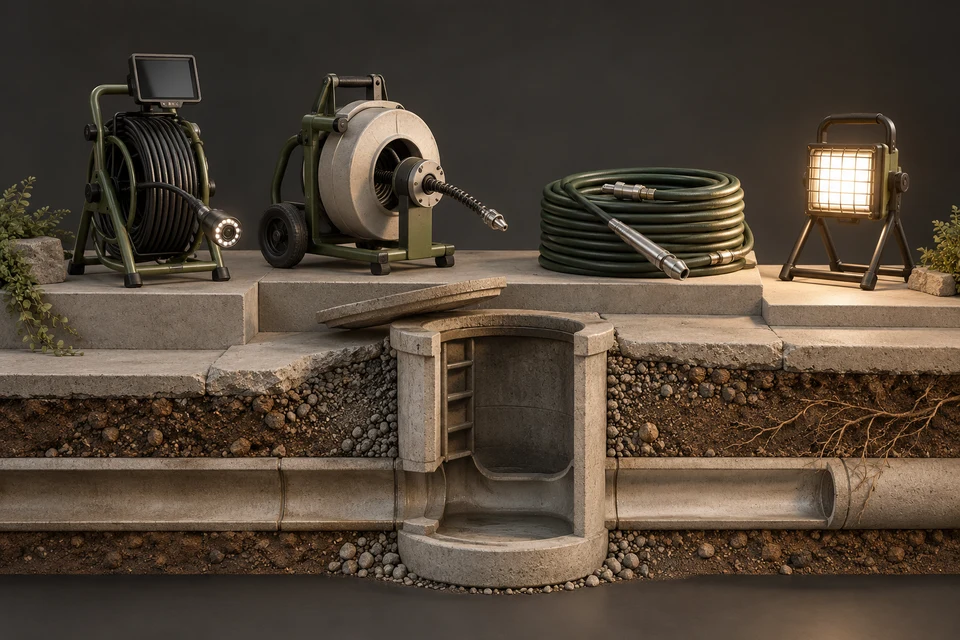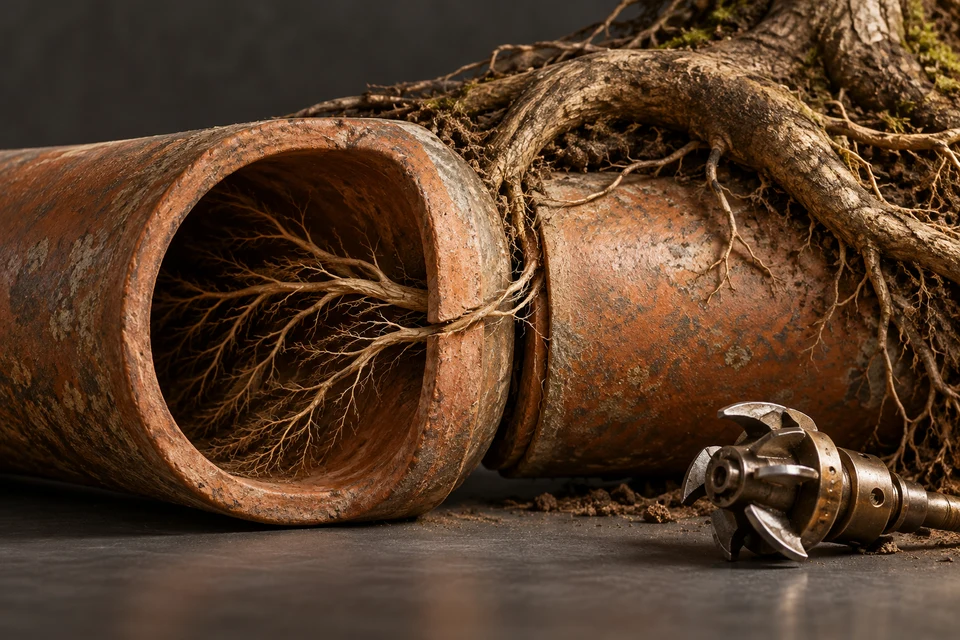
Roots get into Calgary sewer lines through joints and cracks that already leak, usually in clay tile or older cast iron lines. Clear them from the cleanout, camera the line to find which joints and which side of the property line, and cut on a schedule timed to the growing season. City trees on boulevards cannot be pruned or damaged without City permission; call 311 about tree-related sewer blockages.
- The City of Calgary says poplar roots do not break sewer lines; they exploit cracks that are already there, and repairing the crack is the more effective fix.
- Clay tile joints are the usual entry point; City data shows clay tile dominates City-side lines installed in the 1960s and 1970s.
- Cutting roots inside your own pipe is maintenance; digging near a boulevard tree is a City matter.
- Time root cuts to late spring and summer growth, and camera the line every one to two years if you are on a cycle.
- If you are cutting every year, price a permanent fix for the joints rather than a lifetime of visits.
01 /Why do roots find Calgary sewer lines?
Roots find sewer lines because a leaking joint gives off moisture, warmth and nutrients into dry soil, and fine roots grow toward that. Once a hair root gets through a gap, it has an unlimited supply of water and grows into a mat that catches paper and grease. The pipe did not attract the tree; the leak did.
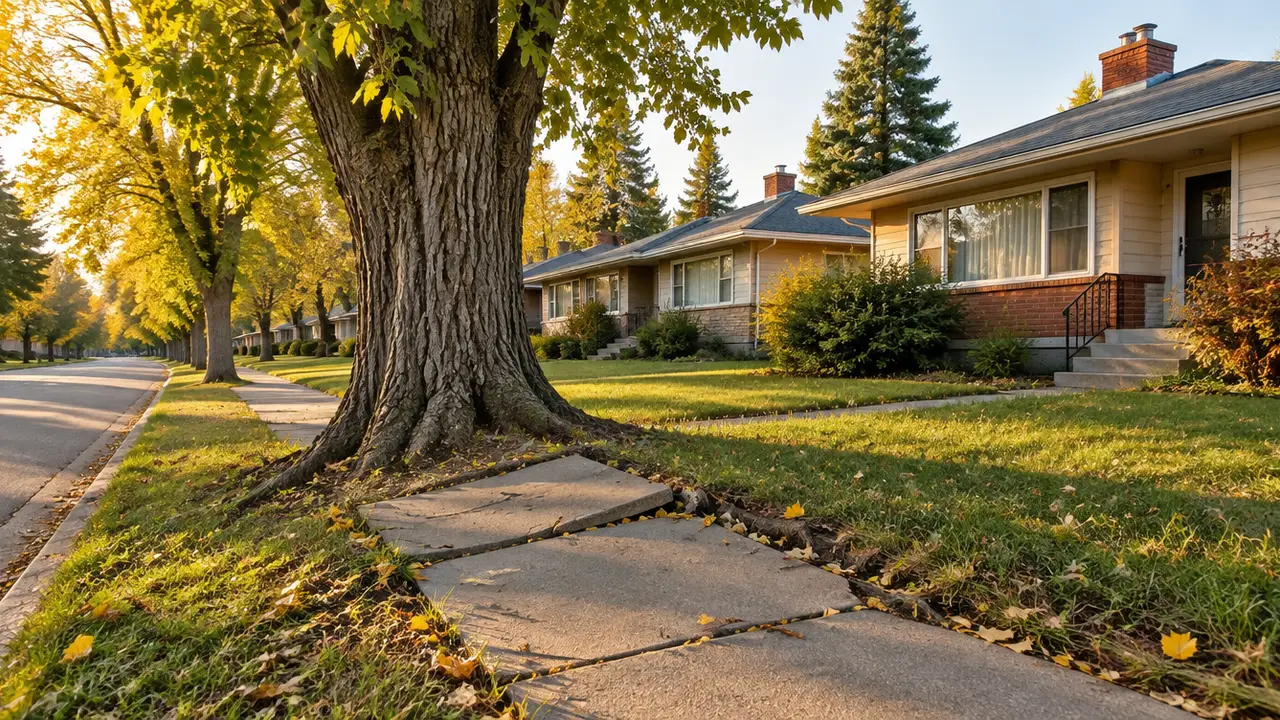
The City of Calgary makes the same point about poplars, the tree most often blamed. Its guidance says poplar roots are not the cause of cracked foundations and do not break sewer lines; roots gravitate toward existing water sources and air pockets such as cracks. The City's advice is that repairing cracks in sewer lines remedies the problem more effectively than removing the tree.
In Calgary, jointed pipe is the common factor. In HAUSE's analysis of City open data, about one in five City-side sanitary service lines are coded TIL, the City's tile code, generally read as clay tile, and most were installed in the 1960s and 1970s. That record covers only the City's portion from the main to the property line; your private portion may be a different material. But clay tile on the City side is a strong hint that you should expect joints on your side too.
02 /Which trees show up in Calgary root calls?
Any tree or large shrub within reach of a leaking joint can send roots in, but large, fast, water-seeking trees are the usual culprits. These are common in Calgary yards, boulevards and older streets; treat the notes as a general pattern, not a ranking.
| Tree or shrub | Why it matters for sewers | Help-desk note |
|---|---|---|
| Poplars, aspen and cottonwood | Large, fast-growing, extensive shallow roots that exploit leaks quickly | The City says fix the crack rather than blame the tree |
| Willows | Very water-seeking roots | Among the first to find a leaking joint |
| American elm | Large boulevard and yard tree in older areas | Provincial elm pruning ban April 1 to September 30 |
| Green ash and Manitoba maple | Hardy, widespread, sizeable root systems | Common in mature yards and lanes |
| Spruce and pine | Denser, shallower roots, often near front walks | Roots can reach lines under lawns beside them |
| Birch and larger crabapples | Moderate trees that still find leaks | Often planted close to the house |
| Lilac, caragana and dogwood hedges | Shrub roots at the property line | Can reach a shallow section or cleanout riser |
For planting distances and species lists built specifically around sewer lines, SewerRoots.ca covers the topic in depth.
03 /City tree or your tree: what may you do?
You may clear roots from inside your own pipe. You may not cut, remove, move, prune or damage a City tree without City permission. The City of Calgary takes exclusive responsibility for maintaining trees on public sidewalks and boulevards, and its tree bylaw guidance says cutting, removing, moving or pruning City trees is prohibited without permission.
- Root cutting inside your private pipe: normal sewer maintenance; no City permission needed to clear a blockage.
- Digging in the boulevard or near a City tree: involve the City first. The pipe there is the City's portion anyway, under its published ownership split.
- Roots from a City tree blocking your line: call 311. The City's poplar guidance directs residents with sewer blockages, sidewalk lifting or property damage to call 311 (403-268-CITY, or 2489, if you are dialling from outside the city).
- A neighbour's tree: a civil matter between neighbours; fix your joints regardless, because sealing the leak is what stops the roots.
- Elm trees anywhere: the City reminds residents of the provincial elm pruning ban between April 1 and September 30, and of rules on storing elm wood, to help keep Alberta free of Dutch elm disease.
04 /When should you cut roots in Calgary?
Cut roots before they rebuild a full mass, which in Calgary means scheduling around the growing season. Roots in a sewer grow year-round because the pipe is never dry, but growth picks up as trees leaf out in late spring and runs through summer.
| Months | What is happening | What to do |
|---|---|---|
| May–June | Trees leaf out; root growth picks up | Camera the line if you are on a cutting cycle |
| July–August | Peak growth; peak storm season too | The usual root cutting window for scheduled lines |
| September–October | Growth slows; freeze-up approaching | Book the main line clean before freeze-up if you missed summer |
| November–April | Slow growth; frozen ground | Emergency clearing only; plan the permanent fix for summer digging |
The best interval is the one your line tells you. If the camera finds a heavy mat 12 months after cutting, shorten the interval. If it finds only fine hairs after 18 months, you can lengthen it. The Calgary sewer season calendar adds a root cut to late spring and summer when you tell it there are big trees near the line.
05 /How should a root cutting visit go?
- Clear from the cleanout
A sectional or drum machine with a root cutter, or a jetter with a root-cutting nozzle, run all the way to the main.
- Flush the fines
Cut roots leave fragments that can re-block a sag. Jetting or a good flush carries them to the main.
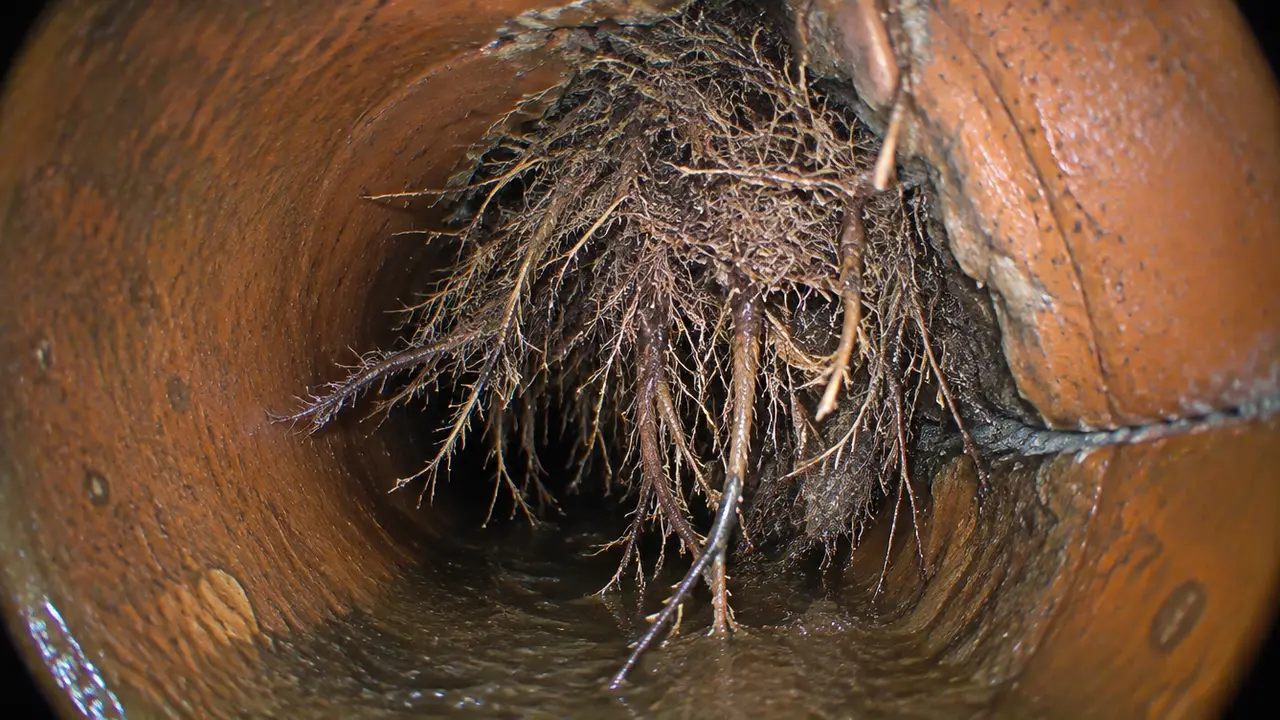
- Camera the whole line
Note every joint with roots, the distance from the cleanout, and the heaviest one.
- Locate the worst joint
A sonde on the camera head lets the technician mark the ground above it. Now you know whether it is under lawn, driveway, tree or boulevard.
- Write the cycle down
Date, distances, how heavy. Next time, you can compare.
Avoid pouring root-killing products into the line on your own. Label directions and local rules apply, some products are hazardous, and none of them fixes the joint. Talk to the contractor first.
06 /When does cutting stop making sense?
Cutting is maintenance. It does not change the joint that let the roots in, so the roots come back on a cycle. When you are paying for cutting every year, or the camera shows roots at many joints, or roots have displaced a joint enough to hold water, it is time to price a permanent fix: a liner through the leaking section, a spot repair of one bad joint, or replacement of the private line.
Where the root entry is on the City side of the property line, report it to 311 with footage rather than fixing it yourself. The City runs a Sanitary Lateral Lining Program that relines existing sanitary service pipes without excavation, and its service line data shows relining concentrated in older communities. For Calgary costs of lining and replacement, see CalgarySewerReplacement.com; for the service call side, see Calgary service call costs.
07 /Which Calgary communities have the most clay tile on the City side?
Among communities with at least 300 City-side lines, the highest shares coded TIL in HAUSE's analysis include Maple Ridge (99.1 percent), Rundle (97.1), Marlborough Park (96.9), Willow Park (96.0), Acadia (93.7), Lake Bonavista (93.3), Brentwood (92.5) and Varsity (85.0). These figures describe the City-owned portion only; the private portion of any individual house can be different and may already have been replaced. Combined with mature trees, though, they mark the areas where a camera baseline is worth more than a guess. Browse every community at CalgarySewers.ca, and if roots are already causing backups, request a quote for cutting and a camera.
FAQQuestions people ask
Do poplar trees break sewer lines in Calgary?
The City of Calgary says poplar roots do not break sewer lines; they grow toward water and air at cracks that already exist. The City's advice is that repairing the crack is more effective than removing the tree.
Can I cut roots from a City boulevard tree out of my sewer?
Clearing roots from inside your own pipe is normal maintenance. Cutting, pruning, removing or damaging the City tree itself is prohibited without City permission, and digging near it should involve the City. Call 311 if a City tree is involved.
How often should roots be cut from a Calgary sewer line?
Commonly every one to two years for clay tile lines with active roots, set by what the camera finds. If you need cutting more than once a year, plan a permanent repair.
Who pays if roots are in the City side of my line?
The City owns and maintains the pipe from the main to the property line under its published split. Report it through 311 with footage and distances; the City makes the determination for your case.
Will removing the tree fix the roots in my sewer?
Not by itself. Roots already in the pipe can keep growing or decay and leave voids, and the leaking joint remains for the next tree. Fixing the joint is what stops roots.
NETWORKGo deeper across the HAUSE Sewer network
How tree roots get into sewer pipes
How tree roots get into sewer pipes: vapour leaks at joints, the soft backfill trench, and why clay and concrete laterals fail first, with depth and fixes.
SewerJetting.caHydro jetting tree roots: what it clears, and why the roots come back
Hydro jetting tree roots in a sewer line: root nozzles vs cable cutters, why roots regrow at the same joints, clay pipe care, and when to line instead.
SewerInspector.caSewer inspection points and cleanouts: how to find, use or move one
What a sewer inspection point, chamber or cleanout is, how to find yours in a Canadian house, whether you can move or add one, and scoping through a toilet.