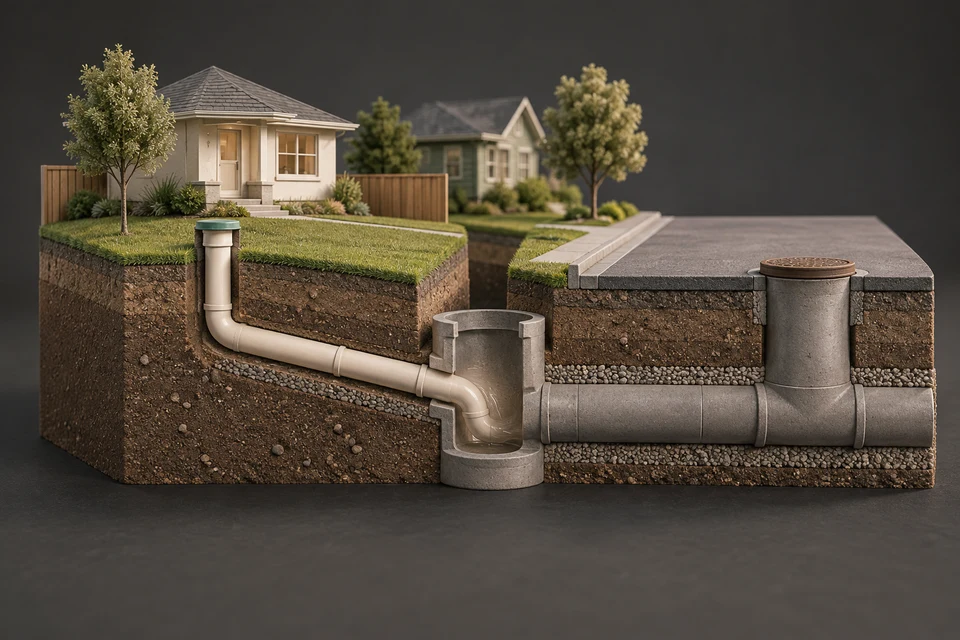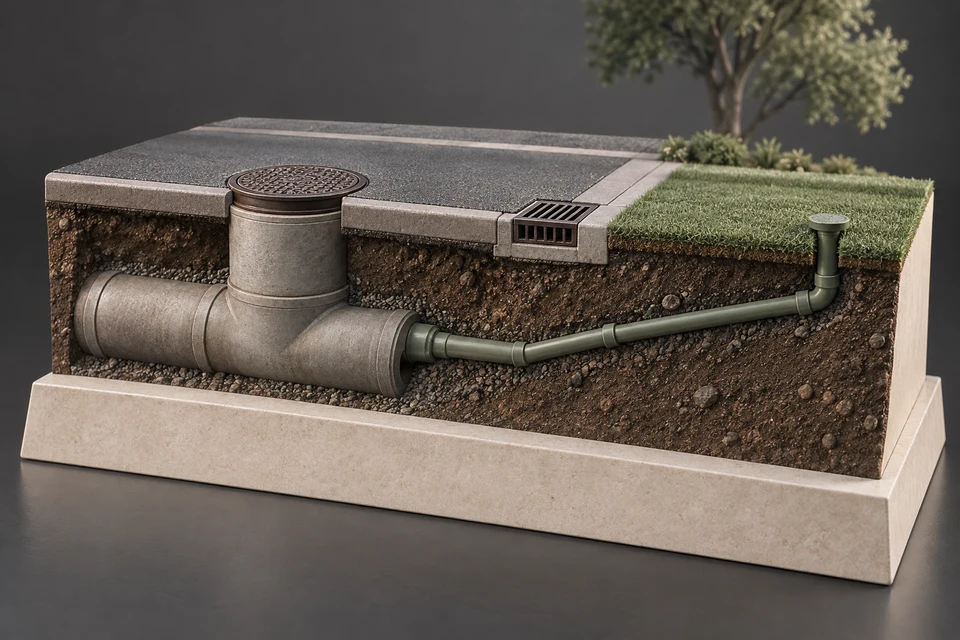
The City of Calgary owns and maintains sanitary mains and the service pipe from the main to the property line; the homeowner owns the pipe from the property line to the house. Through 311 it triages backups, sends crews to find which side a blockage is on, clears blocked storm drains and manages public trees. It does not clean private drains, clean up basements or pump them out.
- Searches for City of Calgary drain cleaning usually mean backup triage; the City diagnoses, it does not clean private lines.
- The ownership split is the City's published position: main to property line is the City's, property line to house is the homeowner's.
- Storm drains are a separate City system; report pooling that has not drained after 90 to 120 minutes.
- The City's Sanitary Lateral Lining Program relines service pipes without digging; if you get a notice, follow its water-use instructions.
- The City's own records cover only its portion of your service line; your private portion can be a different material and age.
01 /Does the City of Calgary clean private drains?
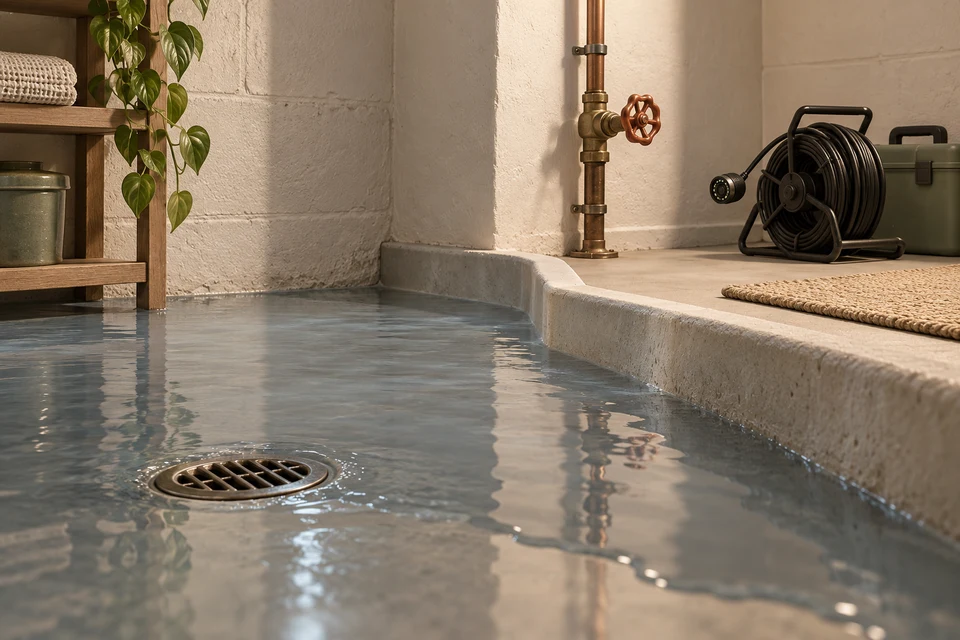
No. The City's role on a sewer backup is diagnostic. Through 311 it decides whether you need a plumber or whether City infrastructure might be involved, and when a crew comes out, it snakes from your cleanout toward the sewer main to establish which side of the property line the blockage is on. If the blockage is on the private side, you are advised to call a plumber.
That division follows ownership. The City's description of its public sanitary service line data puts it plainly: from the sanitary main to the property line, the pipe is owned and maintained by The City of Calgary; from the property line to your house, it is owned and maintained by the homeowner. The same logic applies to new construction, where the City puts the water and sewer connections between the property line and the house plumbing on the builder or homeowner.
02 /What does the City handle, and what is yours?
Most Calgary sewer questions fall into one of the rows below. Everything here comes from the City's own published pages; anything specific to your address should still be confirmed through 311.
| Situation | What the City does | What the homeowner does |
|---|---|---|
| Sewage backup | 311 triage; a crew may snake from the cleanout to find which side the blockage is on | Stop water use, provide cleanout access, call a plumber for private blockages, call the insurer |
| Sanitary main and City-side service pipe | Owns and maintains it | Report suspected problems with footage and distances |
| Private service pipe and building drain | Nothing; not City property | Owns, maintains, clears and repairs it |
| Basement flooding or seepage | Assesses the situation; does not pump out basements | Cleanup, drying, sump maintenance, grading, downspouts |
| Blocked or iced storm drain on the street | Clears it on a priority basis after a 311 report | Clear leaves and debris when safe; report pooling over 90 to 120 minutes |
| Tree on a boulevard or public land | Exclusive responsibility for maintenance | Do not prune, cut or damage it; call 311 about problems |
| Frozen water service (not sewer) | Frozen Pipes Prevention Program letters; 311 triage | Follow letter instructions; turn off the main valve and call 311 if flooding |
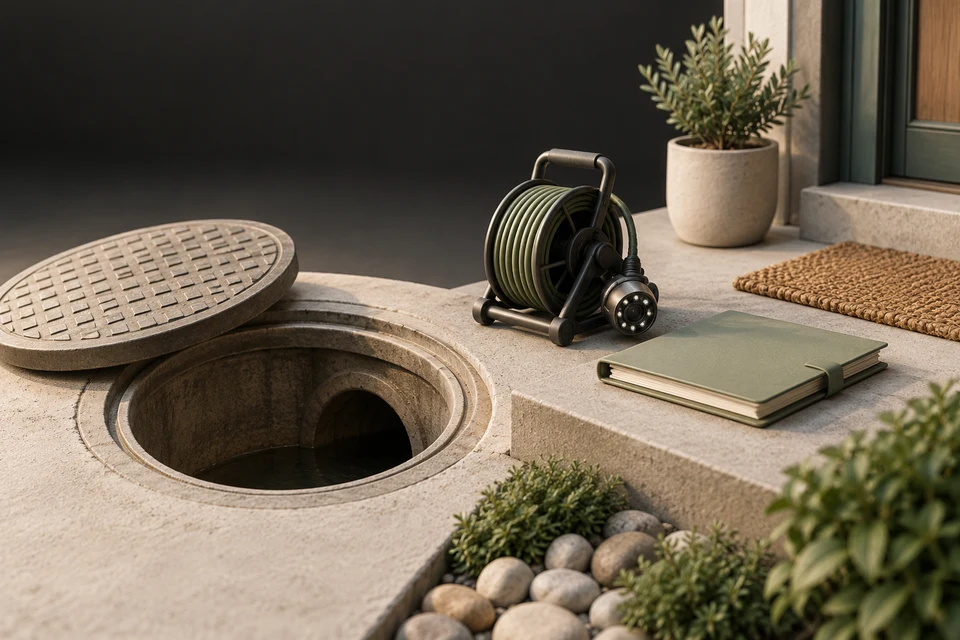
The City is explicit about limits on backup calls: crews do not rearrange furniture, lift carpet, pull toilets or open drywall to trace a backup, and the customer is responsible for providing access to the cleanout.
03 /What is the City's Sanitary Lateral Lining Program?
It is the City's trenchless relining program: a liner goes inside an existing sanitary service pipe to extend its life without digging it up. If your street is part of it, you may receive notice, and the City asks residents to follow specific steps on the day of work.
- Before the crew starts
Pour four litres of water into every floor drain, laundry tub, bathtub and shower drain, as the City's instructions ask. This keeps trap seals full.
- During installation
Do not run showers, bathtubs, dishwashers or washing machines, and keep toilet flushing to a minimum. The City says this prevents sewer backups while the service is temporarily closed.
- Expect a short outage
The City describes the sewer connection outage during liner installation as lasting approximately three hours. If a water shutoff is needed, residents get in-person notice about 30 minutes before work begins.
- Afterward
You can generally use water as usual unless told otherwise. Keep the notice with your house records; it is useful at resale.
The City's service line data shows this relining at work. In HAUSE's analysis of the dataset, 1.1 percent of City-side service lines citywide are coded CIPP (cured-in-place liner), and the share is far higher in some older communities, such as Highwood at 22.1 percent and Glendale and University Heights at 19.9 percent. The CIPP date in the data is usually the relining date, not the original install date, and it applies to the City's portion only; your private portion is separate.
04 /What can the City's service line data tell you about your street?
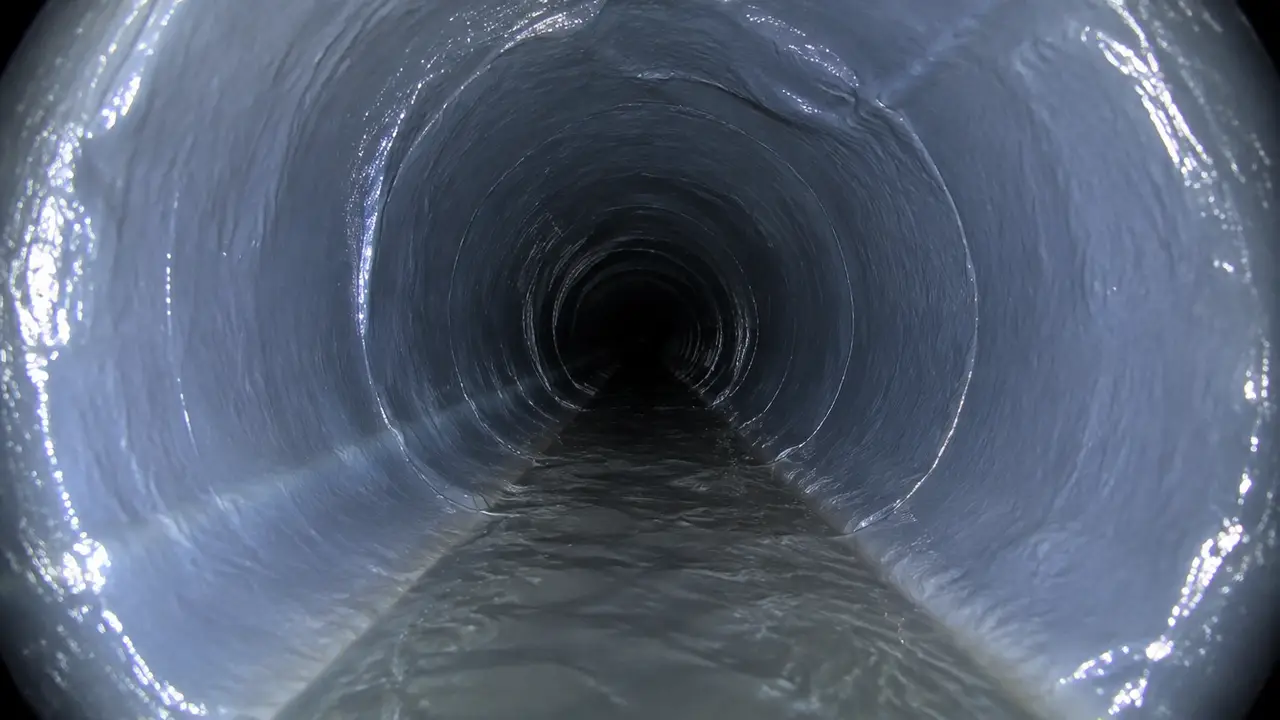
The City publishes the material and installed date for the public portion of each sanitary service line, about 367,000 lines in HAUSE's 2026 analysis. It is useful context for a homeowner, with two limits you should always keep in mind: it describes only the stretch the City owns between its main and your property line, and your private section may be a different material installed at a different time. The dataset also leaves out large commercial and multi-family services.
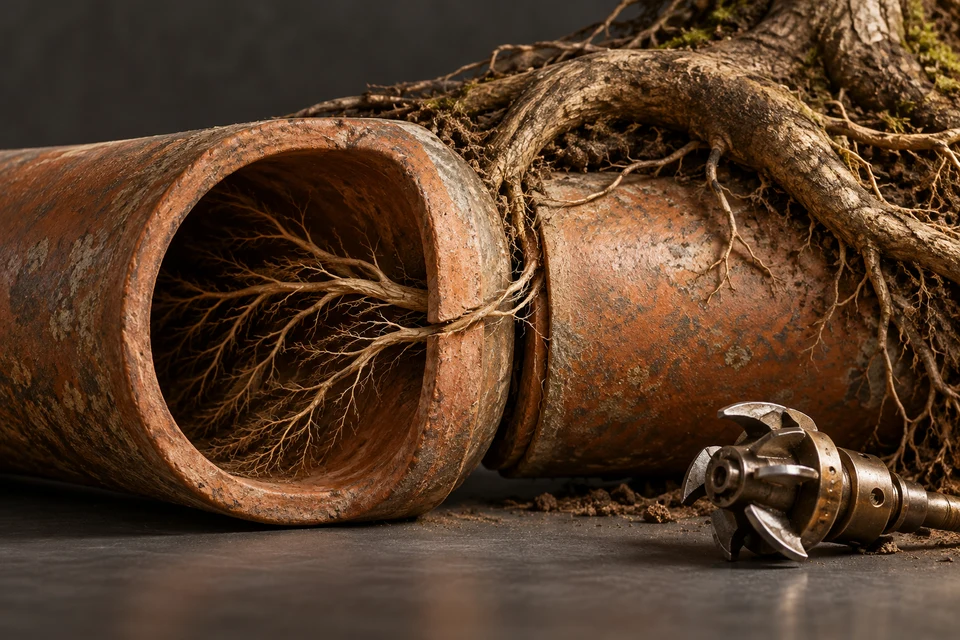
For a help-desk purpose, the data answers one question well: how likely is it that the pipe near your property line is jointed clay or cast iron? Citywide, about 20.2 percent of City-side lines are coded TIL and 3.3 percent cast iron. If your community sits in the City's 1960s/1970s structure class, the TIL share is 77.5 percent. That is a good reason to have your private side scoped before roots or a backup force the question. To look up your own address or browse communities, use CalgarySewers.ca, which is built around this data. If you believe the City's record for your address is wrong, the City invites corrections through 311.
05 /How do you make a 311 sewer request that gets the right response?
Give the agent the details that separate a City problem from a private one. A good request is short, factual and specific to your address.
- What happened, where it came out, and the time it started.
- Whether water rises with all water use stopped.
- Weather: heavy rain, fast melt, or dry.
- Neighbours affected, with addresses if you know them.
- Anything visible outside: a manhole overflowing, a sinkhole or wet spot in the boulevard, pooling over a storm drain.
- Contractor evidence, if any: the camera video, the footage-counter distance to the defect, and where the locate mark landed.
- Your cleanout location and confirmation that it is accessible.
Write down the reference number and share it with any contractor and your insurer. If the problem is a storm drain rather than your sewer, the City says to report water that has not drained after 90 to 120 minutes, and to call immediately if water is entering a building or vehicle or there is a safety concern. To follow the request afterwards, and to know what the crew will ask of you, see after you call 311 about a sewer backup.
06 /What should you do if the problem is on the City's side?
Let the City handle its portion, and do not pay a contractor to dig in the boulevard or road on your behalf without the City's involvement. The boulevard is public land, City trees there are protected, and the pipe under it belongs to the City. Keep your evidence organised and follow up through 311 with your reference number if the problem persists.
If the City's crew or your contractor finds a defect that straddles the property line, expect a shared conversation. Bring the footage and the distances. The City or Owner triage tool shows how different combinations of symptoms and camera findings usually sort out, and it always repeats the City's published split and the fact that the City makes the final determination.
For your own side, what to do in a Calgary sewer backup and how to vet a Calgary drain contractor are the next reads.
FAQQuestions people ask
Does the City of Calgary do drain cleaning?
Not on private lines. The City triages backups through 311, and a crew may snake from your cleanout toward the main to find which side the blockage is on. Private-side blockages are the homeowner's to clear with a plumber or drain contractor.
Who owns the sewer pipe under my front yard in Calgary?
According to the City's published description, you own and maintain the pipe from the property line to your house. The City owns and maintains the pipe from the main to the property line.
Where exactly is my property line?
Your real property report or land title plan shows it. On many Calgary streets the property line is some distance behind the sidewalk or curb, so the boulevard is City land. A contractor's locate and camera distances help show where a defect sits relative to it.
Will the City reline my sewer line for free?
The City's Sanitary Lateral Lining Program lines existing sanitary service pipes using a trenchless process. Which streets and which portion of the line are included is up to the City; ask 311 rather than assuming your line qualifies.
Can I report a storm drain problem to the City?
Yes. Report through 311 if water pooling on the road has not drained after 90 to 120 minutes, and immediately if water is entering a building or vehicle or there is a safety concern.
NETWORKGo deeper across the HAUSE Sewer network
Sewer permits, inspections and who pays: owner or city?
Sewer line permits and who pays in Canada: the usual owner vs city split, permit and inspection costs, road cuts, city tree roots and what to confirm.
SewerInspector.caCCTV sewer inspection: crawlers, lateral launch cameras and coded surveys
What CCTV sewer inspection is: crawler cameras, lateral launch and zoom cameras, PACP-coded municipal surveys, and what city camera work means for your lateral.
SewerRoots.caWhose tree, whose pipe: who pays when roots block a sewer line
Who is responsible when a city or neighbour's tree sends roots into your sewer line: the general Canadian pattern, the evidence, and how to raise it.