In a Calgary sewer backup, protect people first, stop all water use, then call 311. The 311 agent asks questions to decide whether you need a plumber or whether City infrastructure may be involved. A City crew may then snake from your cleanout toward the main to see which side of the property line the blockage is on. Call your insurer early and hire a drain contractor for private-side blockages.
- Sequence matters: people, water use, 311, cleanout access, insurer, contractor. Skipping ahead usually costs time or money.
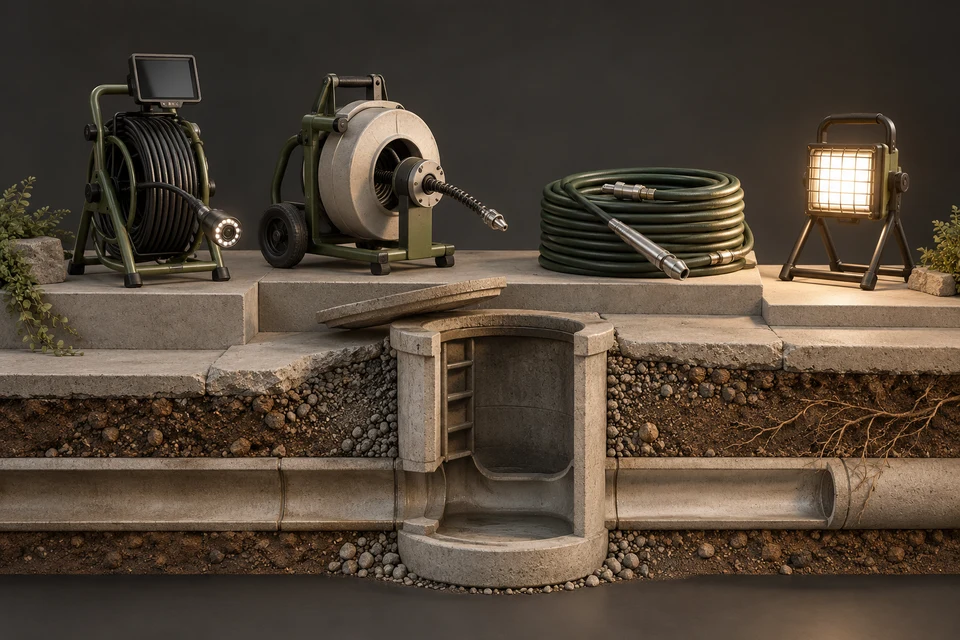
- The City's crew diagnoses which side the blockage is on by snaking from your cleanout toward the sewer main; it does not clean private lines.
- You must give the crew access: clear roughly two metres (six feet) around the cleanout and uncover it if it is boxed in or carpeted over.
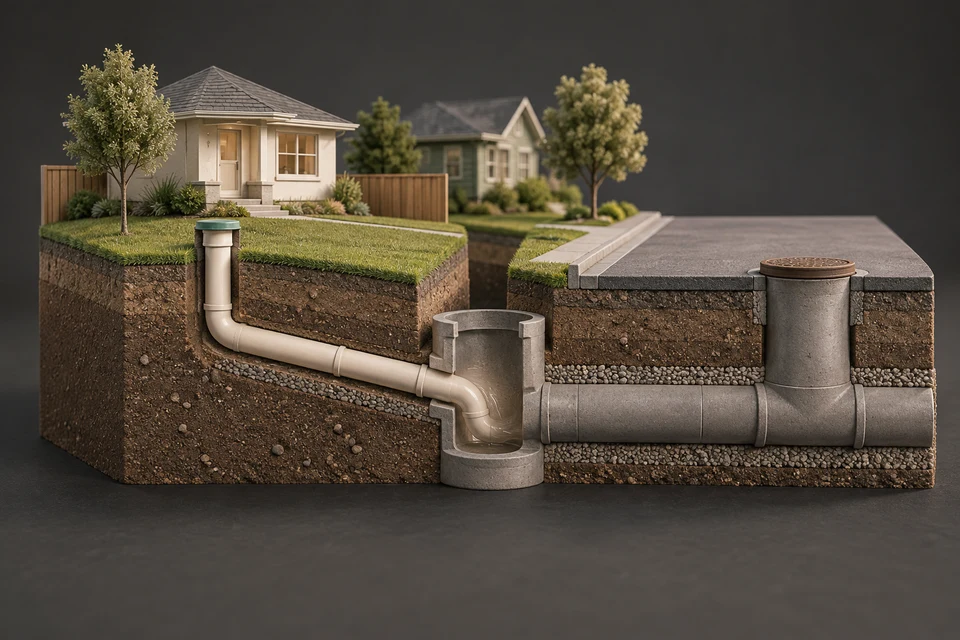
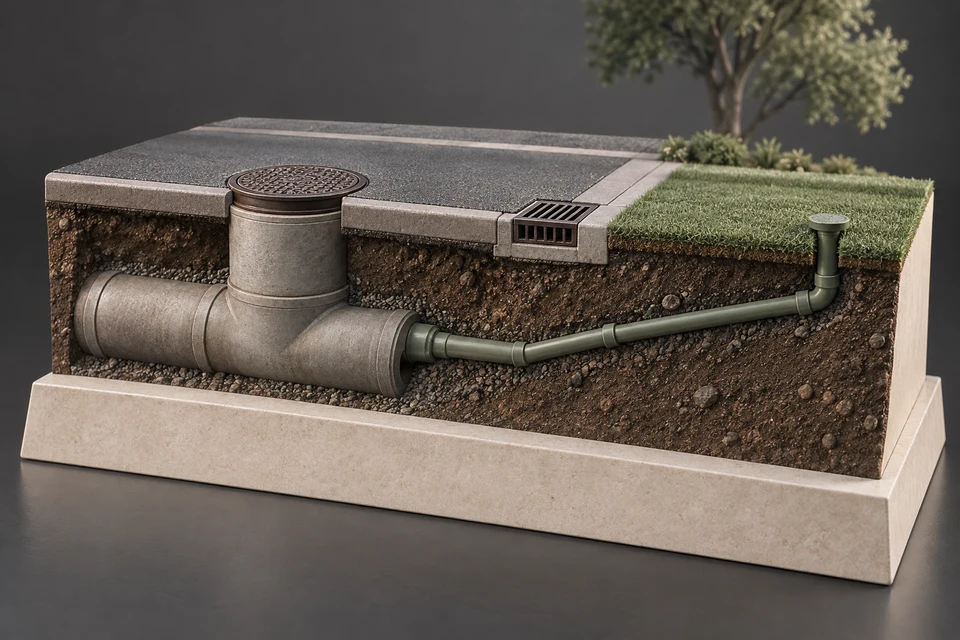
- The City publishes the ownership split: main to property line is the City's, property line to house is the homeowner's.
- Ask whoever clears a private blockage for camera footage with distances, because that evidence settles any City-or-owner question later.
01 /What comes first in the opening minutes of a Calgary sewer backup?
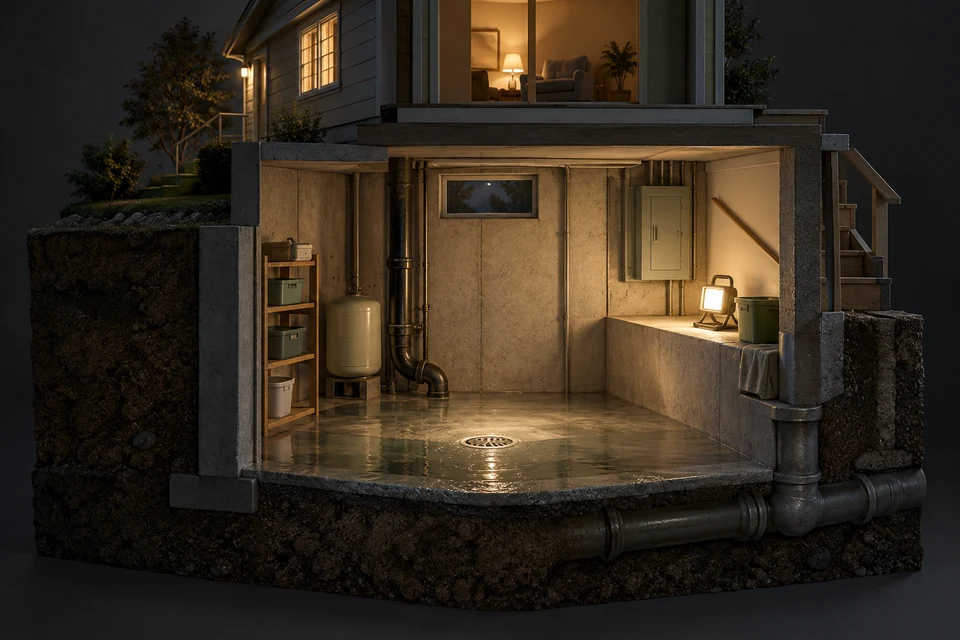
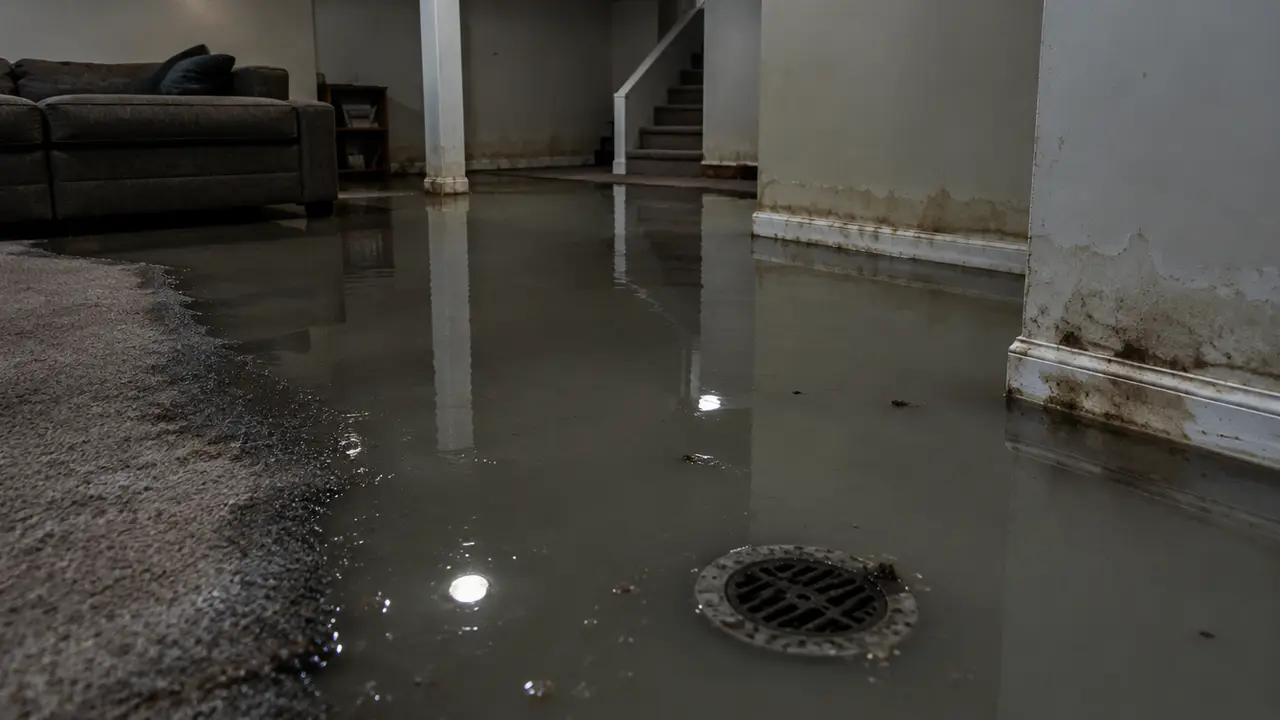
Get people and pets away from the water, then stop every source of water use in the building. Sewage that has come up a floor drain carries bacteria and can hide electrical hazards, so nobody should wade through it in socks or bare feet. The City of Calgary's own backup guidance asks residents to stay out of the affected area unless they are wearing protective gear: rubber gloves, boots and a mask.
- Keep everyone out of the wet area
Close the basement door if you can. Children and pets go upstairs. If a basement suite is involved, knock on the door and tell the occupants what is happening.
- Stop all water use, everywhere
No flushing, no showers, no dishwasher, no laundry. In a backup, every litre used upstairs ends up at the lowest drain. Tell every person in the house, including suite tenants, because one flush from the second floor can add several litres to the basement.
- Check for hazards before anything else
If water is near outlets, extension cords, the furnace, the water heater or the electrical panel, stay out and call an electrician or your electricity provider to make the area safe. If you smell natural gas, leave the house and call from outside.
- Photograph before you touch anything
Take wide photos and short videos of the water, the drain it came from, and damaged items. Note the time. Insurers ask for this, and it is impossible to recreate after cleanup starts.
- Leave the cleanout cap alone
If the line is full, the cleanout is under pressure. Opening it can release a surge of sewage at head height and floor level at once. Let the City crew or your contractor open it with the right equipment.
02 /When should you call 311, and what will the agent ask?
Call 311 as soon as people are safe and water use has stopped. Under the City's published process, the 311 agent works through a set of questions to sort an internal plumbing issue, which needs a plumber, from a problem that might come from City infrastructure. 311 takes requests around the clock by phone, the Calgary 311 app and online; from outside Calgary the number is 403-268-CITY (2489).
You will get a faster, more accurate triage if you have answers ready. Expect questions along these lines, and have a pen handy for the reference number:
- Which drain did the water come out of, and is it still rising?
- Is it raining heavily, or has there been a fast snowmelt?
- Are neighbours on your street reporting the same thing?
- Does the level rise only when someone uses water, or with everything off?
- Do you have a backwater valve, and has anything been changed in the basement plumbing?
- Has the house had backups or drain cleaning before, and when?
If 311 decides a City inspection is not needed, the City's guidance is that you can call a plumber directly. That is common when one fixture group is affected, nobody else on the street has a problem, and it is not raining. The City or Owner triage tool runs the same kind of reasoning so you can see where your answers point before you call.
03 /What does a City crew do when it comes to your house?
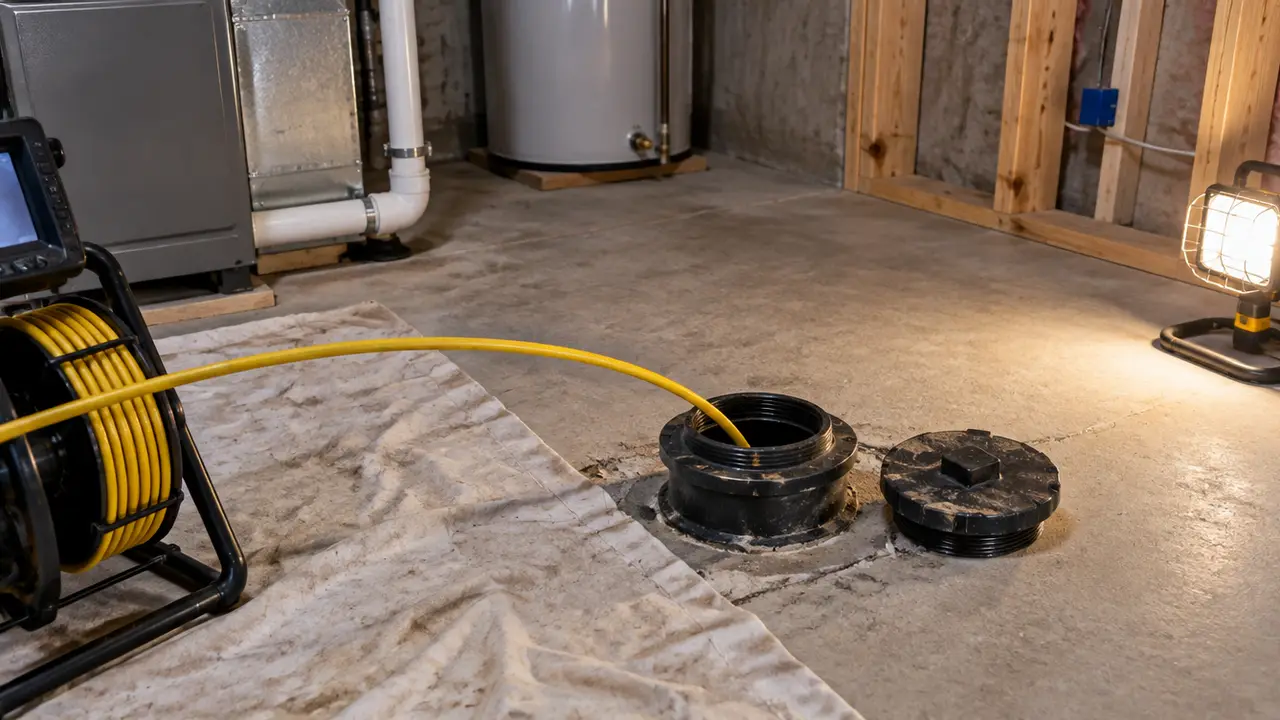
A City of Calgary crew feeds a steel snake in at your cleanout and out toward the sewer main, to establish whether the obstruction sits on private or public property. If the snake finds the obstruction on the private side, the crew advises you to call a plumber. The visit is diagnostic: it decides which side of the property line the problem sits on, not a full cleaning of your line.
The City is also clear about what its crews will not do. Crews do not shift furniture, lift carpet, take toilets off or cut into drywall to hunt for the source of a backup. The homeowner is responsible for providing access, which in practice means three things:
- Clear a path and a working space of roughly two metres (six feet) around the cleanout.
- Uncover the cleanout if it sits under flooring, behind a finishing panel or inside a closet full of storage.
- Tell the crew about changes to the sanitary plumbing, such as a basement development, a backwater valve or a relocated cleanout.
If you do not know where your cleanout is, find it before the crew arrives. A crew that cannot get access may have to leave and come back, and a sewage-filled basement does not improve while you wait. What the crew asks of you during the visit, and how to read the report it leaves, are covered in after you call 311.
04 /Where is the cleanout in a typical Calgary house?
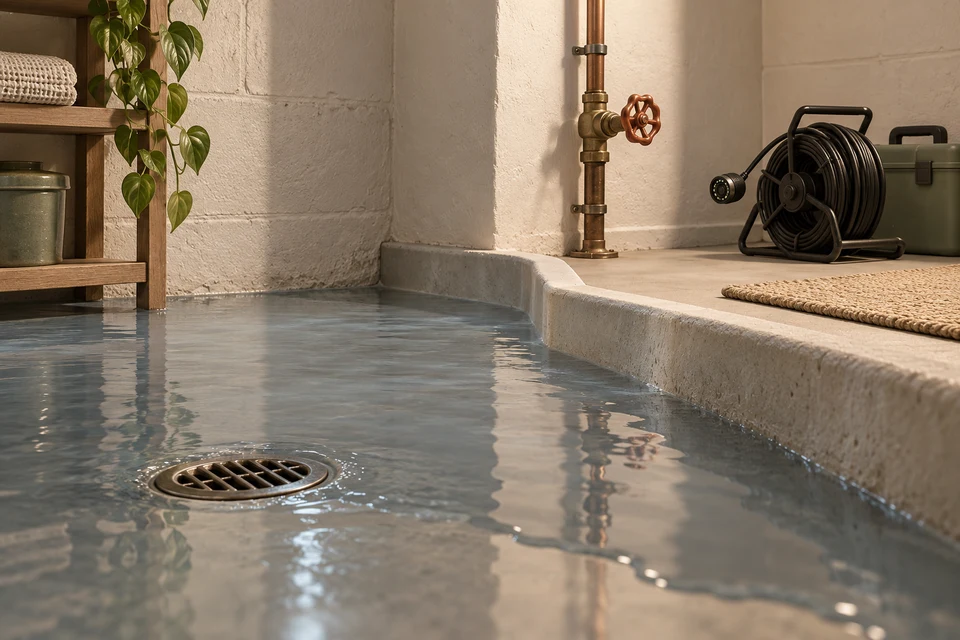
According to the City, you will usually find the cleanout on the lowest floor of the house, often close to the main water shut-off valve, where the water service comes through the wall. That is because the water service and the sanitary service commonly leave the house on the same wall, facing the street or lane where the mains run.
| House type | Where the cleanout often is | What can hide it |
|---|---|---|
| 1950s–1960s bungalow | Low on the cast iron stack or a floor plug near the front foundation wall | Carpet, a finished rec-room wall, a storage shelf |
| 1960s–1970s split-level or bi-level | Lowest level, near the furnace room or laundry, close to the water meter | Built-in cabinets, laundry pedestals |
| 1980s–1990s two-storey | Basement mechanical room, often a capped fitting in the floor near the front wall | Stored boxes, a developed basement with a removable panel |
| 2000s and newer | A backwater valve box in the basement floor with a cover, plus a cleanout on or beside it | Flooring laid over the access cover |
| Infill and duplex | Each unit may have its own; check the mechanical room of each side | Shared lines, locked units |
If you cannot find it at all, say so to 311 when you call. It is also a strong reason to have a contractor add an accessible cleanout later, because a missing cleanout forces toilet pulls and roof access on every future call.
05 /When should you call your insurer?
Call your insurer or broker on the same day, after people are safe and you have photos. Sewer backup coverage in Canada is usually an optional endorsement rather than part of a basic home policy, and the policy wording decides what is covered, what deductible applies, and whether you need approval before a restoration company starts work.
- Record the claim number and the adjuster's name.
- Ask whether you may start cleanup and whether the insurer wants to appoint the restoration company.
- Keep damaged items, or photos of them, until the insurer says they can go.
- Keep the 311 reference number and what the City crew told you about which side the blockage was on.
- Keep every invoice and any camera video from the contractor.
The City crew's finding matters here. If the blockage was on the City side, tell your insurer and ask 311 how the City handles damage in that situation; do not assume either way. The layers of the bill, and which ones insurers commonly treat as the owner's, are set out in what a sewer backup costs in Calgary.
06 /Who clears a private-side blockage, and what should they do?
A drain or sewer contractor clears a private-side blockage, usually from the same cleanout the City used. Clearing a blockage does not need a City permit, but it should still end with evidence. Ask for these before the technician leaves:
- A flow test: several fixtures run together, with the floor drain watched.
- A camera run from the cleanout to the main, with the video saved for you.
- The footage-counter distance to each problem, and whether it is before or past your property line.
- A locate mark on the ground above any defect, so you know whether it sits under lawn, driveway or boulevard.
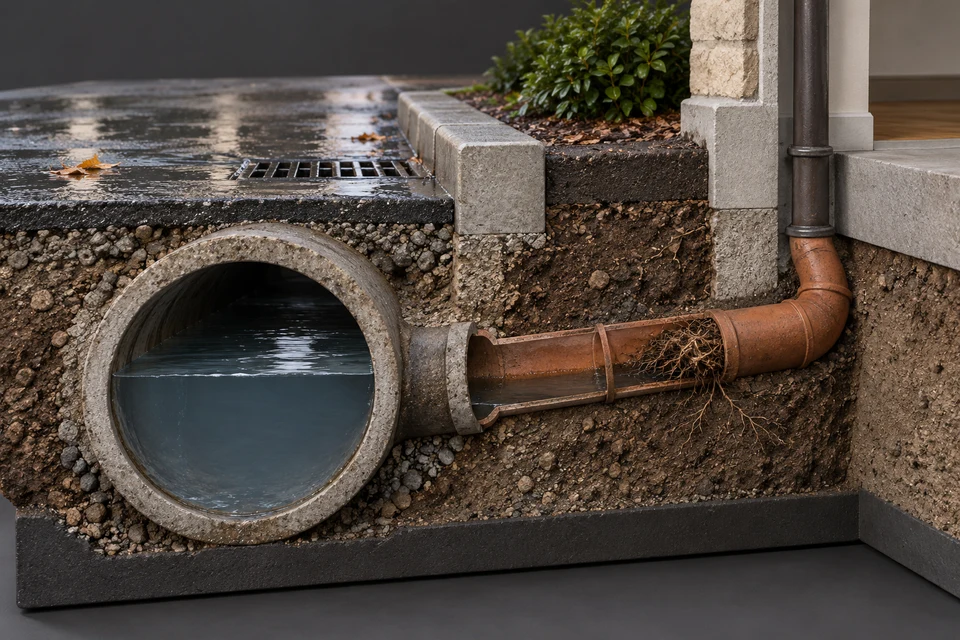
- A plain-language note of the cause: roots, grease, wipes, a sag, a broken section, or no defect found.
If the camera shows the problem at or past the property line, call 311 back with the footage and the distances. The City's published ownership split puts the pipe from the main to the property line in the City's hands, and the pipe from the property line to the house in the homeowner's. The City makes the final call on any specific case, so let it see the evidence.
Prices for a Calgary main-line clearing, camera and after-hours call are laid out on the Calgary service call cost page, and How to vet a Calgary drain contractor covers who to hire. If you want local quotes, request them here with your community and what the camera showed.
07 /What can wait until morning, and what cannot?
A backup that has stopped rising, in a house where everyone can stop using water, can usually wait for business hours. What cannot wait is a backup that keeps rising with all water off, water near electrical equipment, sewage entering a suite where people sleep, or a building where you cannot control water use, such as a rental with several units.
Rising water with everything off is the clearest sign the City's main may be surcharged, which is a 311 call at any hour. The detailed decision list, including how to run a house for a night without drains, is in the after-hours sewer emergency guide. If you are not sure whether it is the City's sewer or your own line, storm surcharge or private blockage walks through the clues.
FAQQuestions people ask
Does the City of Calgary come out for a sewer backup?
The City triages backups through 311. If the agent suspects City infrastructure, a crew can come out and snake from your cleanout toward the main to see which side of the property line the blockage is on. If it is on private property, you are advised to call a plumber.
Will City crews clean up the sewage in my basement?
No. The City's role is to determine where the blockage is and deal with City-owned pipe. Cleanup, drying and repairs inside the house are the owner's responsibility, usually through a restoration company and your insurer.
Why does the City need two metres around my cleanout?
The crew needs room to set up a machine, feed the snake and control any water that comes out. The City asks homeowners to clear about two metres (six feet) and to uncover the cleanout; crews do not rearrange furniture, lift carpet or open walls.
Should I call a plumber or 311 first?
Call 311 first if it is raining heavily, neighbours are affected, or water rises with all your water off. If only your house is affected in dry weather and the backup stops when you stop using water, a private blockage is more likely, and 311 may tell you to call a plumber directly.
If the blockage turns out to be on the City side, who covers it?
The City owns and maintains the pipe from the main to the property line, according to its published dataset description. How costs and any damage are handled in a specific case is the City's decision, so ask 311 and keep your reference number and footage.
Can I use my toilet during a sewer backup?
No. Any water you use has to go somewhere, and in a blocked or surcharged line it ends up at the lowest drain in the basement. Stop all water use until the line is cleared or the surcharge passes.
NETWORKGo deeper across the HAUSE Sewer network
Whose tree, whose pipe: who pays when roots block a sewer line
Who is responsible when a city or neighbour's tree sends roots into your sewer line: the general Canadian pattern, the evidence, and how to raise it.
SewerCleaners.caWhat happens during a professional sewer cleaning visit
A step-by-step look at a professional sewer cleaning visit: arrival, questions, access, cleaning, flow testing, camera verification and the paperwork you keep.
DrainAugering.caDrain augering cost in Canada: what snaking typically costs in 2026
Drain augering cost in Canada for 2026: typical ranges to snake a sink, toilet, floor drain or main line, what raises the price and what a fair quote lists.