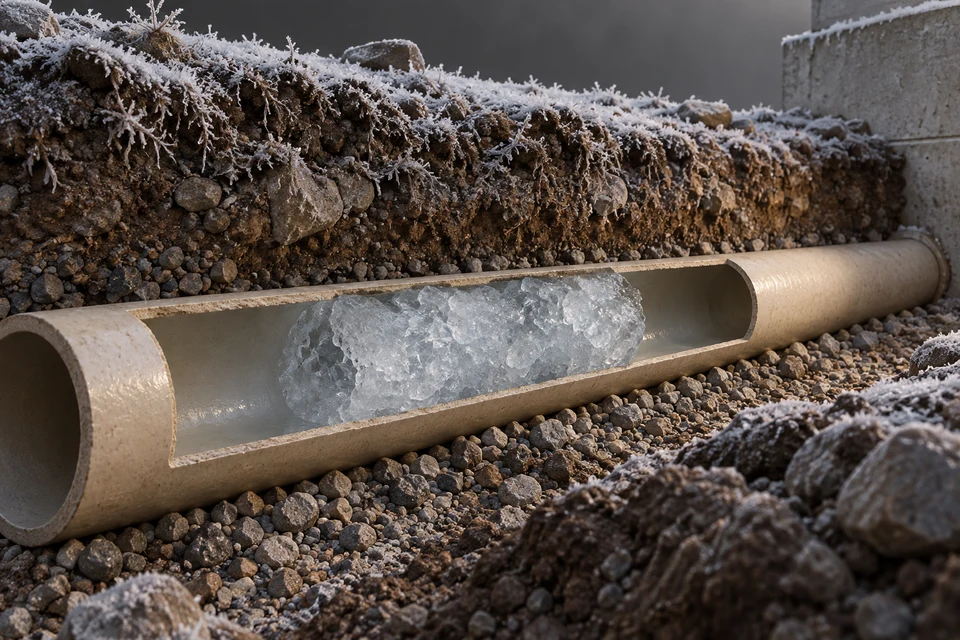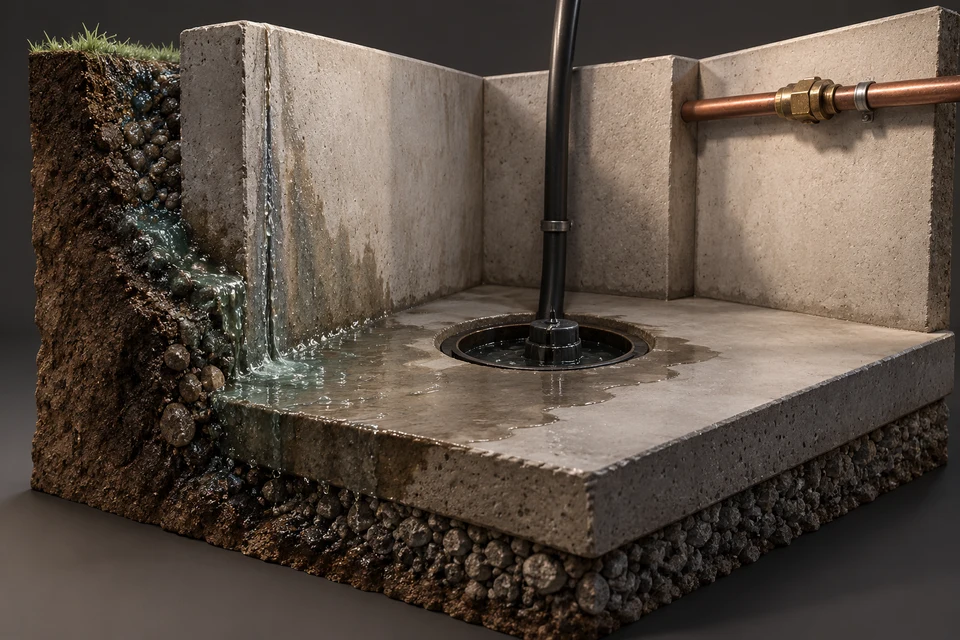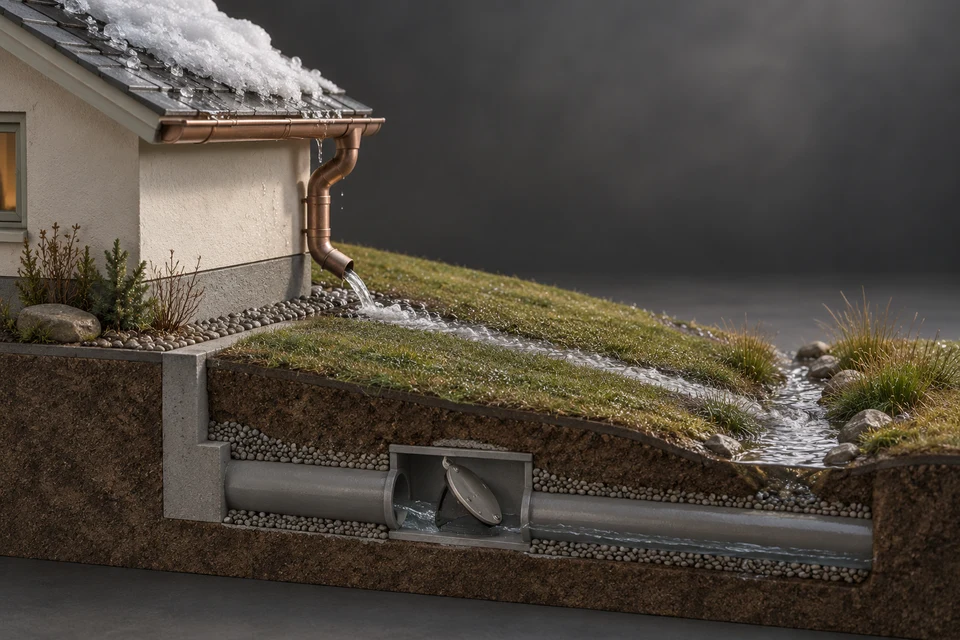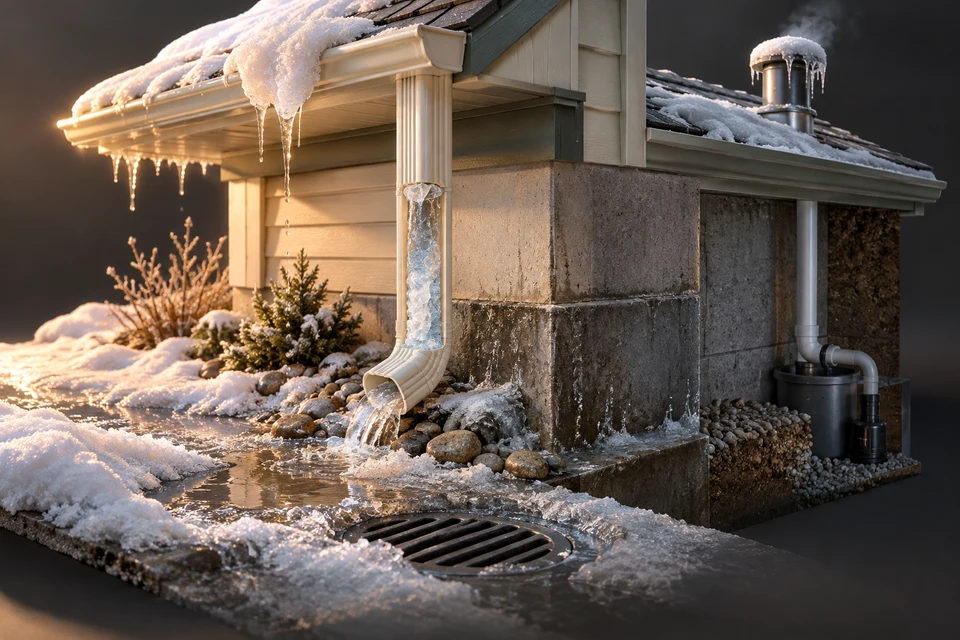
A chinook can melt a snowpack in hours, then a cold front refreezes everything. That cycle ices storm drains so meltwater pools, dumps water at foundations through frozen downspout and sump discharge lines, melts and refreezes frost in roof vents, and lifts or cracks exterior cleanout caps. After each chinook, check the floor drain, the sump, the downspout outlets and the storm drain in front of your house.
- The City notes that chinook weather can turn inches of snow into puddles in hours; if storm drains are clogged with ice, streets pool.
- Report pooling that has not drained in 90 to 120 minutes to 311; call immediately if water is entering a building.
- Frozen downspout extensions and sump discharge lines send meltwater straight back to the foundation.
- Gurgling toilets in a cold snap that stop in a chinook usually mean vent frost, not a clogged sewer.
- Mark and check exterior cleanouts each fall; freeze–thaw lifts caps and lets water and debris in.
01 /What does a chinook do to a Calgary drainage system?
A chinook delivers a sudden warm, dry wind that can push temperatures well above freezing within hours, then often ends with a sharp return to cold. For drains, that means a flood of meltwater arriving on ground that is still frozen underneath, followed by everything wet freezing solid again. The City of Calgary describes the effect on streets plainly: chinook weather can melt snow quickly, turning inches of snow into puddles in a matter of hours, and if storm drains are clogged with ice or snow, water pools.
Inside the lot, the same meltwater looks for the lowest path. On frozen ground it cannot soak in, so it runs along the surface toward the house, collects in window wells, and follows the looser backfill against the foundation down to the weeping tile and sump. Every drain that was frozen shut, from downspout extensions to sump discharge hoses, sends water back toward the basement instead of away from it.
A chinook turns a winter's snowpack into a spring melt in an afternoon, and then puts the lid back on.
02 /What should you do about iced storm drains and pooling?
Clear what you safely can, and report what you cannot. The City asks residents to check the storm drain near their home and clear it of debris such as leaves and sticks, to remove ice and snow when it is safe to do so, and to create channels that help water flow toward the drain in winter. It asks residents never to sweep debris into storm drains, dump chemicals or use ice salt on them.
- Chip a channel through the snowbank to the grate so meltwater can reach it.
- Clear the grate surface of slush and leaves; do not pry at a grate or work in traffic.
- If a drain is solidly iced over or the water keeps rising, report it rather than fighting it.
- Report pooling that has not drained after 90 to 120 minutes through 311, with a photo if you can take one safely.
- Call immediately if water is entering a building or a vehicle, or there is a safety concern.
The City says it responds to these reports on a priority basis, attending first to areas affecting public safety and where water may cause property damage. Storm drains go to rivers and creeks without treatment, so keep anything but snowmelt out of them.
03 /Why do downspouts and sump lines cause chinook basement water?
Because they freeze in the cold that comes before and after the melt. A downspout extension full of ice cannot carry meltwater away; the water overflows at the elbow, right beside the foundation. A sump discharge hose that froze solid at its outlet leaves the pump running against a blocked line, and the pit overflows into the basement.
| Item | What goes wrong | Quick fix |
|---|---|---|
| Downspout extension | Frozen solid; overflows at the foundation | Knock out the ice, or swing the extension up and use a splash pad until the cold passes |
| Downspout outlet location | Discharges toward the house, a neighbour or a walkway that ices | The City recommends at least six feet from the foundation, toward the front or rear of the property |
| Sump discharge hose | Ice plug at the outlet; pump runs but moves nothing | Clear the outlet, keep the hose sloped to drain between cycles |
| Sump discharge location | Onto a sidewalk, lane or neighbour's lot, where it ices | The City says sump discharge must not go onto neighbouring properties, lanes, sidewalks, boulevards or streets |
| Gutters | Ice at the eaves; melt runs down the wall | Clear debris in fall so meltwater reaches the downspouts |
None of these is part of the sanitary sewer, and connecting clean-water drainage to it is generally not accepted practice; confirm with 311 before changing any connection. They still decide how much water reaches your basement floor drain after a chinook, which is why they sit on the same checklist.
04 /Why check the floor drain after a chinook?
Because the floor drain is where meltwater problems and sewer problems both show up first. Check it within a day of a strong chinook for three things: standing water or dampness around it, a sewer smell, and whether it takes water normally when you pour a bucket in slowly.
- Water around it but not coming from it: seepage reaching the lowest point of the floor; look outside at grading and downspouts.
- Water coming up from it: a restriction in the building drain or service line, or a surcharge in the main; follow the storm surcharge or private blockage tests.
- Sewer smell with a dry drain: the trap has evaporated in the dry furnace air; pour in a few litres of water.
- Slow to accept water: debris in the trap or a partial blockage downstream; book a clearing before the spring melt.
Older homes deserve extra attention. Some houses built decades ago had foundation drains or other clean-water sources tied into the sanitary plumbing in ways that would not be accepted today. If your floor drain runs noticeably during a melt with nobody using water, ask a contractor to camera the building drain and identify what is feeding it, and ask 311 what is permitted before changing any connection.
05 /Why do toilets gurgle in a cold snap and stop in a chinook?
Usually because the roof vent is frosting over. Every drain in the house relies on the vent stack to let air in behind draining water. In extreme cold, warm moist air rising up the stack freezes on the inside of the vent pipe near the roof, narrowing it. Drains then pull air through the nearest trap instead, which is the gurgle you hear, and traps can be partly siphoned, which lets sewer smell in.
When a chinook arrives, the frost melts and the symptoms stop, which is the clue that it was the vent, not the sewer. It can return in the next cold spell. Do not climb onto an icy roof to clear it. If it happens every winter, a plumber can assess whether the vent needs to be enlarged or insulated where it passes through the attic, within code requirements.
06 /What does freeze–thaw do to exterior cleanouts?
Freeze–thaw works on anything short and close to the surface. An exterior cleanout riser, the capped vertical pipe some Calgary houses have in the front yard, can have its cap lifted by frost, its threads cracked, or its top broken by a snow shovel or a plow blade. Once the cap is off, meltwater, gravel and ice enter the service line.
- Mark it in the fall
Put a tall stake beside the riser before the first snow, so you and any contractor can find it.
- Check the cap after big thaws
Look for a lifted or cracked cap and replace it with the correct fitting.
- Keep plows and shovels off it
A riser at the edge of a driveway is especially exposed.
- Note any debris
If gravel or ice got in, mention it at the next cleaning; it can hold a clog.
07 /What is the chinook checklist?
Keep it short enough to do every time a chinook arrives, and again when the cold returns.
- Open a channel from the snowbank to the storm drain in front of your house; report pooling to 311 if it has not drained in 90 to 120 minutes.
- Clear ice from downspout outlets and make sure water discharges away from the foundation.
- Check the sump pit, run the pump with a bucket of water, and clear the discharge outlet.
- Look at the basement floor drain for water, smell and slow draining.
- Check the exterior cleanout cap if you have one.
- When the cold returns, disconnect or lift downspout extensions that will freeze full.
The same items appear month by month in the Calgary sewer season calendar, and the seasonal overview is on the Calgary sewer seasons page. If a line froze before the chinook, read frozen sewer line in Calgary.
FAQQuestions people ask
Do chinooks cause sewer backups?
Indirectly. A fast melt can load the sanitary system through cracks and wrong connections, and meltwater at the foundation can reach floor drains in some older homes. Most chinook basement water is seepage, but check the floor drain after each one.
Should I clear the storm drain in front of my house?
The City asks residents to clear debris, ice and snow from nearby storm drains when it is safe, and to report pooling that has not drained after 90 to 120 minutes through 311. Do not use ice salt on storm drains.
Why does my basement smell like sewer in winter?
Dry furnace air evaporates the water in floor drain traps, letting sewer gas in. Pour a few litres of water into each floor drain. A frosted roof vent in a cold snap can also siphon traps.
Can my sump pump discharge onto the sidewalk in winter?
The City says sump discharge must not go onto neighbouring properties, lanes, sidewalks, boulevards or streets. Route it to your own yard, away from the foundation, and keep the outlet clear of ice.
NETWORKGo deeper across the HAUSE Sewer network
Snaking a drain from the roof vent: when it helps and when it does not
Can you snake a drain from the roof vent? When the vent stack is the right access, clearing a blocked or frost-closed vent, and the roof safety that comes first.
PipeCleaning.caHow to clean outside drain pipes: downspouts, yard drains and weeping tile
How to clean outside drain pipes in Canada: downspout leaders, yard drains, weeping tile, sump lines and the sewer cleanout, plus thawing frozen lines.
SewerCleaners.caSeasonal sewer risks: spring thaw, heavy rain and winter freeze
Seasonal sewer risks in Canada: spring thaw and snowmelt, summer storms and surcharges, fall roots and leaves, and winter freeze, with a checklist for each season.