Calgary's sewer year runs through six seasons: winter cold snaps that freeze shallow lines, chinook thaws that flood foundations and ice storm drains, spring melt that raises groundwater, storm and hail season that surcharges mains, a short fall window for cleaning and repairs before frost, and a holiday stretch heavy with grease. Your home's era and nearby trees decide which seasons hit your line hardest.
- The riskiest weeks for basement backups are the heavy-rain weeks of late spring and summer, followed by fast melts.
- Winter problems are mostly about ice at weak spots and water that cannot drain away from the house.
- Fall is the window: clean the main, book repairs and mark the cleanout before snow and frost.
- City data on City-side service lines shows clay tile concentrated in 1960s and 1970s installs; older homes deserve a camera baseline.
- 311 is the route for anything involving the street, a manhole, a boulevard or several homes at once.
01 /Why does Calgary have its own sewer seasons?
Because few cities stack so many different stresses into one year. Calgary has long cold spells that drive frost deep into bare ground, chinook winds that can lift temperatures above freezing in hours in the middle of winter, a spring melt that saturates soils around foundations, and a summer thunderstorm season in one of Canada's most hail-prone regions. Each one tests a different part of the path wastewater takes from your house to the City main.
The soil matters too. Under most neighbourhoods is clay-heavy glacial material, broken in places by sand, gravel and cobble layers, with a frost zone at the top that comes and goes with the seasons. Clay-rich soil drains slowly, so meltwater and storm water linger near foundations; frost heaves and settles shallow fittings; and trench backfill around service lines is looser than the ground beside it, which gives roots and water an easy path.
02 /January and February: cold snaps and chinooks
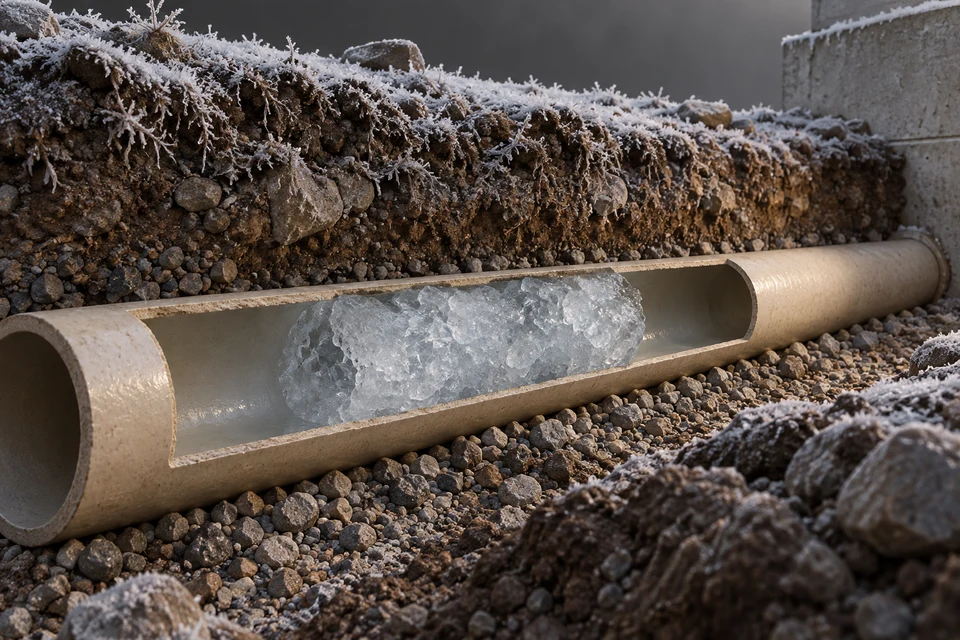
Deep cold finds the weak spots; chinooks then flood them. In a long cold snap, frost reaches furthest under driveways and walks cleared of snow, and a shallow section of service line, an exterior cleanout riser, or a drain in an unheated garage can ice up. Roof vents can frost over, which makes toilets gurgle and drains slow even when the sewer is clear.
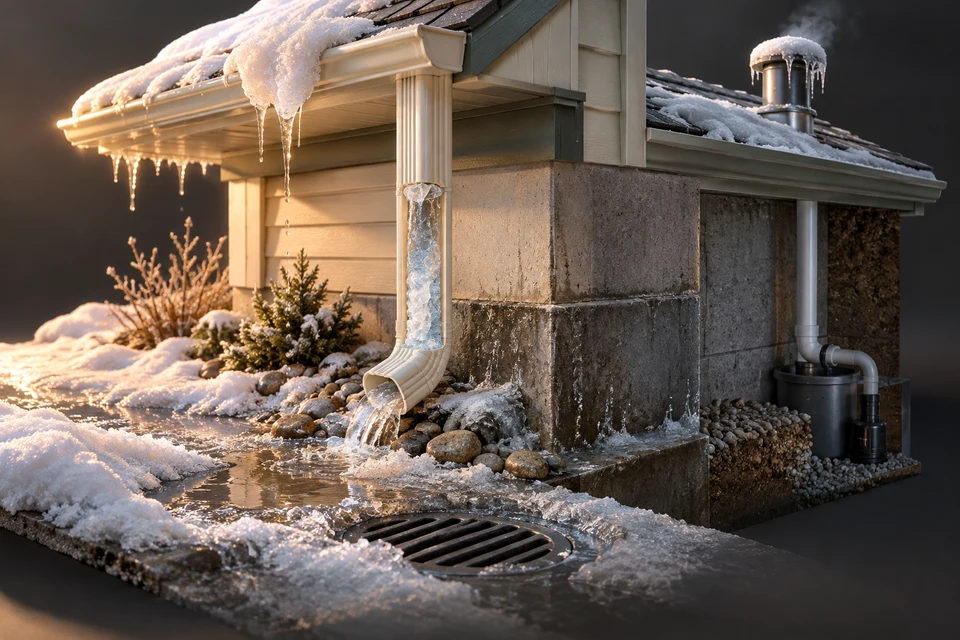
Then a chinook arrives. The City notes that chinook weather can turn inches of snow into puddles in hours, and if storm drains are clogged with ice or snow, water pools in the street. Meltwater that cannot soak into frozen ground runs to the foundation. When the cold returns, downspout extensions and sump discharge hoses freeze full.
- Keep water moving through a line that is known to be prone to freezing, and follow any Frozen Pipes Prevention Program letter the City sends about your water service.
- After each chinook, check the floor drain for water, smell and slow draining.
- Clear a path from the snowbank to the storm drain; report pooling over 90 to 120 minutes through 311.
- Read more: frozen sewer line in Calgary and chinooks and your drains.
03 /March and April: snowmelt
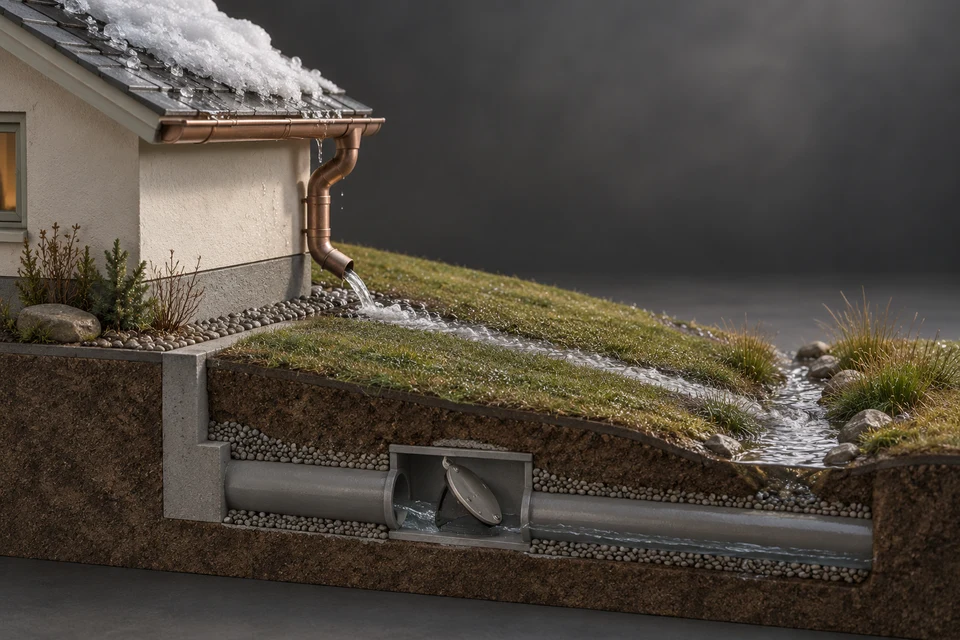
The whole winter's snow has to go somewhere, and on still-frozen ground it goes sideways toward basements. The City notes that as soil absorbs water, the water table rises and water works into basements through cracks, holes and joints. This is also the last calm before storm season, which makes it the right time to test the equipment that protects the basement.
- Point downspouts away from the house, toward the front or rear of the lot, at least six feet from the foundation, as the City recommends.
- Clear the storm drain grate near your house.
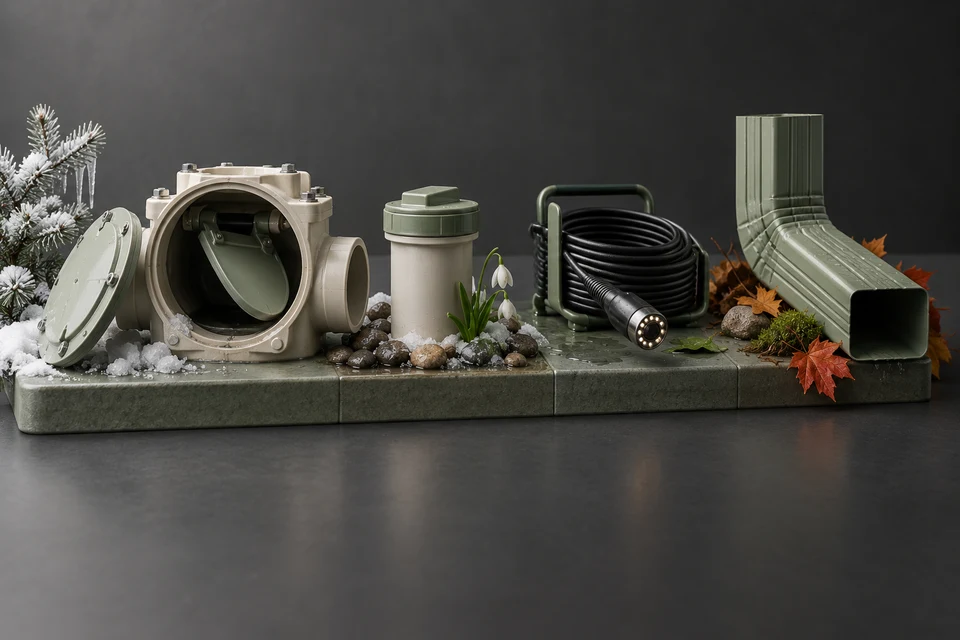
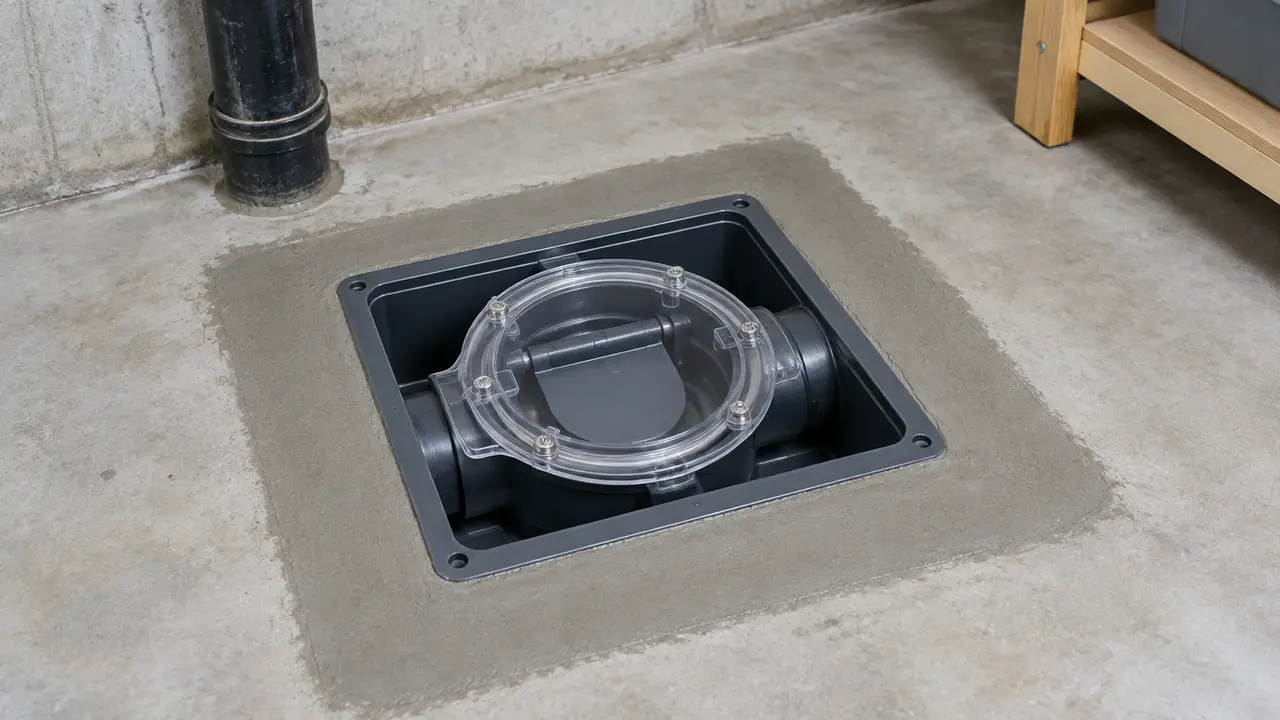
- Test the backwater valve: open the access, check the flap moves freely and the seat is clean.
- Test the sump: pour in a bucket, watch the float and pump, confirm the discharge outlet is clear and not aimed at a neighbour, lane, sidewalk or street.
If water appears in the basement now, work out whether it is seepage or sewage before calling anyone; water in a Calgary basement walks through the difference.
04 /May and June: storm season begins
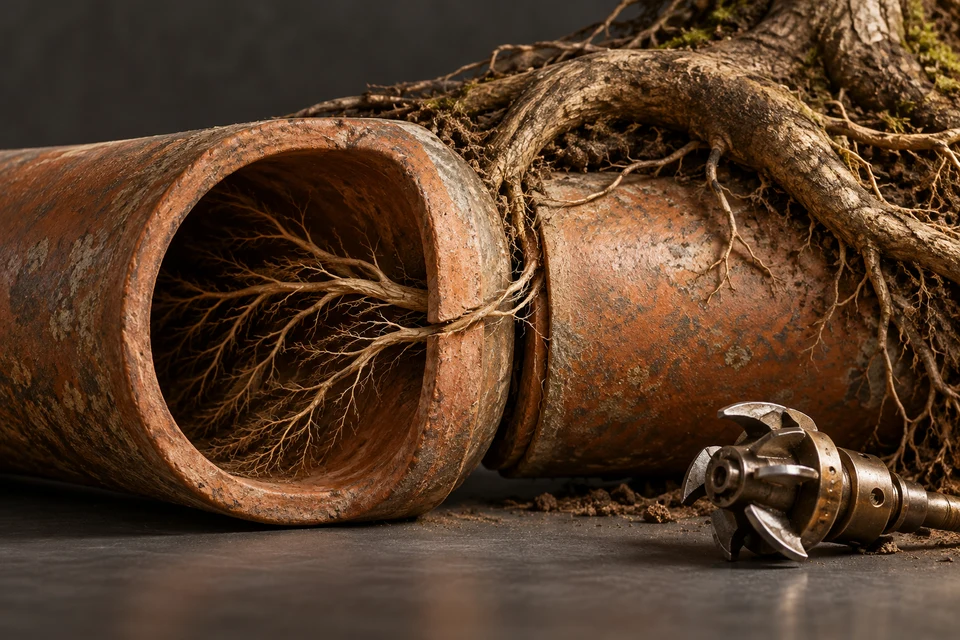
Rain gets heavier and trees leaf out, so two different sewer problems ramp up at once. Thunderstorms can load the sanitary system through cracked pipes and wrong connections, and roots in leaking joints start growing faster.
- Know exactly where your cleanout is and keep two metres clear around it; the City asks for that space if a crew attends a backup.
- If your line is on a root cycle, book a camera look now to see how much has regrown.
- Clean gutters after seed and catkin drop from poplars, maples and elms.
- Learn the storm-day routine in the storm season plan.
05 /July and August: peak storm and hail season
This is when backups cluster. Short, intense storms and hail can plug gutters and storm grates at the peak of the rain, and parts of the sanitary system can surcharge. If neighbours are backing up at the same time during heavy rain, that is a 311 call; check your backwater valve while you are at it.
- Keep the backwater valve serviced and stop water use during the heaviest rain, especially if the valve may be closed.
- This is the root cutting window for lines with trees nearby; see tree roots in a Calgary sewer line.
- It is also good dig season. If a camera has shown a defect that needs repair or replacement, summer ground is the easiest to work in and restore.
- After any storm backup, run the clues through storm surcharge or private blockage.
06 /September and October: before freeze-up
Fall is the window that pays for itself. Roots have finished their summer push, storms have eased, and the ground is still workable. Anything you leave until November is harder to reach and slower to fix.
- Book the main-line clean before freeze-up, particularly on older lines or lines with a history.
- Schedule any repair before frost gets into the ground.
- Mark the exterior cleanout, if you have one, with a tall stake before snow buries it, and replace a cracked cap.
- Clean gutters after leaf drop, and store or shorten downspout extensions that will freeze full.
07 /November and December: early winter and the holidays
Holiday cooking sends more grease toward kitchen drains just as cold weather makes it set faster. The City names fats, oils and grease as usually the main cause of sewage backups. Winter also changes the economics of repairs: excavation in frozen ground costs more, and restoration may be temporary until spring.
- Scrape and wipe grease out of pans; never pour it down the sink, even with hot water.
- Keep the cleanout accessible, not buried behind holiday storage.
- If guests are staying, remember that a full house works a partly restricted line harder.
- If a repair is needed now, ask for both a winter price and a spring price where flow can be maintained.
08 /How do home era and trees change your seasons?
The same season hits different houses differently. The City publishes the material and installed year of the City-owned portion of each residential sanitary service line, and HAUSE's analysis of that data shows how sharply materials change by era. It covers only the City's portion from the main to the property line; your private portion can be a different material and age.
| Structure class | Service lines | % TIL (generally clay tile) | % cast iron | % PVC | % relined (CIPP) |
|---|---|---|---|---|---|
| Inner City | 23,906 | 0.1 | 11.7 | 41.6 | 3.9 |
| 1950s | 46,833 | 23.1 | 18.5 | 22.7 | 3.8 |
| 1960s/1970s | 71,348 | 77.5 | 0.3 | 17.4 | 1.7 |
| 1980s/1990s | 70,484 | 9.1 | 0.0 | 87.6 | 0.2 |
| 2000s | 73,482 | 2.1 | 0.0 | 95.7 | 0.0 |
| 2010s | 26,485 | 0.0 | 0.0 | 98.4 | 0.0 |
Read it as a season-by-season risk map. Clay tile lines, dominant in the 1960s/1970s class and in communities such as Rundle (97.1 percent TIL), Marlborough Park (96.9) and Lake Bonavista (93.3), have joints where roots enter in summer and groundwater enters in melt and storm season. Cast iron, more common in the 1950s and Inner City classes and in communities such as Rosscarrock (56.6 percent), St. Andrews Heights (53.1) and Bowness (41.6), scales inside and holds holiday grease. Newer PVC lines are mostly about habits and backwater valve upkeep. Many pre-1950 records are coded OTHER, and TIL, TP, PLA and OTHER are codes the City does not define in its metadata.
Trees add a summer peak to any jointed line. A big poplar, willow, elm, ash or Manitoba maple near a clay tile service line is the combination that most often turns a July storm into a backup. The Calgary sewer season calendar adds a root cut in late spring or summer when you tell it there are big trees near the line, and a camera baseline for older homes. To see the figures for your own community, use CalgarySewers.ca.
09 /Who do you call in each season?
The answer does not change with the weather, even if the problems do. The City's published split puts the sewer pipe from the main to the property line in City ownership and the pipe from the property line to the house in the homeowner's.
Calgary 311 takes requests 24 hours a day by phone, the Calgary 311 app and online; from outside the city, call 403-268-CITY (2489). When the case is unclear, the City or Owner triage tool sorts it, and when you need local help, request a quote.
FAQQuestions people ask
When do most sewer backups happen in Calgary?
They cluster in heavy-rain periods in late spring and summer, and after fast melts. Dry-weather backups from roots, grease and wipes happen year-round, with roots peaking in summer and grease around the holidays.
When is the best time to replace a sewer line in Calgary?
Summer and early fall, when the ground is workable and restoration can be completed. Winter work is possible but slower and more expensive, and restoration may be temporary until spring.
Do chinooks cause sewer problems?
They cause drainage problems more than sewer blockages: iced storm drains, meltwater at foundations, frozen downspouts and sump lines. Check the floor drain after each chinook, because it is where both seepage and sewer trouble show first.
Why do older Calgary neighbourhoods have more sewer problems?
Older service lines are more often jointed clay tile or cast iron, which admit roots or scale inside, and older neighbourhoods have more mature trees. City data on the City-owned portion shows clay tile concentrated in 1960s and 1970s installs.
Is the City's service line data about my private pipe?
No. It covers only the City-owned portion from the main to the property line. Your private portion can be a different material and age; a camera inspection is how you find out.