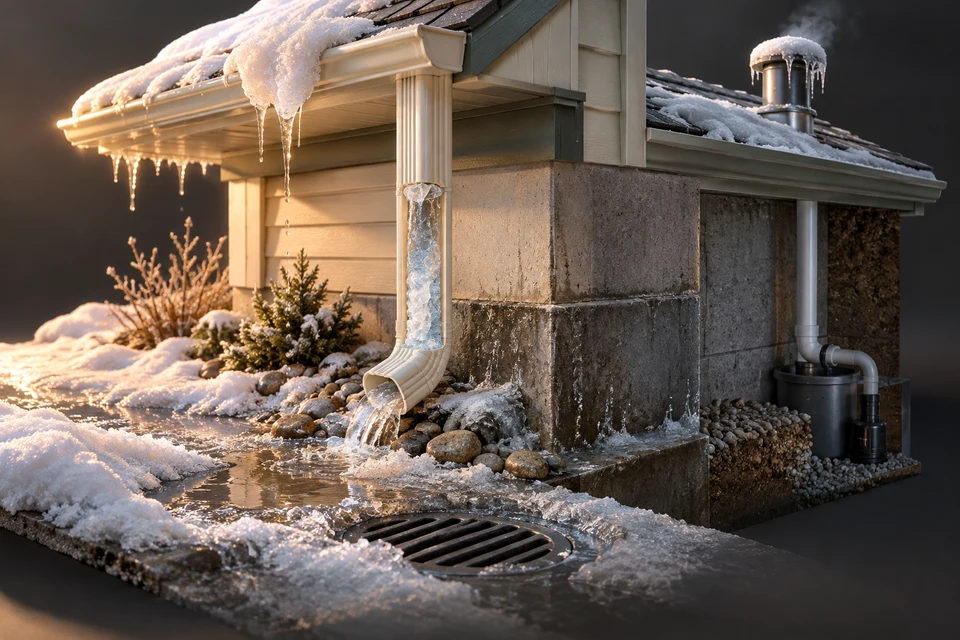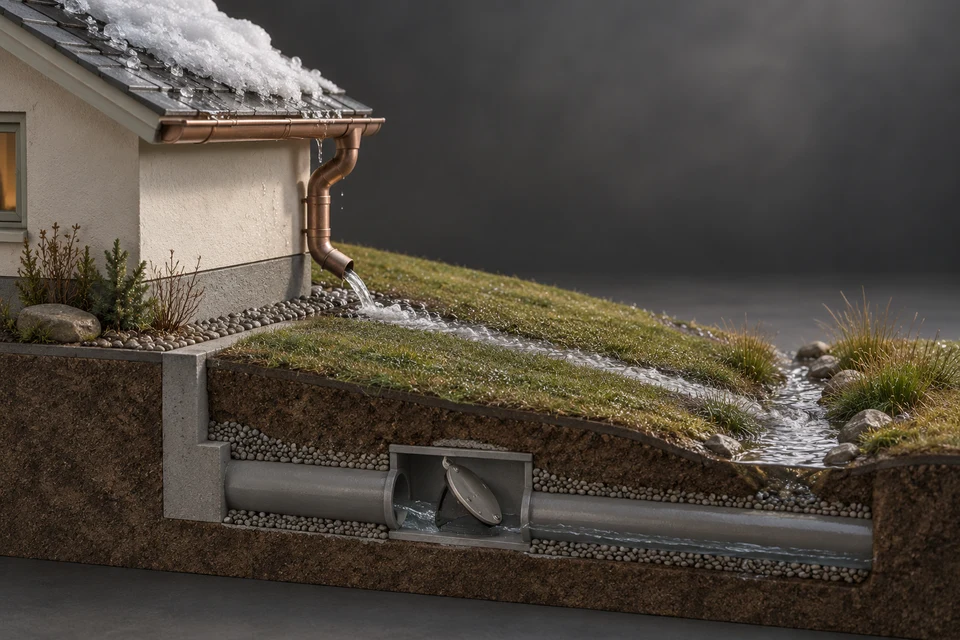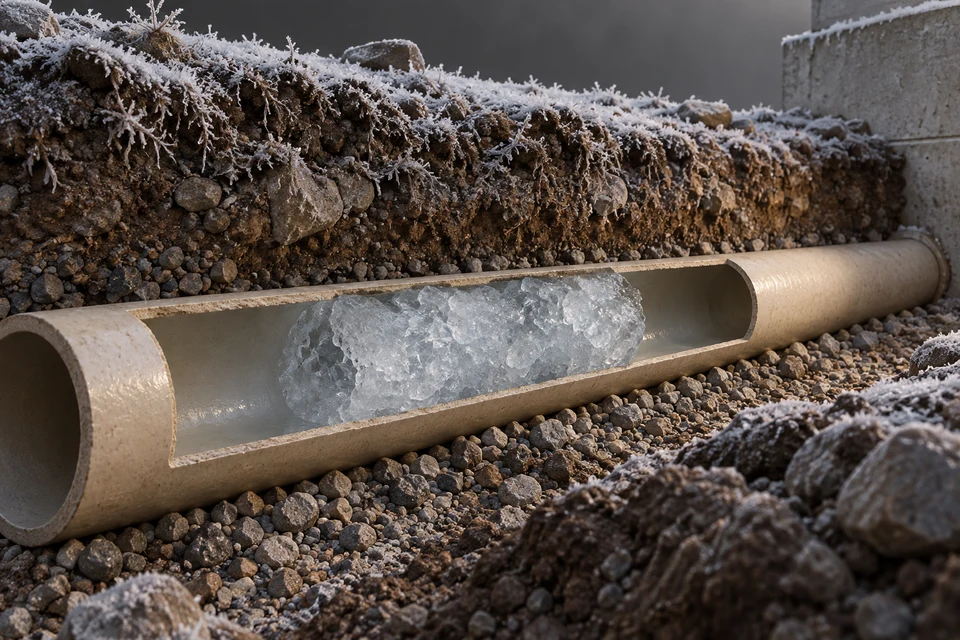
A buried Calgary sewer line rarely freezes, but shallow sections under cleared driveways, exterior cleanout risers, pipes in unheated spaces, and sags in low-flow homes can ice up in long cold snaps. Suspect ice when drains slow then stop during deep cold with no other history. Stop water use and call a drain contractor with hot-water jetting or steam; call 311 if the City side is involved.
- Freeze-ups happen at the weak spots: shallow depth, cleared snow over the line, unheated spaces, standing water in a sag, and very low flow.
- Timing is the tell: a line that was fine all fall and stops in the third week of a cold snap is probably ice.
- Professional thawing uses hot water or steam through the cleanout; never use a torch on plastic pipe or pour chemicals on ice.
- The City's Frozen Pipes Prevention Program is about water services, not sewers, but its running-tap instruction also keeps some warm flow in your drain.
- Snow is insulation. Leaving snow on the lawn over the line helps; clearing a driveway over it drives frost deeper.
01 /Can a sewer line actually freeze in Calgary?
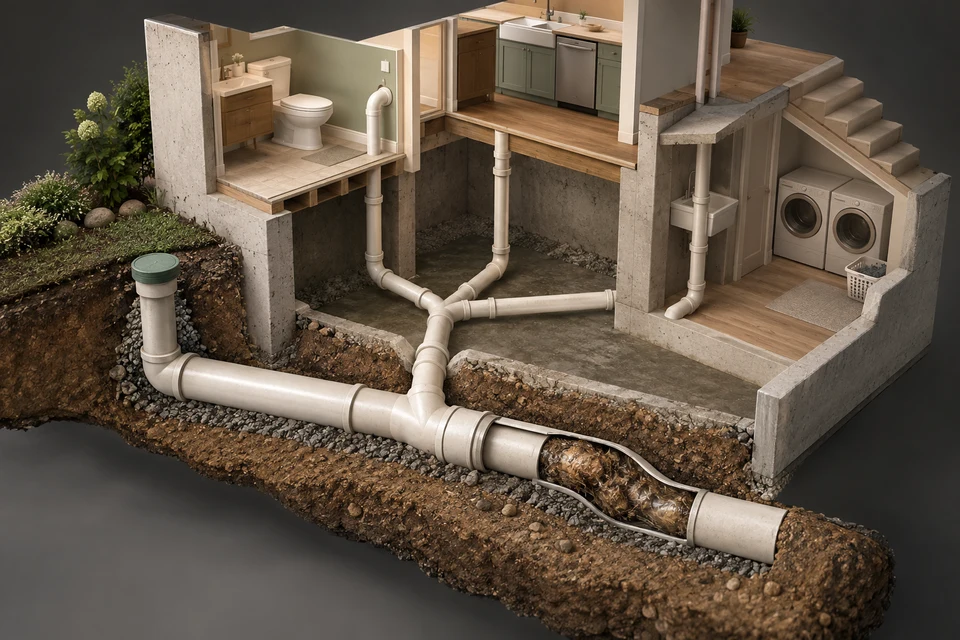
Yes, but only in particular places. Sanitary service lines in Calgary are generally laid deep enough to sit below normal frost, and wastewater leaving a heated house carries warmth with it. A line freezes when those protections fail: where the pipe is shallower than the rest, where frost is driven deeper than normal, where water sits still long enough to lose its heat, or where flow nearly stops.
| Weak spot | Why it freezes | Typical sign |
|---|---|---|
| Shallow section under a driveway or walk | Snow cleared off the surface lets frost reach deeper | Slow drains, then a full stop, deep in a cold snap |
| Exterior cleanout riser | Short vertical pipe close to the surface, often with a loose cap | Riser cap lifted or cracked; ice visible inside |
| Drains in an unheated garage, crawlspace or addition | Pipe outside the heated envelope | Garage floor drain or addition fixtures stop first |
| A sag holding water | Standing water loses heat between uses | Line was slow before winter; freezes at the same spot |
| Low-flow or vacant homes | Little warm water passing through | Vacation return to a stopped line |
| Roof vent stack | Frost builds inside the vent in extreme cold | Gurgling, slow drains, sewer smell; not ice in the line itself |
02 /How can you tell ice from an ordinary clog?
Timing and history. A clog usually gives weeks of warning, affects the house regardless of weather, and comes with a known habit such as grease or wipes. Ice usually appears after an extended stretch of hard cold, in a line with no recent trouble, often starting at a part of the house near an outside wall or garage.
- Has it been well below freezing for a week or more?
- Was the house empty or lightly used for a few days?
- Is the driveway or front walk over the line kept bare of snow?
- Is the first affected drain in an unheated or partly heated space?
- Did the drains run normally right up until the cold snap?
Several yes answers point to ice. A camera settles it: ice looks like a glassy or white plug with clear water or frost around it, where a clog looks like paper, grease or roots.
03 /Is this the City's frozen pipes program?
No, that program is about water service lines, the pipe bringing drinking water into the house. The City's Frozen Pipes Prevention Program monitors frost levels and identifies homes and businesses at risk of frozen water services, and sends letters between December 1 and March 31. Homes that receive one are asked to keep one inside tap running 24 hours a day, at about the width of a pencil for residential properties, until a follow-up letter says they can stop. The City notes that at-risk homes are typically in older communities.
It is worth knowing about for two reasons. First, if you get a letter, follow it: a frozen water service is a bigger problem than a frozen drain. Second, that running tap also sends a small, steady flow of water through your drain and service line, which helps a line that is prone to icing. If water stops flowing into the house, the City's advice is to turn off the main shut-off valve and call 311 to help triage the issue.
For a frozen sewer, the ownership split is the same as for any sewer problem: the City's portion runs from the main to the property line, and the homeowner's from the property line to the house. A freeze-up on your side is a job for a drain contractor. Should the contractor find the ice beyond your property line, give 311 the distance from the cleanout.
04 /How do professionals thaw a frozen sewer line?
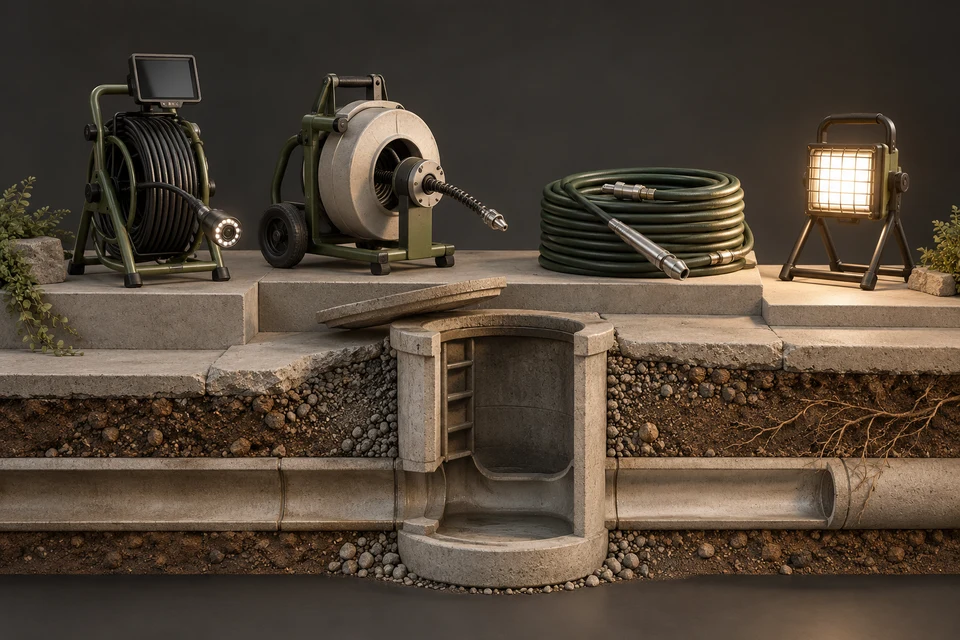
They bring heat to the ice through the pipe itself, from the cleanout. The common methods are a jetter supplying hot water through a nozzle that works its way into the ice, a steam unit that feeds a hose into the line, or a cable with hot water run alongside. Once flow returns, a camera should check for the cause, such as a sag, and for any damage.
- Access
Through the main cleanout, or an exterior cleanout if it is the frozen section and safe to open.
- Thaw
Hot water or steam advanced into the ice slowly, with meltwater allowed to drain back to a controlled point.
- Clear
A flush or cable run to the main once the plug is open, so slush does not refreeze further along.
- Inspect
A camera run to find the cold spot: shallow depth, a sag, a cracked riser.
- Prevent
A plan for the rest of the winter, such as insulation, restored snow cover or a heat source in an unheated space.
As a 2026 planning estimate, hot-water jetting or thawing of a frozen line commonly quotes around $500 to $1,300 in Calgary, with deep cold, long frozen sections and after-hours timing pushing toward the top.
05 /What should you not do?
It is also a mistake to leave a frozen line and hope for a chinook. A warm spell may open it, but meltwater and anything flushed in the meantime can back up into the basement as the plug releases unevenly. Stop water use, call a contractor, and let the ice out under control.
06 /How do you keep a Calgary sewer line from freezing?
Protect the weak spot you have, and keep some warmth moving through the pipe.
- Leave snow on the lawn over the service line. It insulates the ground; bare, compacted areas freeze deeper.
- If a driveway or walk over the line is always cleared, ask a contractor whether that section is shallow and whether insulation board over the line during a future repair is appropriate.
- Check the exterior cleanout cap in fall. Replace a cracked cap or riser, and mark its location before snow buries it.
- Keep drains in garages and additions within the heated envelope, or protected, before a deep cold snap.
- In a vacant or lightly used house, arrange for someone to run water daily, or have the plumbing properly winterized.
- If you received a Frozen Pipes Prevention Program letter, follow the running-tap instruction until the City says you can stop.
- Fix a known sag. A belly that holds water is a winter freeze point and a summer clog point.
Chinooks add their own twist: thaw, meltwater, then hard refreeze. That cycle, and what it does to vents, downspouts and storm drains, is covered in chinooks and your drains. For the whole winter plan, see the Calgary sewer season calendar. If a line is frozen now, request a quote and mention the cold-snap timing.
FAQQuestions people ask
How do I know if my sewer line is frozen?
Drains slow and then stop during a long cold snap, often starting with a drain in an unheated area or near an outside wall, in a line with no recent clog history. A camera confirms ice.
If I just wait, will the ice in my sewer line melt by itself?
It may during a chinook, but it can release unevenly and back up. Stop water use and have it thawed from the cleanout with hot water or steam, then camera the line to find the cold spot.
Does the City of Calgary thaw frozen sewer lines?
The City's frozen pipes program is for water services. For a frozen sewer on your side of the property line, hire a drain contractor. If ice is found on the City side, report it to 311 with the distance from your cleanout.
Can I use salt or antifreeze to thaw a sewer line?
No. They do not reach the ice in useful amounts, and they add chemicals to a line someone else may have to open. Use a professional thaw.
Why does my toilet gurgle in extreme cold?
Often a frosted roof vent rather than a frozen sewer. Frost narrows the vent opening, so draining water pulls air through the nearest trap. It usually clears as temperatures rise.
NETWORKGo deeper across the HAUSE Sewer network
How to clean outside drain pipes: downspouts, yard drains and weeping tile
How to clean outside drain pipes in Canada: downspout leaders, yard drains, weeping tile, sump lines and the sewer cleanout, plus thawing frozen lines.
SewerJetting.caHot water jetting and frozen sewer lines in a Canadian winter
Frozen sewer line in winter? How hot water jetting and steam thawing work, why sewer lines freeze, what not to do, and how to prevent a repeat.
DrainAugering.caHow to snake a drain from outside the house
How to snake a drain from outside: using an exterior cleanout, why weeping tile and septic drain fields are different, and what to do when the line is frozen.