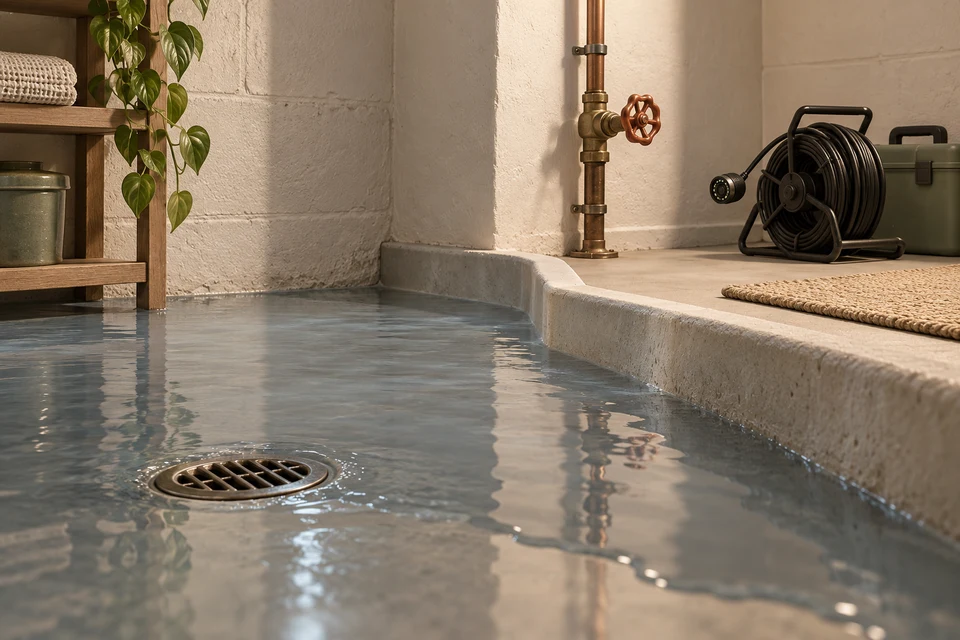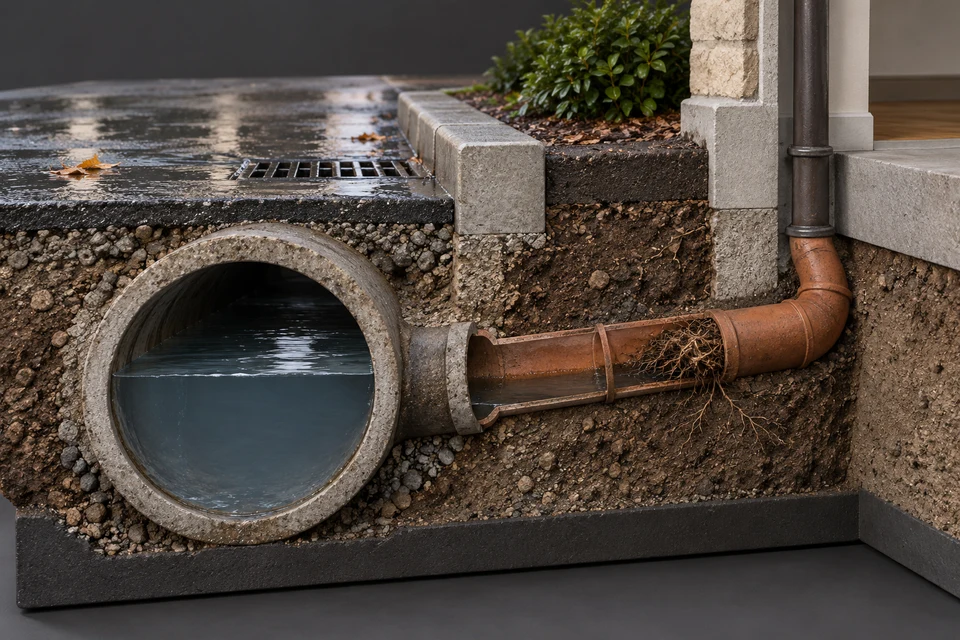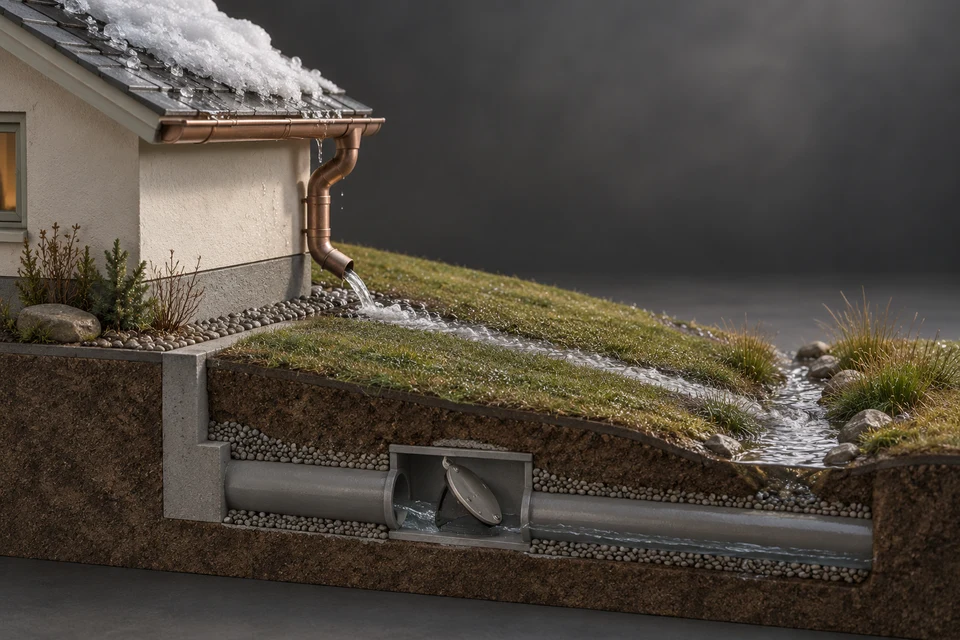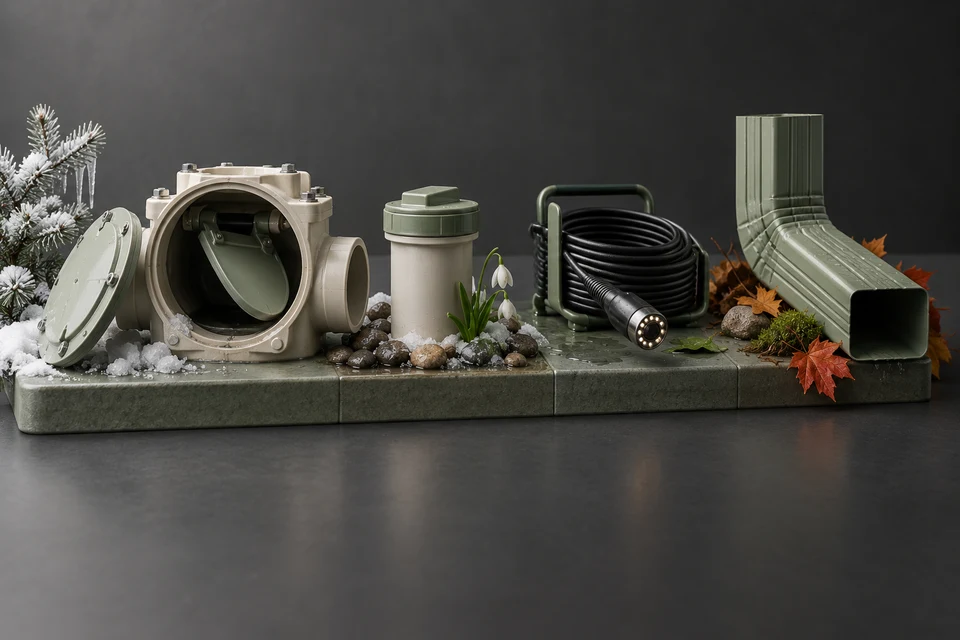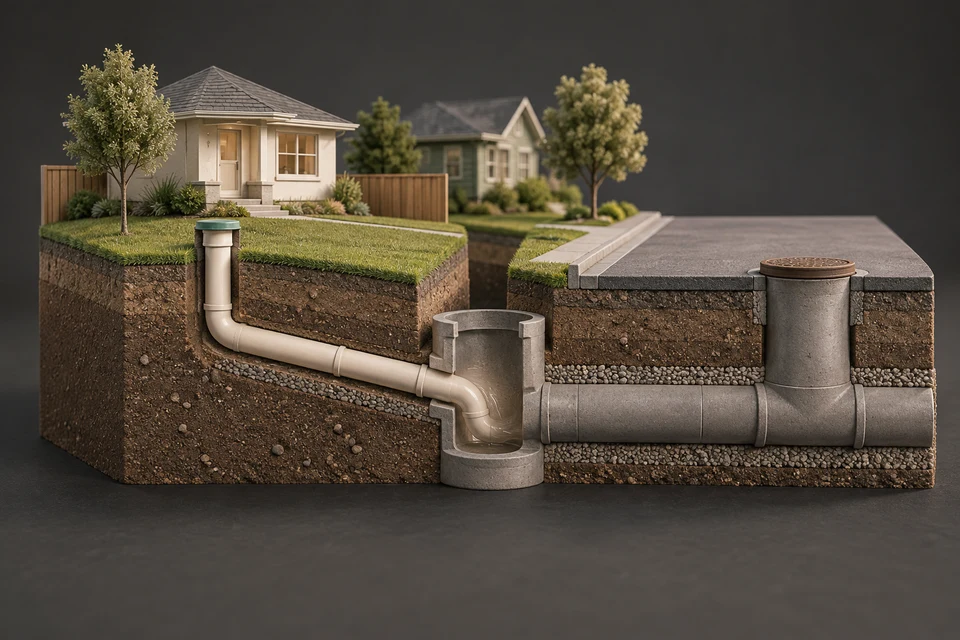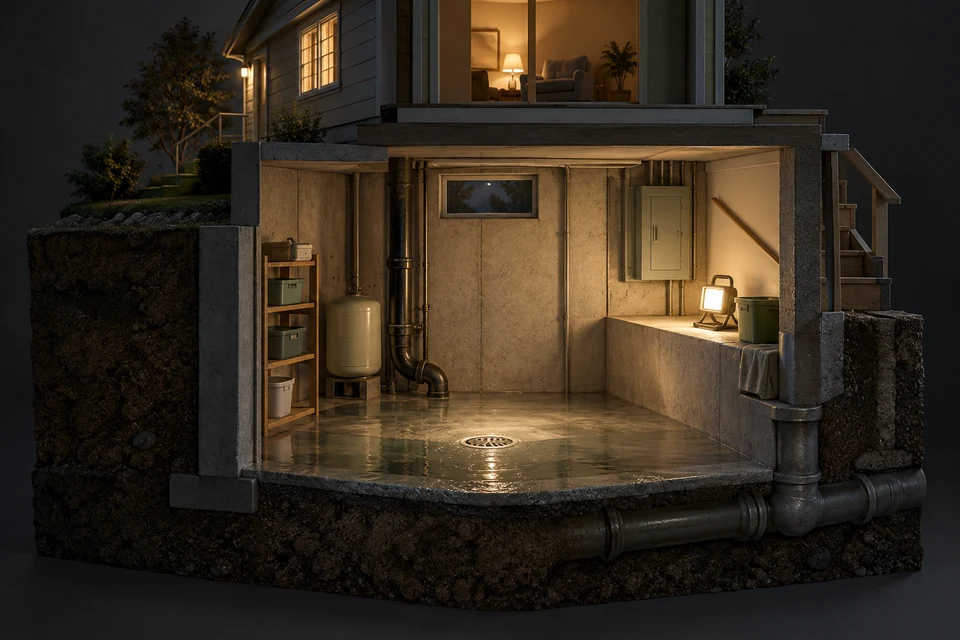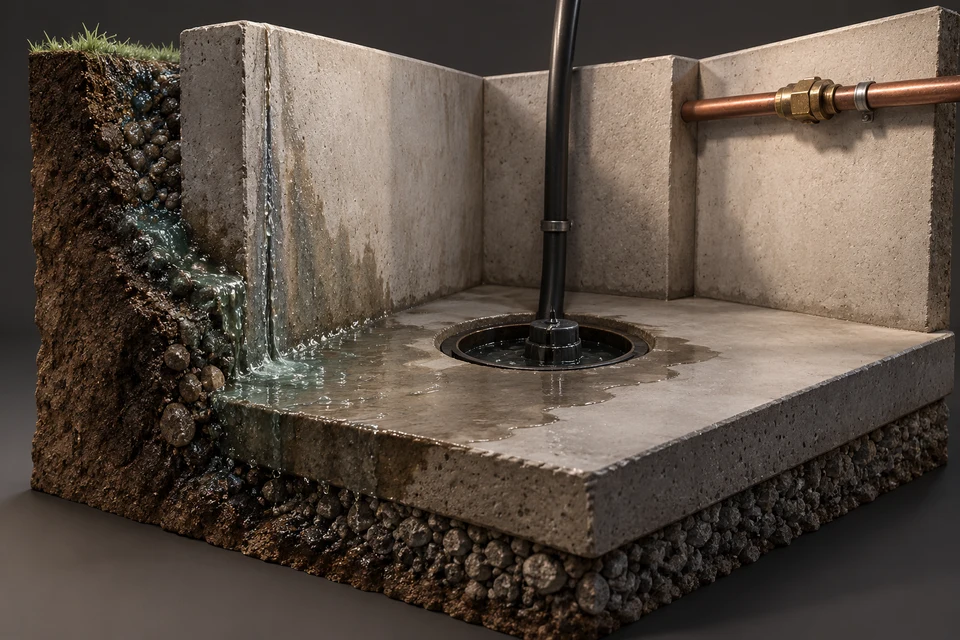
Look at where the water enters. Water coming up through a floor drain, toilet or shower is a sewer problem. Water along the wall-floor joint, through cracks or at a window well is seepage or overland flow. Water from above or from a pipe is a supply leak. The City of Calgary treats basement flooding and seepage as the homeowner's responsibility, and triages sewer backups through 311.
- Where the water enters tells you more than how much there is.
- Sewage from a drain is a contamination problem first and a water problem second; clean up accordingly.
- The City says basement flooding is the homeowner's responsibility; it will assess but does not pump water out of basements.
- Spring melt and heavy rain raise groundwater around Calgary foundations, which is why seepage peaks in the same weeks as storm backups.
- Insurance usually treats sewer backup, overland water and groundwater differently, so identify the source before you file.
01 /How can you tell sewage from seepage in the first minute?
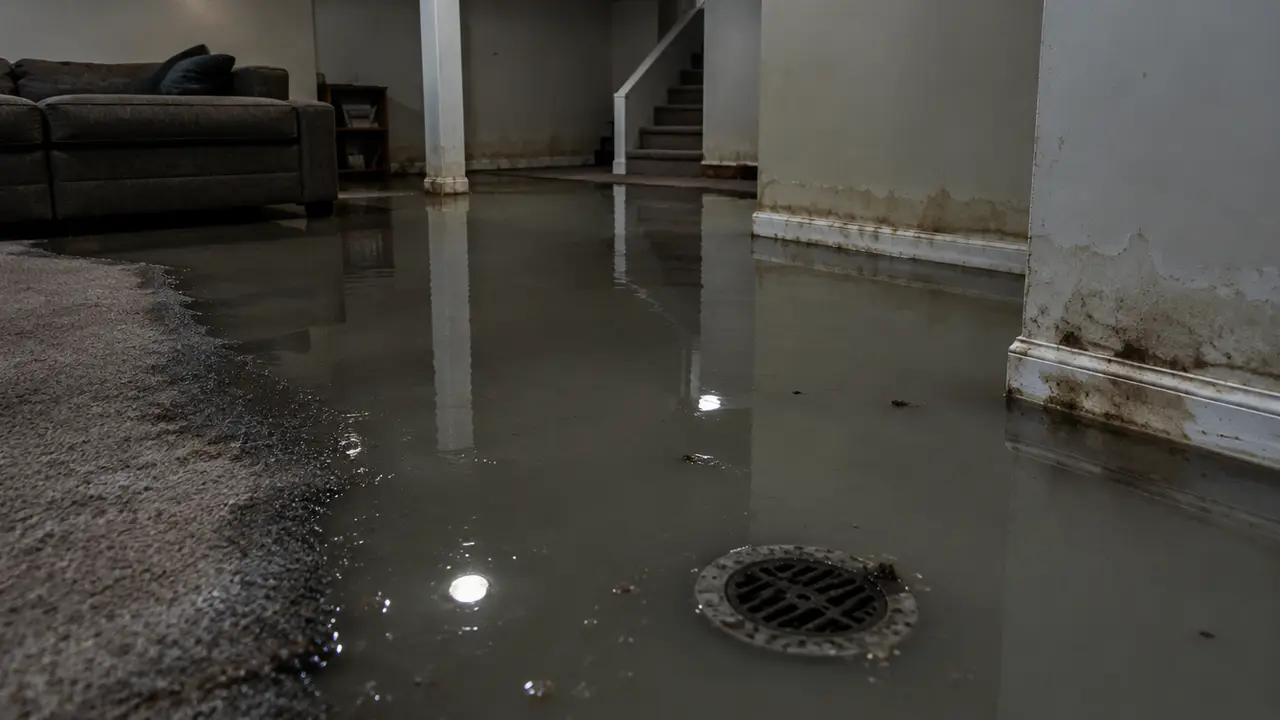
Find the entry point. Sewage arrives through the plumbing: it comes up from a floor drain, a basement toilet, a shower or a laundry standpipe, often with toilet paper or grey solids and a strong sewer smell. Seepage arrives through the building: it appears along the joint where the wall meets the floor, at a crack, around a pipe penetration or under a window well, and it is usually clear or muddy rather than grey.
Two more quick checks help. First, is the water spreading outward from a drain, or flowing toward the drain from a wall? Water that runs into a floor drain is being removed by the plumbing, which is working. Second, does anything in the house make it worse? A backup grows when someone flushes; seepage does not care what you do inside.
02 /Which source is it? A side-by-side guide
| Source | Where it enters | What it looks and smells like | Typical timing | First call |
|---|---|---|---|---|
| Sewer backup (private line) | Floor drain, basement toilet, shower | Grey, solids, strong sewer smell | When fixtures are used | Stop water use; 311 triage or a drain contractor |
| Sewer surcharge (City main) | Floor drain and lowest fixtures | Grey, sewer smell, may rise with water off | Heavy rain, fast melt | 311 |
| Groundwater seepage | Wall-floor joint, cracks, penetrations | Clear or muddy, earthy smell | Spring melt, prolonged rain | Waterproofing or foundation contractor; 311 to report |
| Overland flow | Window wells, doors, low walls | Muddy, debris | Intense storms, blocked grading | Clear the flow path; insurer |
| Sump failure | Sump pit overflows, then seepage | Clear to muddy | Storms, power outages, frozen discharge | Restore the pump; plumber |
| Supply or appliance leak | Ceiling, wall, water heater, washer | Clean water, may be warm | Any time | Shut off the main valve; plumber |
Sometimes two sources arrive together. A storm can raise groundwater around the foundation and surcharge the sanitary main in the same hour. Deal with the sewage first, because it carries the health risk, then track the clean water.
03 /What does the City of Calgary say about basement flooding and seepage?
The City's position is that basement flooding is the responsibility of the homeowner. The City will assess the flooding situation but does not pump water out of basements. Seepage can be reported through 311 by phone or online, which is worth doing when several homes on a street see it at once, but the water in your basement is yours to deal with.
The City also sets out rules that matter for seepage prevention:
- Maintaining a sump pump is the homeowner's responsibility, and basement seepage caused by a sump pump malfunction is also the homeowner's responsibility.
- Sump discharge must not go onto neighbouring properties, lanes, sidewalks, boulevards or streets, or back into foundation drains or weeping tile. The City cites its Community Standards Bylaw for these restrictions.
- Downspouts should point away from your house and your neighbours, toward the front or rear of the property, at least six feet (about 1.8 m) from the foundation.
- Landscaping should slope so water drains away from the foundation.
Sewage backups are handled differently: 311 triages them and a City crew may attend to find whether the blockage is on the private or public side. The step-by-step version is in what to do in a Calgary sewer backup.
04 /Why does seepage peak in Calgary in spring?
Snowmelt and spring rain soak the ground around foundations while the deeper soil may still be frozen, so the water has fewer places to go. The City notes that as soil absorbs water, the level of the underground water table rises, and water then works into basements through cracks, holes and joints.
Calgary's soils make this worse on many lots. Large parts of Calgary are built on slow-draining, clay-heavy glacial deposits, with sand, gravel and cobble lenses in places that can carry water sideways toward a foundation. Backfill around a basement is looser than the undisturbed ground beside it, so meltwater collects in that zone and presses against the walls. Chinook thaws in late winter can deliver a burst of meltwater onto still-frozen ground weeks before the real spring melt.
The fixes for seepage are mostly outside the house: downspout extensions, grading that falls away from the walls, clear window wells, a working sump where one exists, and repairs to foundation cracks. None of these is a sewer job, but they belong on the same spring checklist, which is why the Calgary sewer season calendar puts them together.
05 /What if there is a sewer smell but no water?
A sewer smell in a dry basement usually means a dry trap, not a backup. Floor drains, basement showers that are rarely used and laundry standpipes all rely on a water seal in their trap to block sewer gas. In a dry Calgary winter with the furnace running, that water evaporates. Pour a few litres of water into each basement drain every month or two. The City's own instructions for its sanitary lateral lining work ask residents to pour four litres of water into every floor drain, laundry tub, bathtub and shower drain, which shows how basic the trap seal is to keeping sewer air where it belongs.
If the smell persists with full traps, look for a loose cleanout cap, a cracked cast iron fitting, a failed wax ring at a basement toilet, or a vent problem. A smell that comes with gurgling after a cold snap can mean a frosted roof vent; see chinooks and your drains.
06 /Does insurance treat these sources differently?
Usually, yes. Canadian home policies commonly separate water that enters through the sewer (sewer backup), water that flows over the ground and in through openings (overland water), groundwater, and sudden leaks from plumbing inside the house. Some are covered by the base policy, some only by optional endorsements, and some, such as gradual seepage, are often excluded. Your policy wording, not the general pattern, decides.
- Photograph the entry point, not just the water. It is the evidence of source.
- Write down the weather and the time the water started.
- Keep the 311 reference number if you reported a backup or street flooding.
- Ask your broker which coverages you actually hold before the next storm season, not during a claim.
The Insurance Bureau of Canada publishes consumer information on water damage coverage types. For a sewage backup, a restoration company working under your insurer's approval is normal; for seepage, the insurer may send an adjuster before anything is removed.
07 /What should you do next?
Match the next step to the source. For sewage from a drain, stop water use and follow the backup sequence, then book a camera inspection once the line is clear so you know why it happened. For seepage, dry the area quickly, then fix the outside drainage before the next melt. For a supply leak, shut off the main water valve and call a plumber.
If you are unsure whether a backup is yours or the City's, the City or Owner triage tool sorts the clues, and storm surcharge or private blockage explains the tests. For help from a local contractor, request a quote and describe where the water came in.
FAQQuestions people ask
Will the City of Calgary pump out my flooded basement?
No. The City treats basement flooding as the owner's responsibility and does not pump basements out. It will assess the situation, and sewer backups are triaged through 311.
Why is water coming up through my floor drain when it has not rained?
In dry weather, water from a floor drain usually means a blockage downstream in your building drain or service line. Stop using water and follow the backup steps; if water rises with everything off, call 311.
Can my sump pump discharge into the floor drain?
The City says sump discharge must not go into foundation drains or weeping tile, onto neighbouring properties, or onto lanes, sidewalks, boulevards or streets. Whether any connection to the sanitary system is allowed is a question for 311 before you change anything.
How far should downspouts extend in Calgary?
The City recommends pointing downspouts away from your house and neighbours, toward the front or rear of the property, and at least six feet (about 1.8 m) from the foundation.
Is a musty smell the same as a sewer smell?
No. A musty or earthy smell points to damp materials and possibly mould, often from seepage. A sharp, rotten-egg sewer smell points to a dry trap, a loose cleanout or a plumbing leak.
NETWORKGo deeper across the HAUSE Sewer network
Sewer backup insurance in Canada: coverage, deductibles, condos and claims
Sewer backup insurance in Canada explained: what the endorsement covers, deductibles and limits, flood vs backup, condos, septic, and whether it is worth it.
SewerRoots.caDoes home insurance cover tree roots in a sewer line?
Does home insurance cover tree roots in a sewer line in Canada? Why root cutting and pipe repair are usually excluded, and what backup endorsements pay.
SewerQuotes.comSewer backup insurance: what your home policy does and does not pay
Sewer backup insurance in Canada: sewer backup vs overland water endorsements, exclusions, deductibles, and why pipe repair is rarely covered.