This glossary defines the words Calgary homeowners run into when a drain backs up, a line freezes or a contractor quotes a repair: City terms such as 311 triage, the property line split and the TIL code; plumbing terms such as cleanout, trap and backwater valve; and hiring terms such as City Qualified Trade, WCB clearance and prepaid contracting licence.
- City terms describe who owns and handles what; plumbing terms describe the pipe; hiring terms describe who may do the work.
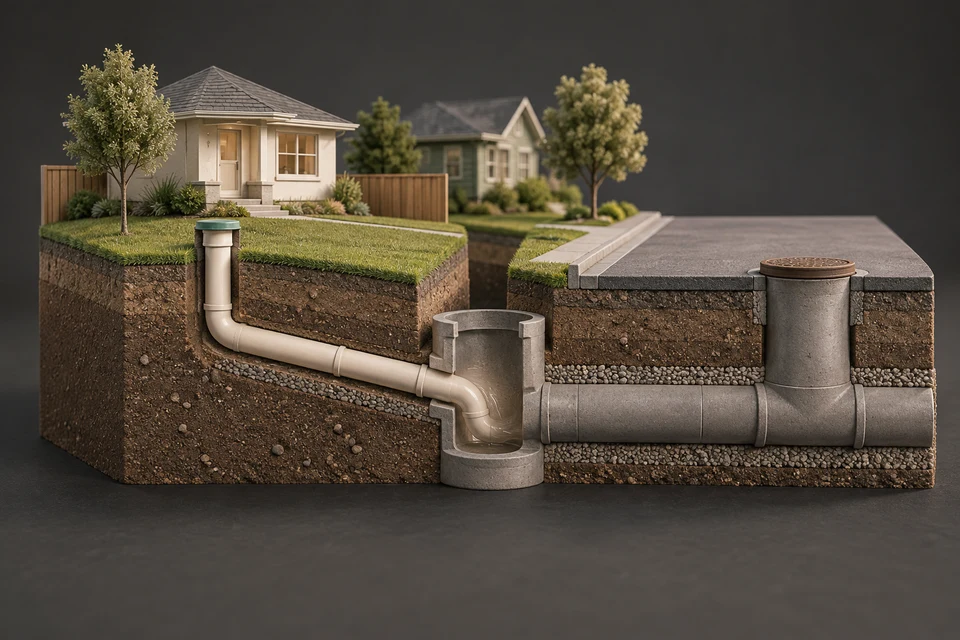
- The City's published split: main to property line is the City's; property line to house is the homeowner's.
- TIL, TP, PLA and OTHER are City material codes that the City's metadata does not define; TIL is generally read as clay tile.
01 /How to use this glossary
Terms are grouped loosely by where you meet them: the City, the pipe, the season and the contractor. Where a definition comes from a City of Calgary or Government of Alberta page, it paraphrases that source; confirm anything specific to your address through 311. For step-by-step help, start with what to do in a Calgary sewer backup or the City or Owner triage tool.
A–ZTerms
- 311
- The City of Calgary's service request line, available 24 hours a day by phone, the Calgary 311 app and online. It triages sewage backups and takes reports about storm drains, public trees and City-side sewer problems. From outside Calgary, call 403-268-CITY (2489).
- 311 triage
- The short interview a 311 agent runs when you report a backup, to sort a plumbing problem inside your house from one that might involve City pipes.
- ABS
- Black plastic drain pipe (acrylonitrile butadiene styrene) common inside Canadian houses built from roughly the 1970s on, joined with solvent cement.
- The extra a drain contractor charges for evenings, weekends, holidays and overnight calls, either as a flat amount added to the call or a multiple of the daytime rate.
- Backflow prevention device
- The City of Calgary's general term for devices, such as a backwater valve, that stop sewage flowing back into a building. Installing one takes a plumbing permit in Calgary.
- Backwater valve
- A one-way valve on the building drain whose flap or gate swings shut if sewage starts running back from the main, shielding basement fixtures. When shut, it also holds your own wastewater in, so stop using water until it reopens.
- Basement flooding
- Water entering a basement from any source. The City of Calgary treats basement flooding as the homeowner's responsibility; it assesses but does not pump water out of basements.
- Belly (sag)
- A low section of pipe where the grade dips, so water and solids sit instead of draining. A common cause of repeat clogs and a winter freeze point.
- Bonnybrook, Fish Creek and Pine Creek
- The City of Calgary's three wastewater treatment plants. Treated water is released to the Bow River.
- Boulevard
- The strip of public land between the street or sidewalk and private property, often planted with City trees. Pipe under it is usually the City's portion of the service line.
- Branch backwater valve
- A backwater valve on the pipe serving one fixture group, such as a basement floor drain or bathroom, rather than on the whole building drain. The City of Calgary says branch valves do not require annual servicing.
- Building drain
- The horizontal pipe under or along the basement floor that collects all the house's drains and carries them to the service line.
- Business licence (City of Calgary)
- A licence the City requires for contractor businesses, including plumbers, excavation services and handyman services. The City's Licensed Trade Contractor search lets you check one.
- Cast iron (CI)
- Heavy metal drain and sewer pipe common in older Calgary houses and on the City side of some older services. It scales inside over time. CI is the City's material code for it.
- Chargeback (condominium)
- A charge a condominium corporation passes to an owner for costs caused by the owner, a tenant or a guest, where the bylaws allow it. Under 2026 Alberta rules it is capped at the lesser of the actual costs or the corporation's deductible, subject to a provincial ceiling; see the condo backup guide for details.
- Chinook
- The warm, dry wind off the Rockies that can lift a Calgary winter day above freezing within hours, melting snow quickly before the cold comes back. It drives freeze–thaw drainage problems.
- CIPP (cured-in-place pipe)
- Relining an old pipe from the inside: a flexible tube soaked in resin is pushed into the existing pipe and cured hard, leaving a new jointless pipe inside the old one with little or no digging. In the City's service line data, the CIPP date is usually the relining date.
- City Qualified Trade (CQT)
- City of Calgary registration that, together with a contractor business licence, lets a business apply for trade permits like plumbing permits.
- Clay tile (TIL)
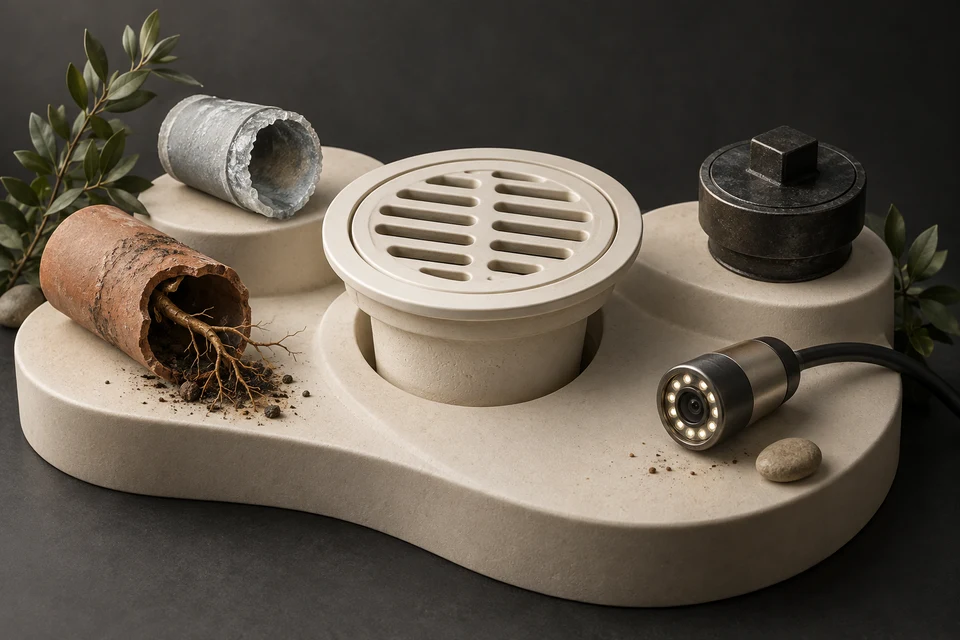
- Jointed vitrified clay sewer pipe. The City's TIL code is not defined in its metadata but is generally read as clay tile; in HAUSE's analysis it covers about one in five City-side service lines, mostly installed in the 1960s and 1970s.
- Cleanout
- A capped access fitting on the drain system, usually in the basement or lowest level near where the water service enters, that lets a City crew or contractor run a snake, jetter or camera. The City asks for about two metres of clear space around it on backup calls.
- Closet auger
- A short cable tool with a protected bend designed to clear toilets without scratching the porcelain.
- Common property
- The parts of a condominium outside the units, as shown on the registered plan, such as shared stacks, the building drain and lines under common land. The corporation maintains it, subject to the bylaws.
- Compulsory certification trade
- An Alberta trade whose regulated tasks are limited to certified journeypersons, people with a recognized trade certificate, and registered apprentices working under supervision. Plumbing is one of these trades.
- Condominium Dispute Resolution Tribunal
- An Alberta body that the provincial government says began operating on April 1, 2026, to resolve disputes between condominium owners and boards as an alternative to court.
- Customer Service Report (CSR)
- The written record a City of Calgary Water Services crew gives the homeowner after a sewer backup visit. It notes what the crew found and gives information on next steps; keep it with the 311 reference number.
- Downspout extension
- A pipe or trough that carries roof water away from the foundation. The City recommends discharging at least six feet from the foundation, toward the front or rear of the property.
- Dry trap
- A trap whose water seal has evaporated, letting sewer gas into the house. Common in rarely used floor drains during dry winters; fixed by pouring in water.
- Dutch elm disease
- A fungal disease spread by elm bark beetles that Alberta works to keep out. The City reminds residents of the provincial elm pruning ban from April 1 to September 30.
- Floor drain
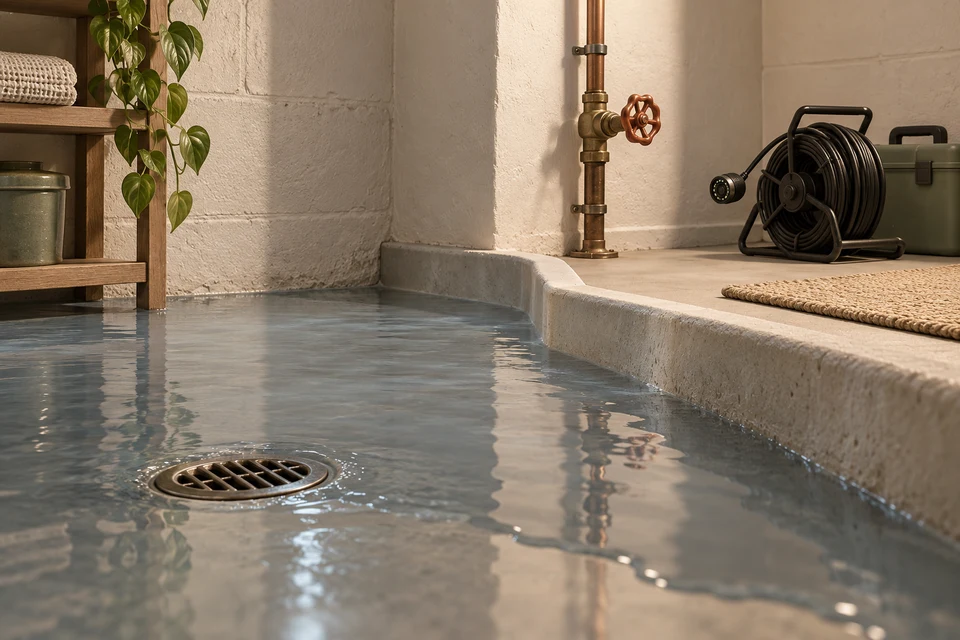
- The basement drain in the floor, usually the lowest opening on the drain system and therefore where backups appear first.
- FOG
- Fats, oils and grease. The City of Calgary names their accumulation as usually the main cause of sewage backups.
- Footage counter
- The distance readout on a sewer camera, measured along the pipe from the access point. It locates defects relative to the cleanout, not in a straight line across the yard.
- Frozen Pipes Prevention Program
- A City of Calgary program that identifies homes at risk of frozen water services and sends letters between December 1 and March 31 asking residents to keep a tap running at about pencil width. It concerns water service lines, not sewers.
- Full port backwater valve
- A backwater valve installed on the main building drain so that it protects every fixture behind it. The City of Calgary says it needs servicing once a year; most have a clear lid for a quick visual check.
- Hydro jetting
- Cleaning a line with water at high pressure: backward-facing jets on the nozzle drive the hose forward while scrubbing grease and debris off the pipe wall.
- Inflow and infiltration
- Clean water entering the sanitary sewer: inflow through direct connections such as downspouts, infiltration through cracks and open joints. It is why storms can surcharge sanitary mains.
- Journeyperson plumber
- A certified plumber in Alberta. The City lists a Journeyman Plumber qualification for pulling standard plumbing permits.
- Lateral (service line)
- The pipe from the house to the sewer main. Calgary splits it at the property line, per the City's published position: the house side belongs to the homeowner and the street side to the City.
- Locate (private)
- Finding a buried private line, usually with a sonde on the camera head and a receiver above ground, then marking the surface. Public utility locates are arranged through Utility Safety Partners before digging.
- Manhole
- An access chamber into the City's sewer. Sewage coming out of a manhole is a 311 report.
- Normally open and normally closed valves
- Two backwater valve designs. A normally open valve rests open and shuts only when flow reverses; a normally closed valve rests shut and opens only to let wastewater out. Both rely on a clean flap and seat.
- Orangeburg (bituminous fibre)
- A tar-impregnated fibre pipe used in some mid-century construction that can deform and collapse over time.
- OTHER, TP and PLA
- Pipe codes that appear in the City's service line records without a definition in the accompanying metadata. Many pre-1950 records are coded OTHER; TP appears almost entirely on 1950s and 1960s installs.
- P-trap
- The curved section of pipe below a sink, tub or shower that stays full of water, so sewer air cannot rise into the room.
- Prepaid contracting licence
- An Alberta licence required of businesses that take payment before work is complete on contracts sold away from their place of business. Consumers can check it through the province's licensed business search.
- Property line
- The legal boundary of your lot, shown on your title plan or real property report. Under the City's published split, it marks where City ownership of the sanitary service pipe ends and the homeowner's begins.
- PVC
- White or green plastic sewer pipe with gasketed or solvent-welded joints. About two-thirds of City-side service lines in HAUSE's analysis are PVC, dominant from the 1980s on.
- Root cutting
- Clearing roots from inside a sewer line with a cable cutter head or a jetter root-cutting nozzle. It is maintenance; roots return unless the joint is sealed.
- Sanitary Lateral Lining Program
- A City of Calgary program that relines existing sanitary service pipes from the inside, without excavation. Residents receive instructions on water use during the roughly three-hour outage.
- Sanitary main
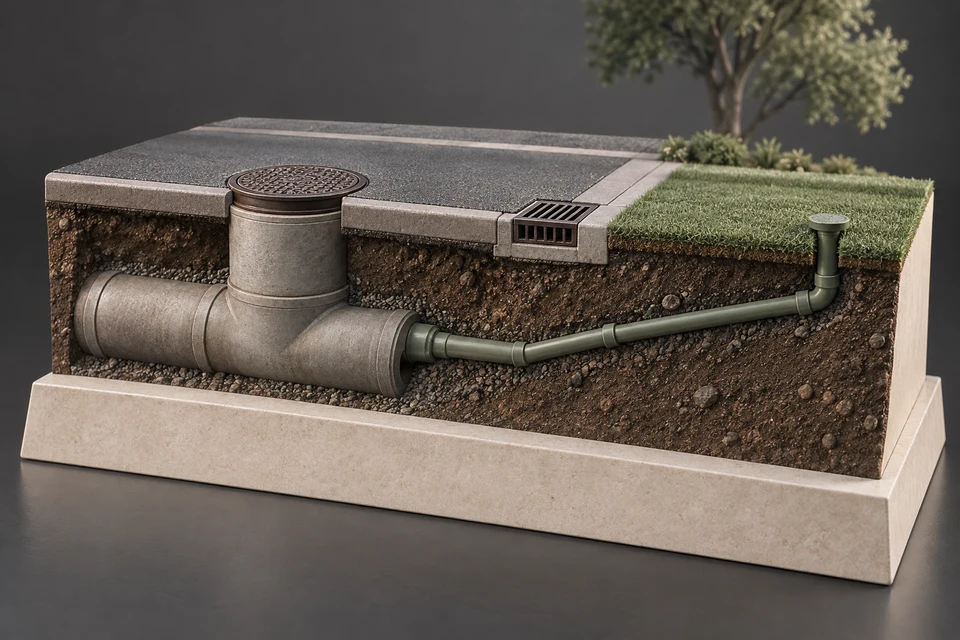
- The larger City-owned sewer pipe in the street or lane that every house on the run connects to.
- Sanitary sump
- A sealed basin with a pump that lifts sewage from fixtures that cannot drain by gravity, such as some basement bathrooms, up into the building drain. The City of Calgary distinguishes it from a storm sump, which handles groundwater.
- Secondary suite
- A self-contained dwelling unit within a house, such as a legal basement suite. A 2022 City of Calgary plumbing advisory treats it as a separate dwelling unit for backflow protection, so one normally open valve should not serve both units.
- Sewer backup
- Sewage or wastewater coming up a sink, toilet or drain inside a building because it cannot get out through the line.
- Sewer backup endorsement
- Optional insurance coverage in many Canadian home policies for damage from water or sewage entering through the drains. Policy wording decides what is covered.
- Sonde
- A small transmitter on a camera head or cable that a receiver above ground can locate, to mark where a defect is and how deep.
- Steel snake
- The cable machine a City of Calgary crew runs from a home's cleanout toward the main to determine whether a blockage is on private or public property.
- Storm drain (catch basin)
- A street or lane grate that takes runoff into the separate stormwater system, which flows to rivers and creeks without treatment. The City has more than 60,000 of them.
- Sump pump
- A pump in a basement pit that removes groundwater collected by the foundation drains. The City says maintaining it is the homeowner's responsibility and sets rules on where it may discharge.
- Surcharge
- A condition in which the sewer main runs full, so wastewater cannot enter it and may push back up service lines. Heavy rain is a common trigger.
- Utility Safety Partners
- Alberta's utility locate and safety organization, which runs the Click Before You Dig locate request service for buried public utilities.
- WCB-Alberta clearance letter
- WCB-Alberta's written confirmation of whether a contractor is covered and current on its account. Getting one before hiring and before payments protects you from the contractor's unpaid premiums.
- Weeping tile
- Perforated pipe laid around the basement footing to gather groundwater and lead it to the sump pit or another outlet.
FAQQuestions people ask
What is the TIL code in the City's service line records?
It is one of the pipe codes the City uses in its service line records. The City's metadata does not define it, but it is generally read as clay tile, and it is concentrated in lines installed in the 1960s and 1970s.
What is the difference between a cleanout and a backwater valve?
A cleanout is an access point for cleaning and inspection. A backwater valve is a one-way device that closes when sewage flows back from the main. Many newer homes have a cleanout on or beside the valve box.
Where does City responsibility for my sewer end?
The City's published split puts the pipe from the main to the property line in City ownership and the pipe from the property line to the house in the homeowner's. The City makes the final determination for specific cases.