Calgary's sewage flows from your drains through your private service line and the City's mains, moving by gravity and pump stations to whichever of the City's wastewater plants serves your area: Bonnybrook, Fish Creek or Pine Creek. After screening, settling, biological treatment and ultraviolet disinfection, the treated water is released to the Bow River. Storm drains are a separate system that goes to rivers and creeks without treatment.
- Everything you flush or pour travels through your own pipe first; most backups start there, not at the plant.
- Calgary's three wastewater plants are Bonnybrook, Fish Creek and Pine Creek; treated water returns to the Bow River.
- Storm drains are not sewers: what goes in them reaches rivers and creeks untreated.
- The City says the only things that belong in a toilet are pee, poo and toilet paper, and names fats, oils and grease as the usual main cause of sewage backups.
- The City reports responding to over 8,000 sewer backups a year, which is why the habits in your kitchen matter.
01 /Where does Calgary's sewage go?
Calgary's sewage ends up at a City wastewater treatment plant, Bonnybrook, Fish Creek or Pine Creek, and once treated it is released as clean water into the Bow River. The City describes wastewater moving through its sewer pipes by gravity and pump stations, and says the three plants together handle the daily wastewater of more than a million Calgarians.
That is the civic answer. The help-desk answer starts much closer to home, because the first few dozen metres of the trip are through pipe you own. When something goes wrong between your toilet and the river, it is usually in that first stretch. For the system itself, with maps and data on the City's pipes by community, see CalgarySewers.ca.
02 /What route does your wastewater take from the house?
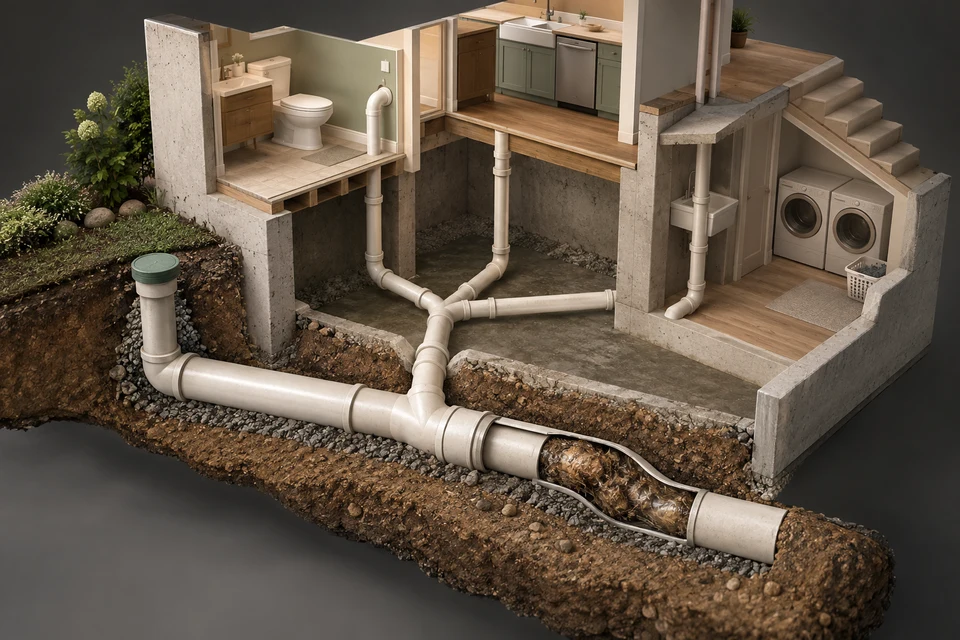
Wastewater leaves each fixture through its trap, runs down branch drains to the vertical stack, then along the building drain under the basement floor. It passes the cleanout, leaves the foundation as your private service line, crosses the property line, continues through the City's portion of the service line, and enters the sanitary main under the street or lane. From there it joins larger pipes toward a treatment plant.
| Segment | Who owns it | What usually goes wrong there |
|---|---|---|
| Fixture trap and branch drain | Homeowner | Hair, soap, food and grease clogs at one fixture |
| Stack and building drain | Homeowner | Scale in old cast iron, grease, wipes at the base of the stack |
| Private service line (house to property line) | Homeowner | Roots at clay joints, sags, offsets, grease, wipes |
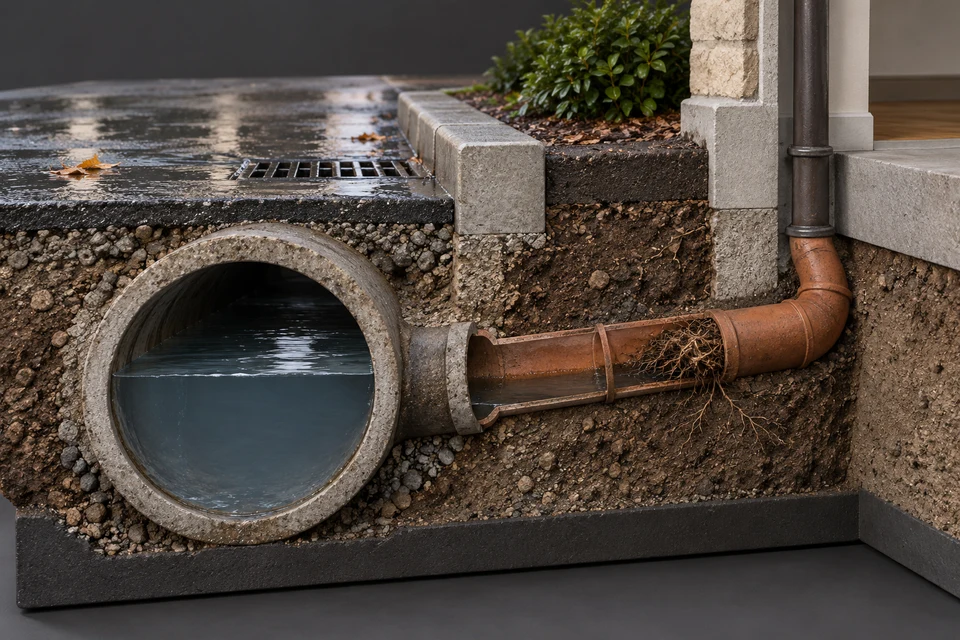
| City service line (property line to main) | City of Calgary | Roots, joint failures, material defects; report to 311 |
| Sanitary main and trunks | City of Calgary | Blockages and storm surcharge; report to 311 |
| Treatment plant | City of Calgary | Screens remove wipes and debris that made it this far |
The ownership column is the City's published split: main to property line is the City's; property line to house is the homeowner's.
03 /What happens at the treatment plant?
The City's online tour of its wastewater plants describes a series of physical, biological and disinfection steps. Understanding them explains why some things you flush cause trouble long before they reach the plant.
- Screening at the headworks removes larger material such as plastic bags, wads of toilet paper and flushable wipes.
- Grit tanks let heavier solids like sand and gravel settle out.
- Primary clarifiers hold wastewater for about three hours so more solids settle.
- Biological treatment mixes the flow with micro-organisms and air, which consume dissolved organic material.
- Secondary clarification lets those micro-organisms settle out as sludge.
- Filtration at some facilities further reduces solids and phosphorus.
- Ultraviolet disinfection damages the DNA of remaining organisms so they cannot reproduce, before the water returns to the Bow River.
The solids do not simply disappear. The City says recovered organic matter is processed seasonally, at Shepard Lagoons in spring and summer or a dewatering facility in fall and winter, then recycled through its Calgro agricultural program or composted at the City's composting facility.
Notice what the screens catch. If flushable wipes are a known item at the plant headworks, they were also travelling through thousands of household service lines, snagging on roots, joints and sags along the way.
04 /Why is a storm drain not a sewer?
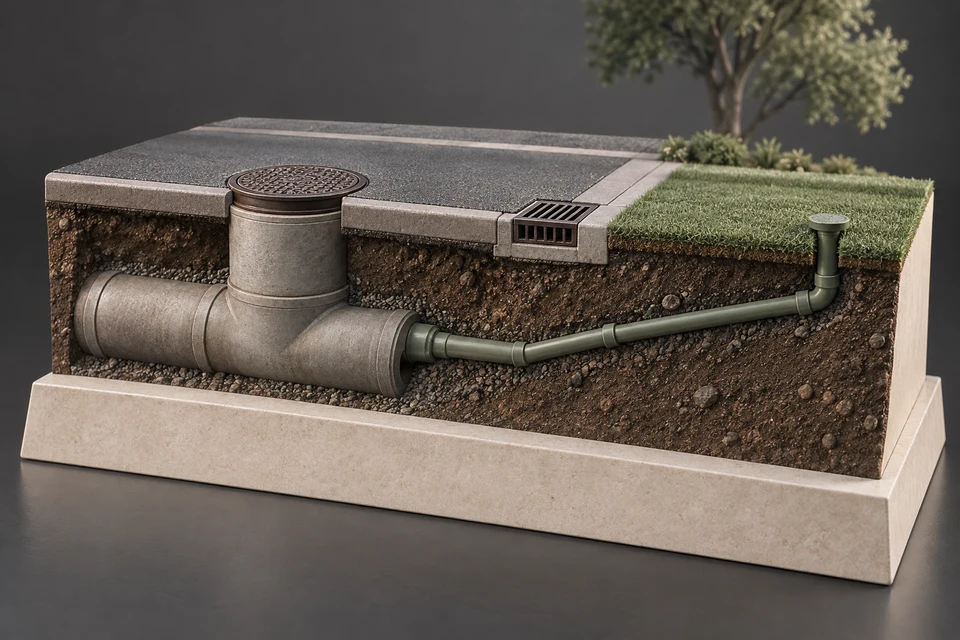
Storm drains, the grates in the street and lane, belong to a separate stormwater system that carries runoff to Calgary's rivers and creeks without treatment. The City says it has more than 60,000 storm drains and warns that water entering them travels to rivers and streams untreated. Anything you sweep, pour or rinse into one ends up in the Bow, the Elbow or a creek.
- Do not sweep debris into storm drains, dump chemicals down them, or use ice salt on them.
- Do clear leaves and sticks from the grate near your home when it is safe, especially before a storm or a chinook melt.
- Report pooling that has not drained after 90 to 120 minutes through 311, and call immediately if water is entering a building or vehicle.
The two systems do interact at the edges. Rain that finds its way into cracked sanitary pipes, or into sanitary pipes through wrong connections, adds load to the sewage system in storms. That is one reason backups cluster after heavy rain, as explained in storm surcharge or private blockage.
05 /Why does what you flush matter so much in Calgary?
Because it has to travel through your own pipe first, and your pipe is the part most likely to catch it. The City's guidance is direct: the only things that are okay to flush are pee, poo and toilet paper. It names fats, oils and grease as usually the main cause of sewage backups, because they cool, harden and stick to pipe walls.
The City also puts numbers on the problem. On its Protect Your Pipes page it says it responds to over 8,000 sewer backups annually and spends approximately $3 million repairing damage caused by blockages. Those are City figures for its system; the cost of backups inside private homes comes on top.
06 /What should stay out of Calgary drains?
The City's lists are longer than most people expect. Treat this as the house rule for kitchens and bathrooms.
| Group | Examples from the City's guidance | Better route |
|---|---|---|
| Fats | Butter, dairy, gravy, soups, meat fat | Scrape plates and pots into a container before rinsing |
| Oils | Cooking oils, salad dressing, marinades, mayonnaise | Wipe pans with paper towel before washing |
| Grease | Bacon grease, pan drippings | Cool in a can or jar; dispose of it as the City's waste guide directs |
| Wipes and paper | Wipes labelled flushable, paper towels, facial tissue | Bin in the bathroom |
| Personal items | Pads, tampons, applicators, diapers, dental floss, cotton swabs, condoms, hair | Bin |
| Hazardous products | Bleach, ammonia, disinfectants, pool chemicals, paints, petroleum products | Household hazardous waste disposal; check calgary.ca |
Wipes are the item homeowners argue about most. The City notes that products labelled flushable may pass through your toilet but can still clog pipes, because they keep their shape and strength instead of breaking down. On an older clay tile service line with root hairs at the joints, a few weeks of wipes can be enough to form a blockage.
07 /What does this mean for your own line?
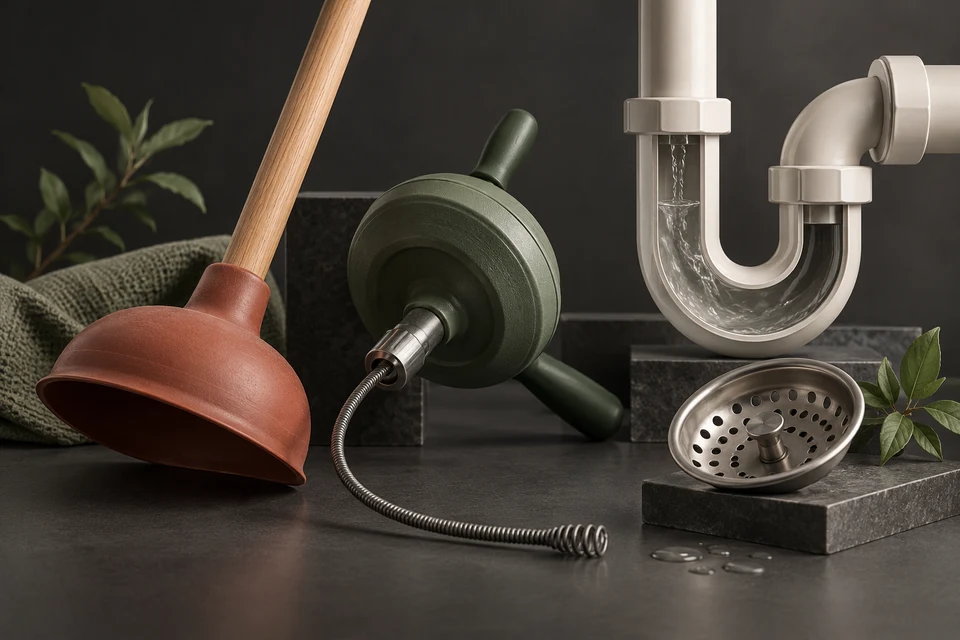
Keep the first stretch of the trip healthy and the rest usually takes care of itself. A strainer in every sink and shower, grease cooled in a jar instead of poured, a bin beside every toilet, and a camera inspection when the house is older or the drains start talking to you. If your line has already had a clog, the Calgary main line clog guide explains where they usually form in Calgary houses, and the Calgary sewer season calendar turns the habits into a year-round rhythm.
FAQQuestions people ask
What happens to Calgary's wastewater after it leaves my house?
It travels through your line and the City's mains to the Bonnybrook, Fish Creek or Pine Creek plant, and the treated water goes back into the Bow River.
Does Calgary treat water from storm drains?
No. The City says water entering storm drains travels to rivers and streams without treatment. Only the sanitary sewer system goes to the wastewater treatment plants.
Are flushable wipes okay in Calgary?
The City says products labelled flushable may pass through your toilet but can still clog pipes, because they do not break down like toilet paper. Put them in a bin.
What is the main cause of sewer backups in Calgary?
The City says the main cause is usually the accumulation of fats, oil and grease, which cool, harden and stick to the inside of pipes. Roots in older lines and wipes are also common.
How many sewer backups does Calgary have a year?
The City states on its Protect Your Pipes page that it responds to over 8,000 sewer backups annually.
NETWORKGo deeper across the HAUSE Sewer network
Cleaning grease out of a kitchen drain line
How to clean a grease-clogged kitchen drain line: how fats build up, why snaking alone fails, when to jet, what to do at home, and how to keep the line clear.
SewerCleaners.ca“Flushable” wipes and what really belongs in a sewer
Are flushable wipes safe for sewer lines? Why wipes snag on roots, joints and grease, what belongs in a toilet, and a do-not-flush list for Canadian homes.
SewerJetting.caJetting grease lines: how to actually remove fats, oils and grease
Jetting grease lines explained: why FOG hardens in drains, why snaking a grease clog fails, nozzle and hot water choices, and keeping the line clear.