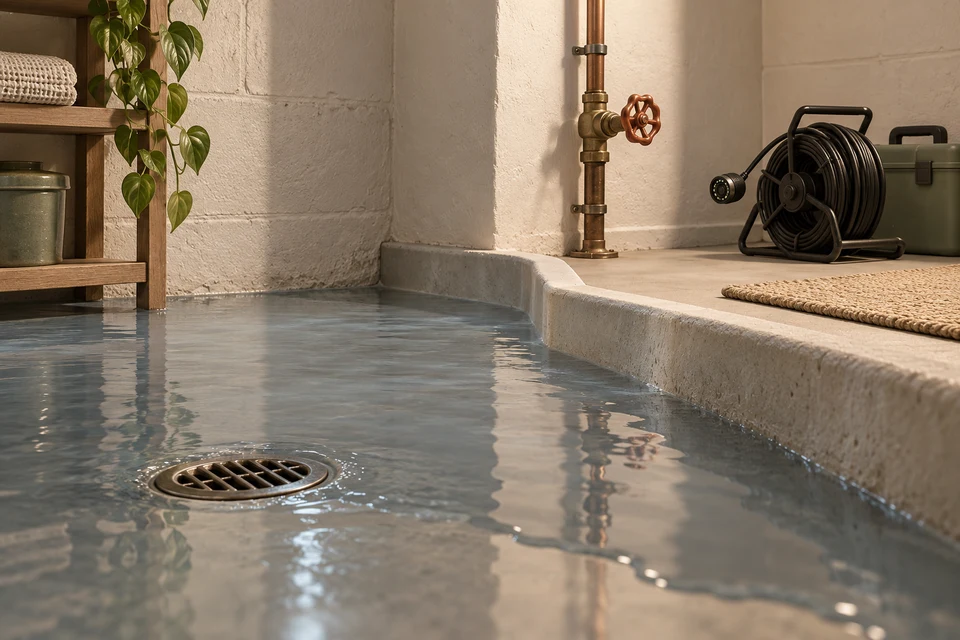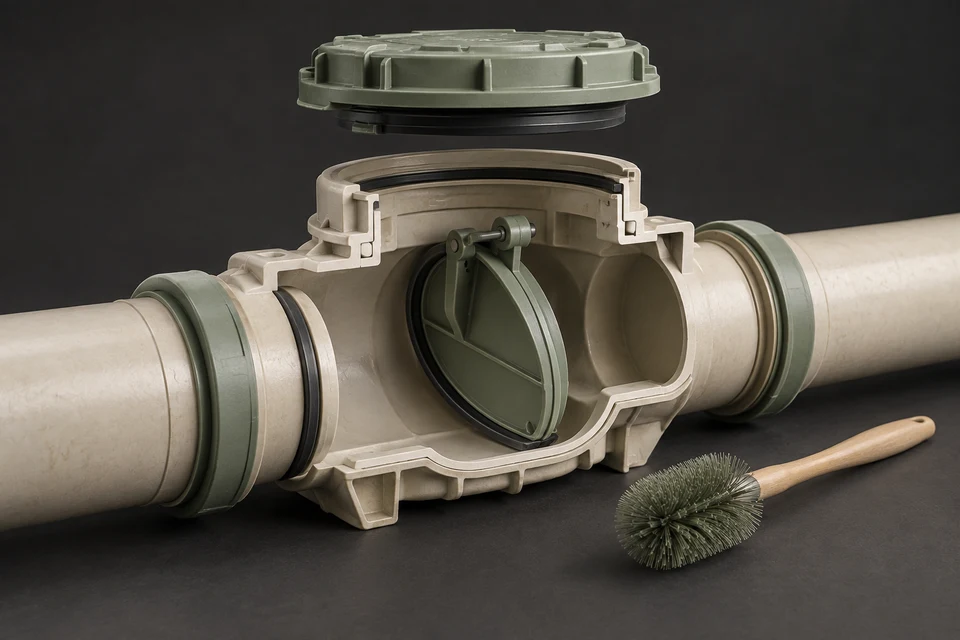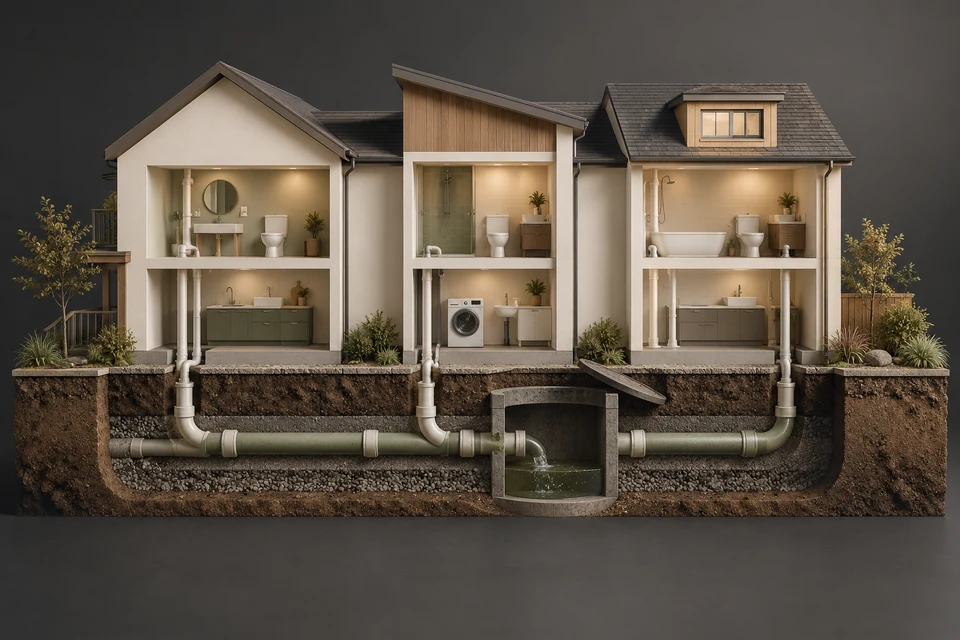
In a Calgary condo or townhouse, call the property manager or the board's emergency line first, stop water use, and warn neighbours on the same stack or shared line. The registered plan and the bylaws decide what is common property. Under Alberta rules in force since February 2026, a corporation may charge an owner who caused damage the lesser of its costs or its deductible, capped at $50,000.
- The first call in a condo is the manager or board, not your own contractor; 311 is still the route for the City's main.
- Shared plumbing means the backup often appears in one unit while the cause sits in another or in common pipe.
- Alberta's 2026 amendments let a corporation charge back the lesser of its actual costs or its deductible, up to $50,000, if its bylaws allow it.
- Chargebacks come with notice: the board must write within 90 days of discovering the issue and give at least 10 days to respond.
- Owners and tenants protect themselves with a timeline, photos, written notice to the manager, and a unit policy that fits the bylaws.
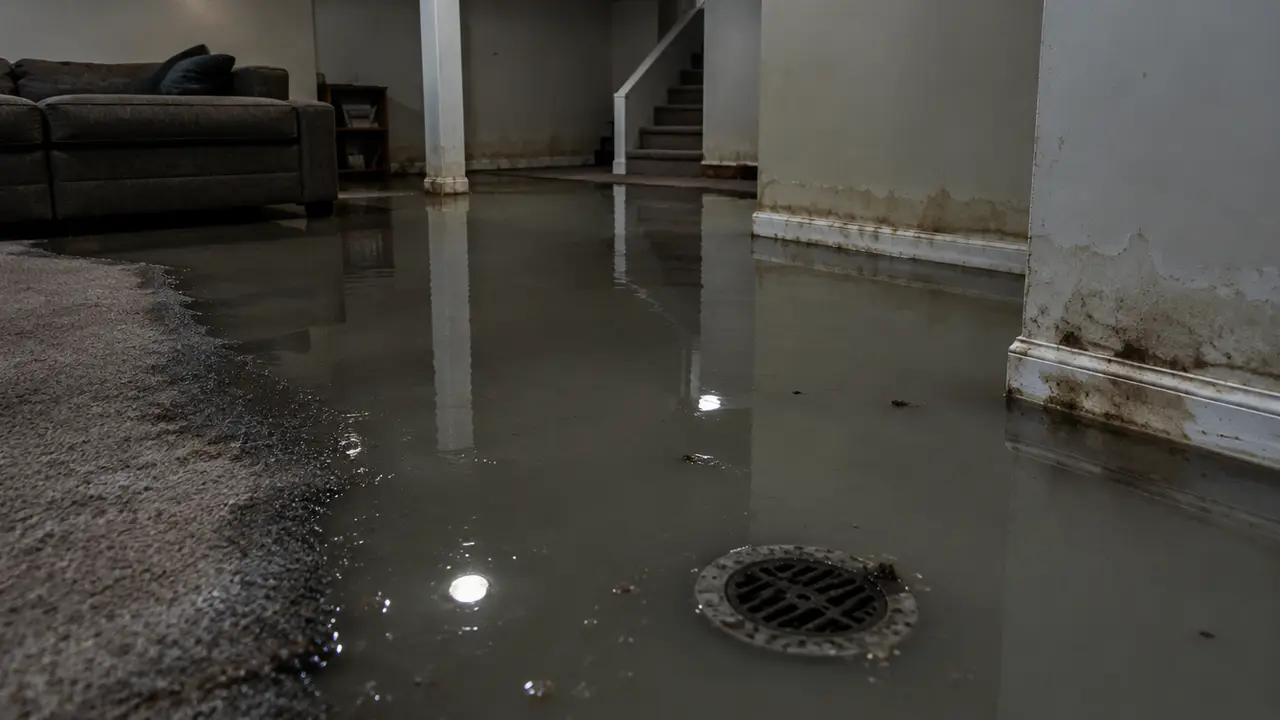
01 /Who do you call first when sewage backs up in a Calgary condo?
Call the property manager or the condominium board's emergency number first. In most Calgary condominium buildings, the stacks, the building drain and the service connection are common property, and the corporation usually has a drain contractor it calls for them. Booking your own company may leave you with a bill the corporation does not reimburse, and may delay the contractor who has the building's access keys and drawings.
- Stop water use and tell the neighbours
In an apartment, knock on the units above you on the same stack and ask them to stop running water. In a townhouse row, tell the units that share your line.
- Call the manager's emergency line
Give the unit number, the fixture it came from, the time it started and whether it is still rising. Ask for the reference or work order number.
- Call 311 when the signs point to the City
Heavy rain, several buildings affected, or a manhole overflowing are City matters regardless of the building's structure. Tell 311 it is a multi-unit building.
- Photograph and write it down
Photos of the water, the drain and the damage, with the time. A short written note to the manager the same day, by email, starts the paper trail.
- Call your own insurer
Your unit policy may matter even when the corporation's policy covers the building; ask your broker which applies to what.
If you are a tenant, call your landlord or the property manager first, unless someone is in danger. The after-hours emergency guide covers what to do when nobody answers at night.
02 /Is the problem in your unit or in common property?
The registered condominium plan and the corporation's bylaws decide where your unit ends and common property begins, and they differ from building to building. The patterns below are common in Calgary, but treat them as starting points to check against your own documents, not as rules.
| Building type | Often the unit owner's | Often the corporation's | The City's (via 311) |
|---|---|---|---|
| Apartment-style condominium | Fixtures and the short branch drains inside the unit | Stacks, building drain, service connection | The main |
| Stacked townhouse | Fixtures within the unit; sometimes branch lines | Shared stacks and the line leaving the building | The main |
| Row townhouse, conventional condo | Varies widely; read the bylaws | Shared laterals and lines under common land | The main |
| Bare land condominium | Often the line within the owner's unit lot | Shared lines on common land, if any | The main |
| Duplex or side-by-side, not a condo | Each owner's own line, unless shared by agreement or easement | Not applicable | The main and the City-owned service pipe |
The City's public service line dataset describes the ownership split for houses, but it notes that large commercial and multi-family services are not included. For a condominium connection, ask 311 how your building's service is handled rather than assuming the house pattern applies.
03 /How do shared stacks and laterals change a backup?
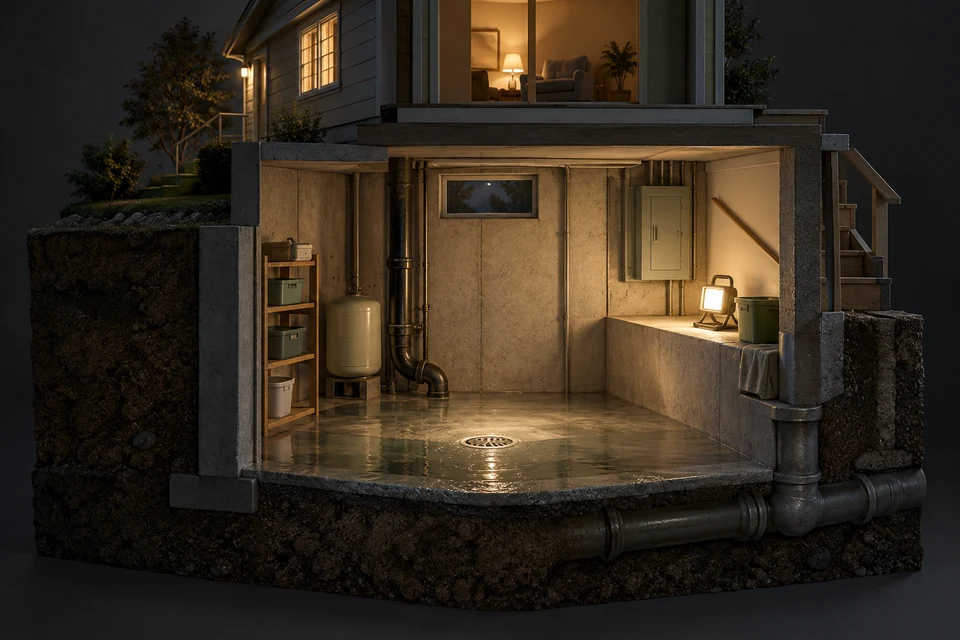
Shared plumbing means the unit that floods is often not the unit that caused the flood. Wastewater backs up to the lowest opening on the blocked path, so the ground-floor or lowest unit on a stack takes the water from everyone above it.
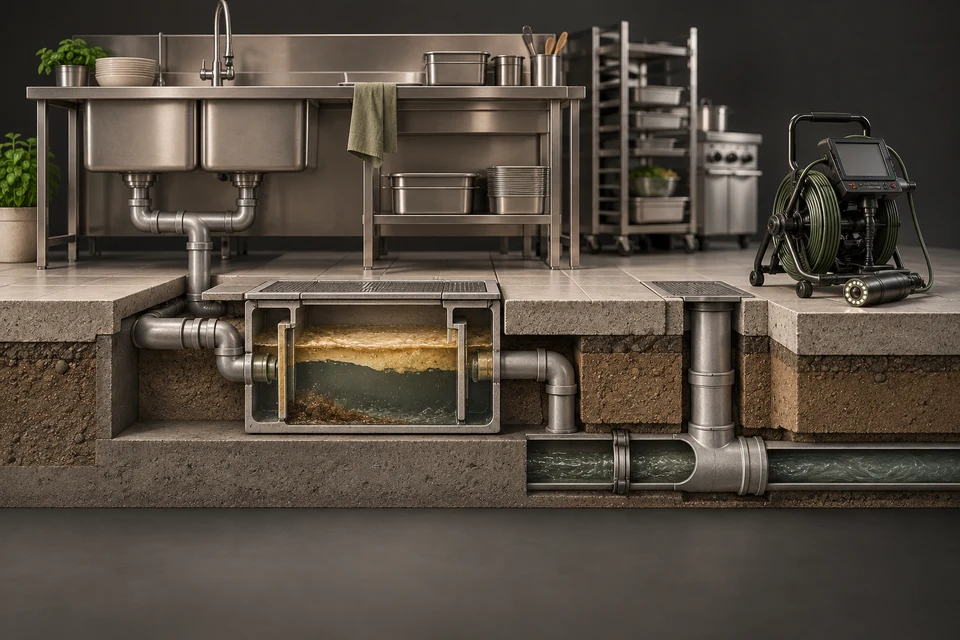
- Apartment kitchen stacks collect grease from every kitchen above. A blockage near the bottom pushes wastewater out of the lowest kitchen sink or dishwasher on that stack.
- Toilet and bathroom stacks block with wipes and paper, and surface in the lowest tub or floor drain on the stack.
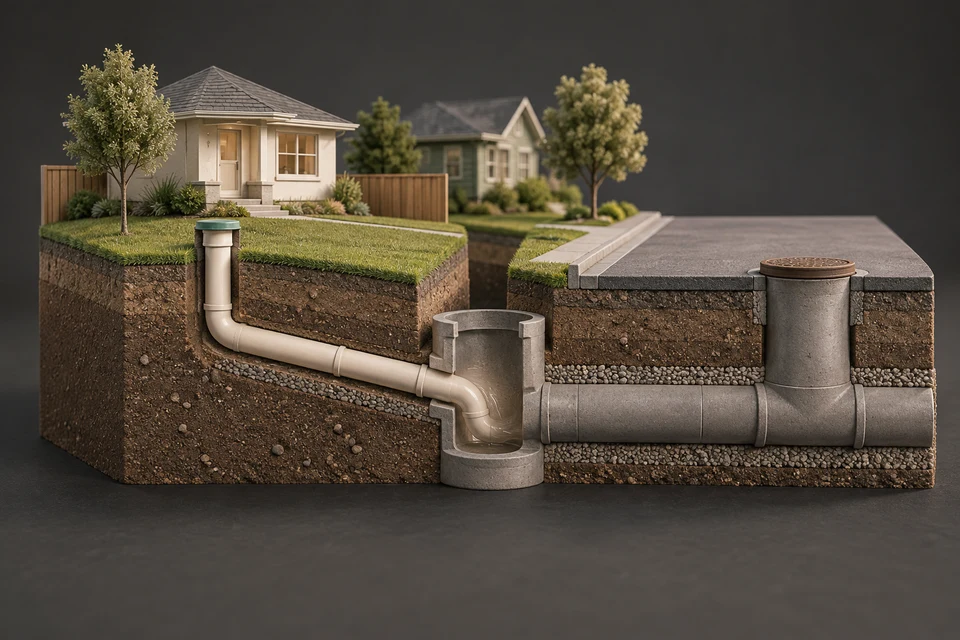
- Townhouse rows may share one line to the main. A blockage near the street end backs up every unit upstream, with the lowest basement taking it first.
- Surcharges from the City's main affect every building on the street and are a 311 matter, not a stack problem.
Because of this, a single unit owner hiring a contractor to cable from inside the unit often cannot reach the actual blockage, and may not be permitted to open common cleanouts. The corporation's contractor, working from the building's cleanouts, usually can.
04 /Who pays when one owner's drain causes damage?
Under amendments that took effect in February 2026, as described by the Government of Alberta, a condominium corporation can charge an owner for costs arising from the actions or inaction of the owner, their tenant or a guest, where its bylaws allow chargebacks. The amount is capped at whichever is less: the corporation's actual costs to fix the issue, or its insurance deductible up to $50,000. The corporation does not have to file an insurance claim to recover an amount up to the deductible.
| Rule | What the Government of Alberta says |
|---|---|
| When a chargeback can apply | Costs from the actions or inaction of an owner, their tenant or a guest, where the bylaws allow it |
| Maximum amount | The lesser of the actual costs or the corporation's deductible, up to $50,000 |
| Insurance claim needed? | No, for amounts up to the deductible |
| Notice | Written notice within 90 days of discovering the issue, with the owner's name, unit number, date and a description |
| Time to respond | At least 10 days after service of the notice, not counting holidays |
| Disputes | A Condominium Dispute Resolution Tribunal, operating from April 1, 2026, as an alternative to court |
For a sewer backup, the practical question is causation. A blockage in a common stack built up by many kitchens over years is hard to pin on one owner; a wipe-packed branch serving only one unit is easier. The evidence that settles it is the contractor's camera footage and written cause, which is another reason to ask the manager for a copy. This page describes the provincial rules in general terms; for your case, read your bylaws and consult the Government of Alberta's condominium information or a lawyer.
05 /What should a Calgary condo board or manager have in place?
Buildings that handle backups well have made most of their decisions before the first call. A board can put these in place in a single season.
- A drain contractor on standing instructions for evenings and weekends, with the building's cleanout locations and access.
- A drawing or list showing which units share which stacks and lines, so the manager knows whose water to stop.
- A kitchen stack cleaning schedule. As a 2026 planning estimate, jetting a condo kitchen stack typically quotes about $300 to $900 per stack, and a building drain cleaning with camera about $600 to $2,500.
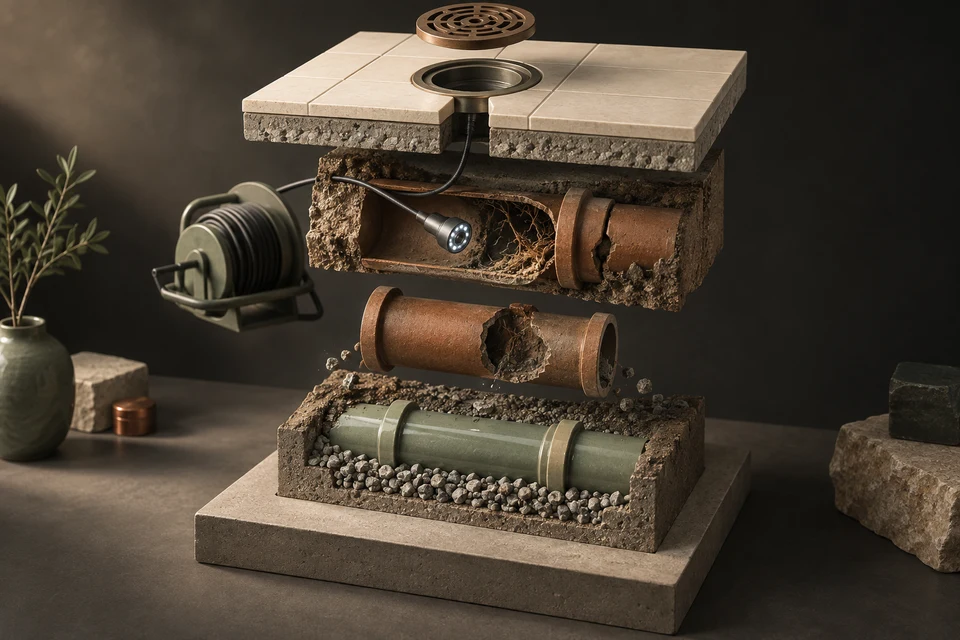
- A camera baseline of the building drain and service connection, repeated after any backup.
- Records of any backwater valves: location, type and service dates.
- A plain notice to owners and tenants about wipes and grease, sent before the holidays and when units change hands.
- A written procedure for a backup: who calls 311, who calls the contractor, who notifies neighbours, and where the photos go.
For larger buildings with mixed commercial and residential use, commercial drain cleaning in Calgary covers standing instructions, grease and contractor records in more depth.
06 /What should owners and tenants keep on record?
Keep a record that would let a stranger reconstruct the event: what happened, when, where it came from and whom you told. If a chargeback notice arrives weeks later, that record is your response.
- The time the backup started, which fixture it came from, and whether any water had been used in the unit just before.
- Photos and short videos before anything is moved or cleaned.
- The manager's reference or work order number, and a copy of your written notice.
- The contractor's findings, camera footage and stated cause, requested through the manager.
- Your 311 reference if the City was involved.
- Invoices and your own insurer's claim number.
Ask your broker whether your unit policy covers a deductible chargeback, and whether it covers improvements inside the unit that the corporation's policy leaves out. Alberta's condominium information pages also cover the standard insurable unit description, which is worth asking your manager for, because it bears on which finishes the building policy replaces.
07 /What if you own a townhouse that is not a condominium?
Freehold townhouses and duplexes usually have their own private lines, but some older side-by-side homes share a line under one lot before it reaches the City's pipe. If a backup appears in both homes at once, or in yours when only your neighbour is using water, a shared line is a strong possibility.
Start with the cleanouts in both homes and a camera run from whichever is accessible, with distances. Your title documents or an easement may say who maintains a shared line; a real estate lawyer can read them. Where the camera puts the problem at or beyond the property line, call 311 with the footage. The City or Owner triage tool sorts the common cases, and what a sewer backup costs in Calgary breaks down the bill.
FAQQuestions people ask
Whose bill is it when sewage backs up into a Calgary condo unit?
It depends on where the cause was and what the bylaws say. Common stacks and building drains are usually the corporation's responsibility. Where an owner, tenant or guest caused the damage and the bylaws allow it, Alberta rules let the corporation charge back the lesser of its costs or its deductible, up to $50,000.
What is the most an Alberta condo board can charge me for a backup I caused?
As described by the Government of Alberta for amendments effective in 2026, the lesser of the corporation's actual costs or its insurance deductible, capped at $50,000, and only where the bylaws allow chargebacks. Notice rules apply.
Why did sewage come up in my unit when I was not even home?
Shared stacks and lines send everyone's wastewater down the same pipe. If the blockage is below your unit's connection, water from units above surfaces at the lowest opening, which may be yours. The cause is usually downstream of your fixtures.
Does the City of Calgary respond to backups in condo buildings?
311 handles problems with the City's sewer main and its side of the service connection for any property. Inside the building and on private land, the corporation or owners are responsible. Tell 311 the building is multi-unit when you call.
Where can Alberta condo owners take a dispute over a chargeback?
The Government of Alberta says a Condominium Dispute Resolution Tribunal began operating on April 1, 2026, as a streamlined alternative to court. Check alberta.ca for how to apply and what it hears.
Do Calgary townhouses share a sewer line?
Some do. Condominium townhouse rows often share lines under common land, and some older freehold side-by-side homes share a line before it reaches the City's pipe. The registered plan, bylaws or title documents, plus a camera run, will tell you.
NETWORKGo deeper across the HAUSE Sewer network
Condo and multi-unit sewer inspections: who scopes what
Condo and multi-unit sewer inspections: shared vs unit piping, what boards should scope, what buyers should ask for, and access in occupied buildings.
SewerCleaners.caSewer backup insurance in Canada: coverage, deductibles, condos and claims
Sewer backup insurance in Canada explained: what the endorsement covers, deductibles and limits, flood vs backup, condos, septic, and whether it is worth it.
SewerQuotes.comWho pays for sewer repair: buyers, sellers, landlords, tenants and condo owners
Who pays for sewer repair in Canada: buyer vs seller, landlord vs tenant, condo corporation vs unit owner, and neighbours who share one sewer lateral.