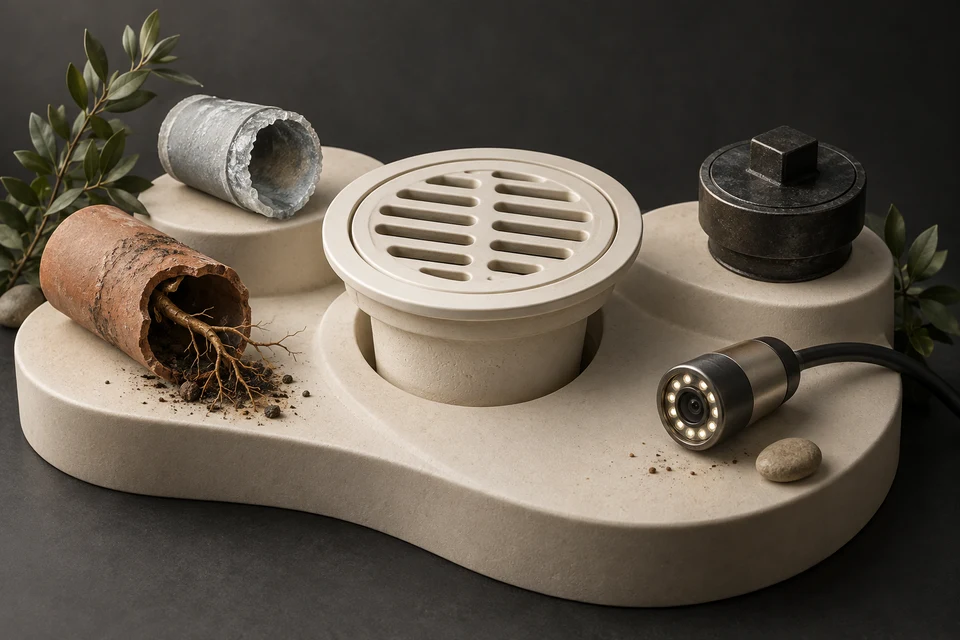
These are short, direct answers to the sewer questions Calgary homeowners ask most: what to do in a backup and when to call 311, where City responsibility ends, why lines clog, freeze and fill with roots, how chinooks and storms change the risks, how to vet a contractor, and what common service calls cost as 2026 planning estimates.
- In a backup: people first, stop water use, then 311 for triage.
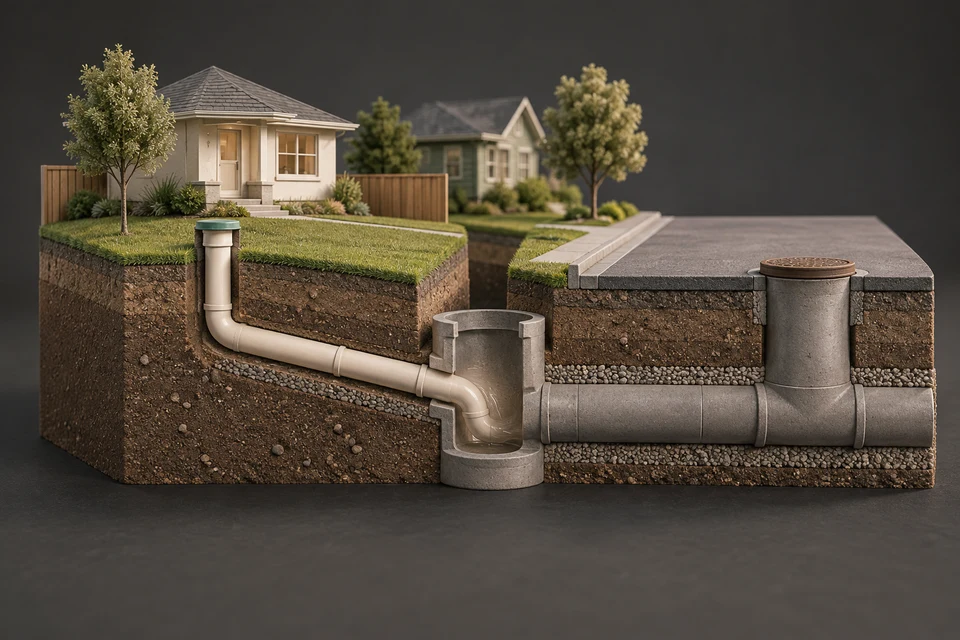
- The City's published split: main to property line is the City's; property line to house is yours.
- Camera footage with distances settles most City-or-owner questions.
01 /About these answers
Every answer below is short enough to read at a glance and links to the guide with the detail. Anything the City of Calgary or the Government of Alberta publishes is paraphrased from their pages; anything specific to your address, such as whether a defect is on the City side or whether a permit applies, should be confirmed through 311. Dollar figures are 2026 planning ranges, not quotes.
The full price table, with what pushes each range up, is on the Calgary service call cost page. If you are dealing with a problem right now, go straight to what to do in a Calgary sewer backup or the City or Owner triage tool.
FAQAll questions
What should I do first if sewage backs up into my Calgary basement?
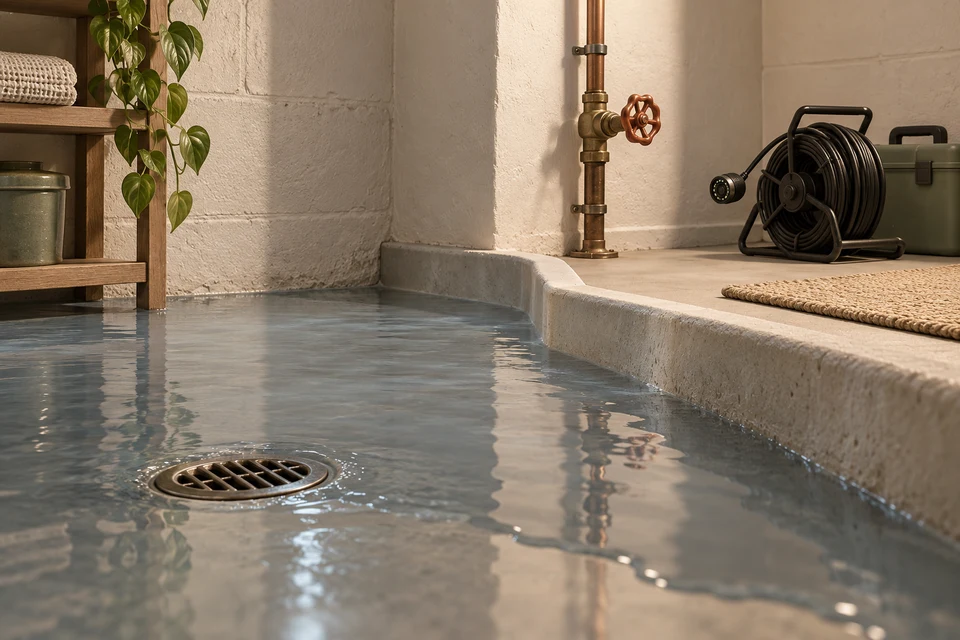
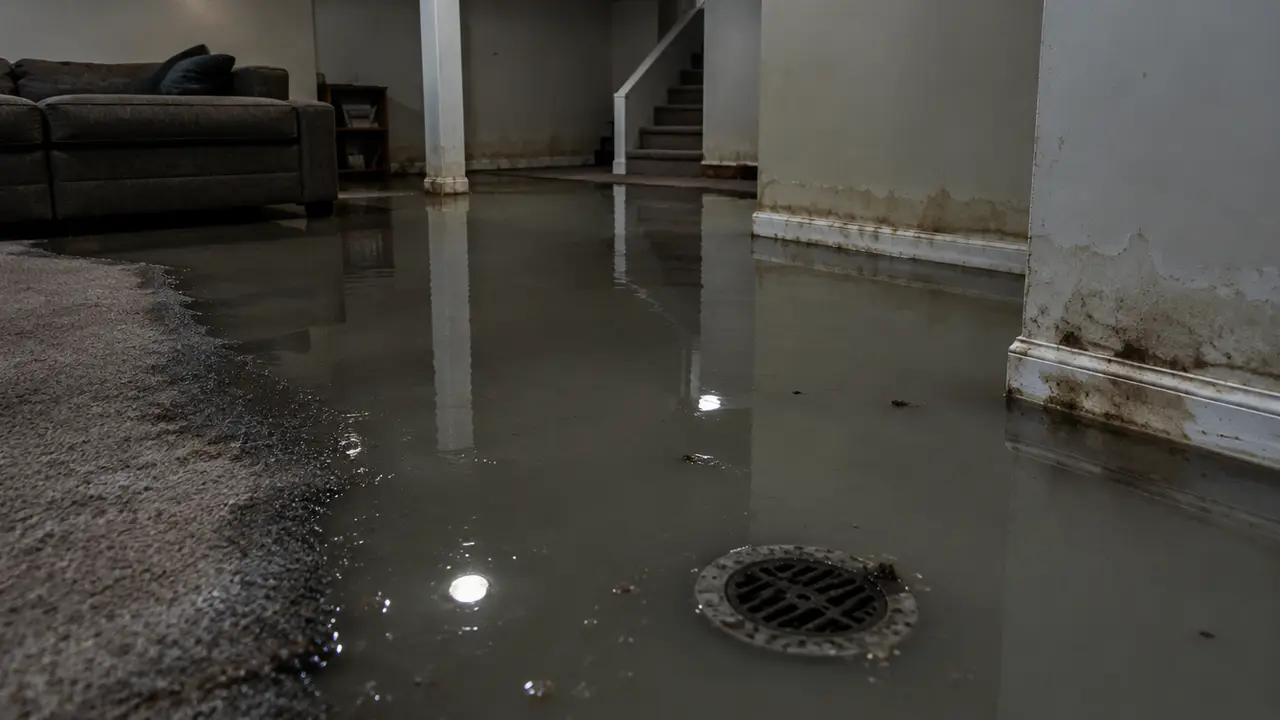
Get people and pets away from the water, stop all water use in the building, and stay clear of anything electrical the water touches. Then call 311, which triages backups to decide whether you need a plumber or whether City infrastructure may be involved. Photograph everything and call your insurer the same day.
Does the City of Calgary come out for sewer backups?
It can. After 311 triage, a City crew may come and snake from your cleanout toward the main to see which side of the property line the blockage is on. If it is on the private side, you are advised to call a plumber. Crews leave furniture, carpet, toilets and walls as they find them, so clear the access yourself.
Which part of my sewer line does the City look after?
According to the City's published description of its service line data, the City owns and maintains the pipe from the sanitary main to the property line, and the homeowner owns and maintains it from the property line to the house. The City makes the final determination for any specific case.
Is 311 available at night?
Yes. The City says 311 takes requests 24 hours a day, seven days a week, by phone, the Calgary 311 app and online. From outside Calgary, call 403-268-CITY (2489).
How do I know if a backup is the City's problem or mine?
Heavy rain, neighbours with the same problem, water rising with all your water off, or sewage at a manhole point toward the City's main. A backup that only happens when you use water, in dry weather, with neighbours unaffected points to your own line. Camera footage with distances settles it.
Where is my cleanout?
The City says it is usually in the basement or lowest level, often near the main water shut-off where the water service enters the house. It may be low on the stack, in the floor, or in a backwater valve box, and it is sometimes hidden under flooring or behind a panel.
Do I need a permit to clear a blocked drain in Calgary?
No. The City's plumbing permit guidance says no permit is needed to remove a blockage in the drainage system. Building, extending or altering plumbing does need one, and so does replacing water or sewer lines in or around the home.
How much does drain cleaning cost in Calgary?
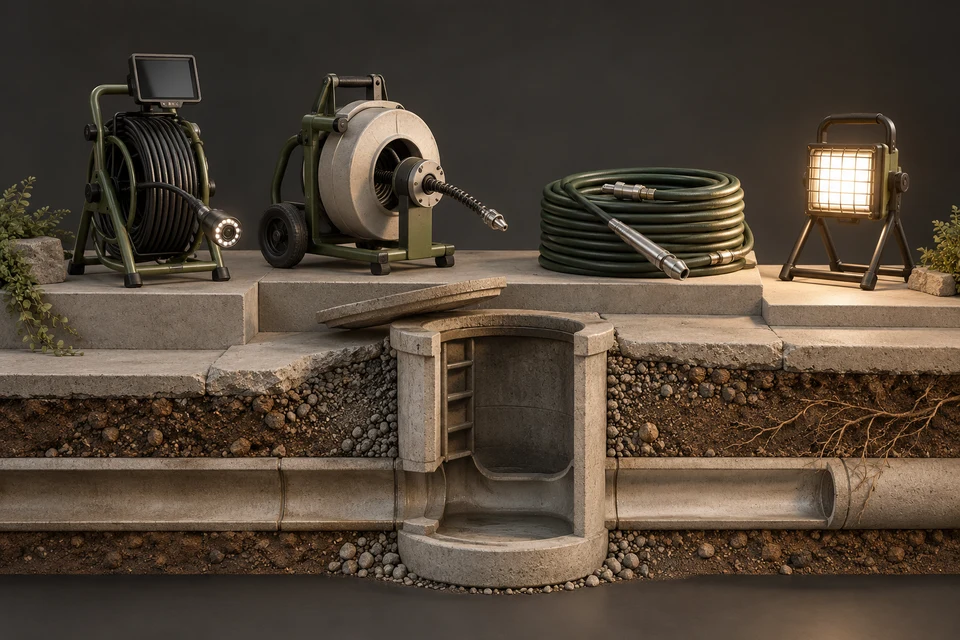
As 2026 planning estimates before GST, clearing a main line from an accessible cleanout typically quotes about $200 to $450 in business hours, a camera inspection about $250 to $600, and hydro jetting a residential main about $450 to $1,100. After-hours calls cost more.
Should I use a chemical drain cleaner?
Not as a first choice. Plungers, hair tools and hand augers clear most fixture clogs more safely. The City lists bleach, ammonia and disinfectants among hazardous items to keep out of drains, and chemical cleaners never fix a main line clog.
What causes most sewer backups in Calgary?
The City says the main cause is usually the accumulation of fats, oil and grease, which cool, harden and stick to pipe walls. Roots in older jointed lines, wipes, sags and storm surcharges of the City main are the other common causes.
Are flushable wipes okay?
No. The City says products labelled flushable may pass through the toilet but can still clog pipes because they keep their shape and strength. The City's rule for toilets is pee, poo and toilet paper, nothing else.
Why do older Calgary neighbourhoods have more root problems?
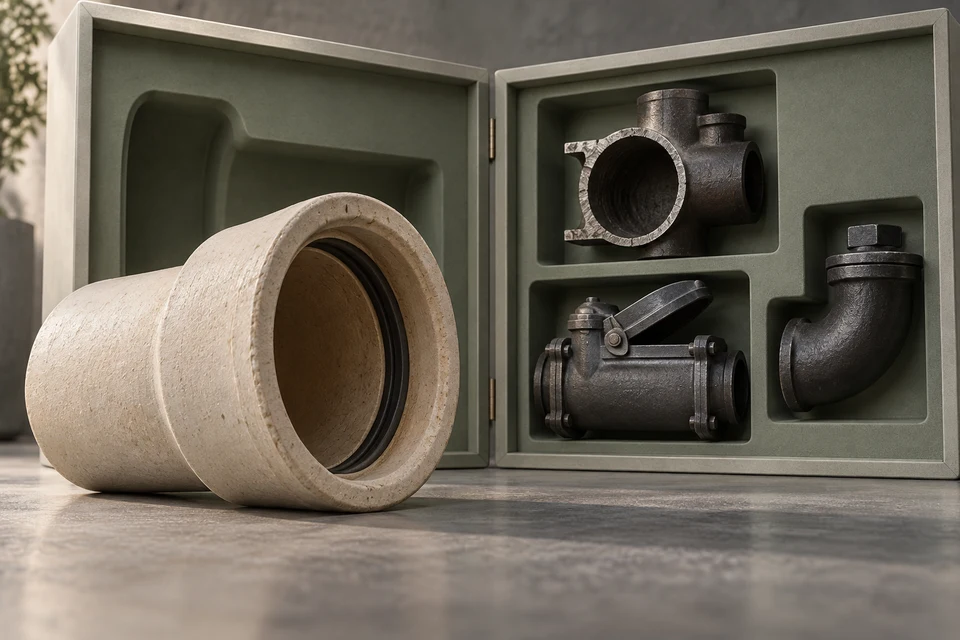
Older service lines are more often jointed clay tile or cast iron, and roots enter through leaking joints. In HAUSE's analysis of City data on the City-owned portion of service lines, clay tile is concentrated in 1960s and 1970s installs. Mature trees add to the risk.
Can I cut a City tree's roots out of my sewer?
Clearing roots from inside your own pipe is normal maintenance. Cutting, pruning, removing or damaging a City tree is prohibited without City permission. If a City tree is involved in a sewer blockage, call 311.
Do Calgary sewer lines freeze in cold snaps?
Yes, at weak spots: shallow sections under cleared driveways, exterior cleanout risers, drains in unheated spaces, sags holding water, and very low-flow homes. A professional thaws it with hot water or steam from the cleanout.
What does a chinook do to my drains?
It melts snow fast onto frozen ground, so meltwater pools at iced storm drains and runs toward foundations, and frozen downspout and sump lines send it back to the basement. Check the floor drain, sump and downspouts after every chinook.
When is the worst time of year for sewer backups in Calgary?
Backups cluster in heavy-rain periods in late spring and summer, especially storm and hail season, and after fast melts. Dry-weather backups from roots, grease and wipes happen year-round.
Do I need a backwater valve in Calgary?
Not every home has one. Installing one takes a plumbing permit, according to the City, and residents in flood-prone areas near the Bow River, Elbow River, Nose Creek or West Nose Creek should check the Land Use Bylaw to see whether one is required. If you have one, the City says a full port valve on the building drain needs servicing every year, and a 2022 City advisory says a normally open valve should not serve both a house and its secondary suite.
Will the City pump out my flooded basement?
No. The City places basement flooding with the homeowner. It will look at the situation, but it does not pump basements out.
How do I check a Calgary contractor's licence?
Ask for the City of Calgary business licence number and check it with the City's Licensed Trade Contractor search. The City requires a business licence for plumbers and other specialty trade contractors.
Why ask a Calgary drain contractor for a WCB clearance letter?
It is WCB-Alberta's confirmation of whether a contractor is covered and paid up. Holding one means the contractor's unpaid premiums do not become your problem, so ask for it before the job starts and again before you pay.
Can a contractor ask for a deposit?
If a business wants money up front, before the job is finished, it may need an Alberta prepaid contracting licence, depending on how the contract was sold. Check it through the province's licensed business search before paying.
Where does my toilet water end up in Calgary?
It flows to a City treatment plant (Bonnybrook, Fish Creek or Pine Creek, depending on where you live) and, once treated, is returned to the Bow River. Storm drains are separate and go to rivers and creeks untreated.
Does the City's service line data show my private pipe?
No. It covers only the City-owned portion from the main to the property line, and excludes large commercial and multi-family services. The pipe on your side of the property line may differ in both material and age. You can look up the City-side record at CalgarySewers.ca.
What does a sewer backup cost in Calgary once everything is added up?
It depends on how many layers you pay. Clearing and a camera are usually a few hundred dollars to about $1,500 as 2026 planning estimates; professional cleanup runs from about $1,000 on bare concrete to $25,000 for a finished basement; a repair to your own line adds thousands more. Many backups involve only the first layer.
How do I follow up on a 311 sewer backup request?
Check the request status in the 311 app, online or by calling 311 with your reference number. If a Water Services crew visited, keep the Customer Service Report it left; if the backup returns, call 311 again and quote the original reference.
How often does a full port backwater valve need servicing?
Once a year, according to the City of Calgary, which also says valves on individual branches do not need annual servicing. Spring, before storm season, is the practical time; a clear lid lets you look in between services.
Why does the basement shower fill up when other drains are used?
The shower is the lowest opening, so wastewater from elsewhere surfaces there when the building drain or sewer line is restricted. Stop water use and have the main cleared from the cleanout; plunging the shower will not help.
Can a Calgary condo board charge me for a sewer backup?
If the bylaws allow chargebacks and the damage came from the actions or inaction of an owner, tenant or guest, Alberta rules let the corporation recover the lesser of its costs or its deductible, up to $50,000, with written notice. Blockages in common stacks are usually the corporation's.
How often should my sewer line be cleaned?
Only as often as it needs. Modern PVC lines with no history may never need scheduled cleaning; clay tile lines with roots often need attention every one to two years. Camera findings and your backup history should set the interval.