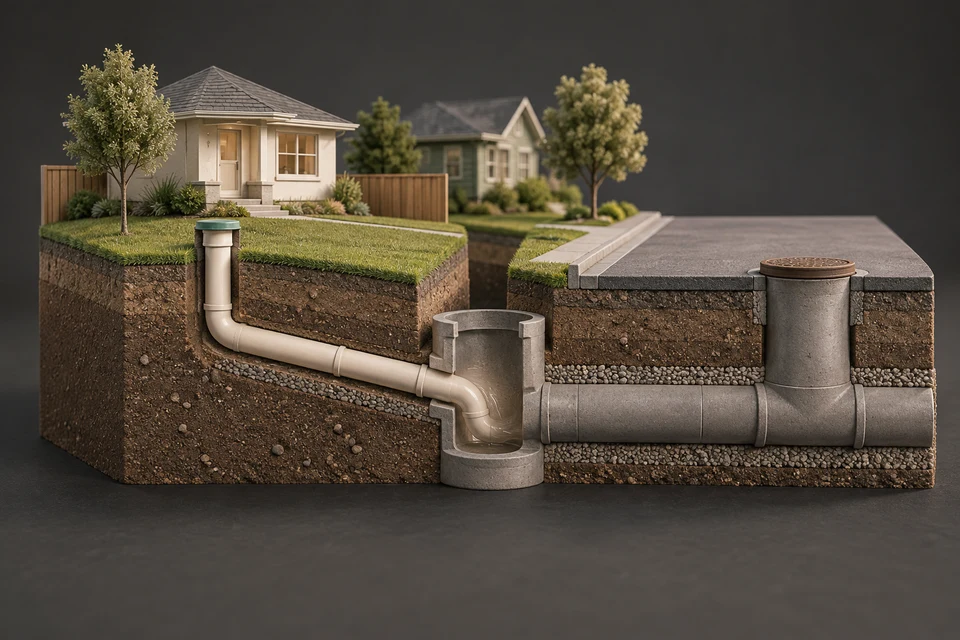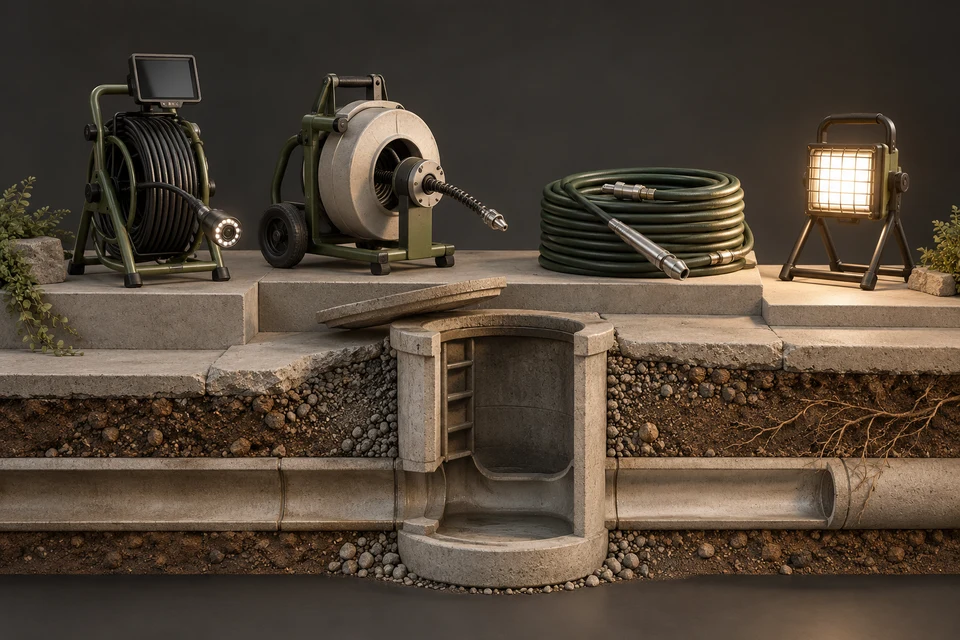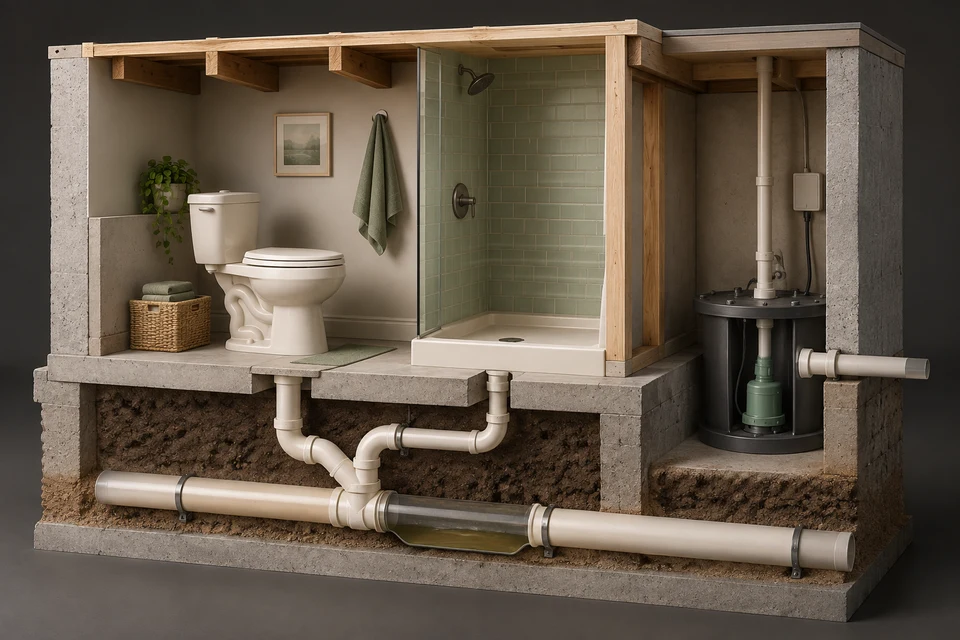
A basement shower or toilet backs up first because it is the lowest opening on the drain, so water from anywhere in the house surfaces there when the line downstream is restricted. If only one basement fixture misbehaves, the clog is usually in that fixture. If the shower fills when upstairs fixtures drain, the building drain or sewer line is blocked. Stop water use and clear from the cleanout.
- The lowest fixture is the messenger, not the culprit: water surfaces there because it is where the drain system is lowest.
- Which fixture moves when another drains tells you how far downstream the restriction is.
- Some basement bathrooms cannot drain by gravity and rely on a sanitary sump pump; a pump fault looks like a backup but needs a different fix.
- Plunge a single clogged toilet; do not plunge when several basement fixtures are affected, because you are pushing against the whole house.
- Basement suites raise the stakes: a second household, a second set of low fixtures, and backflow protection rules to check.
01 /Why do basement fixtures back up before anything else?
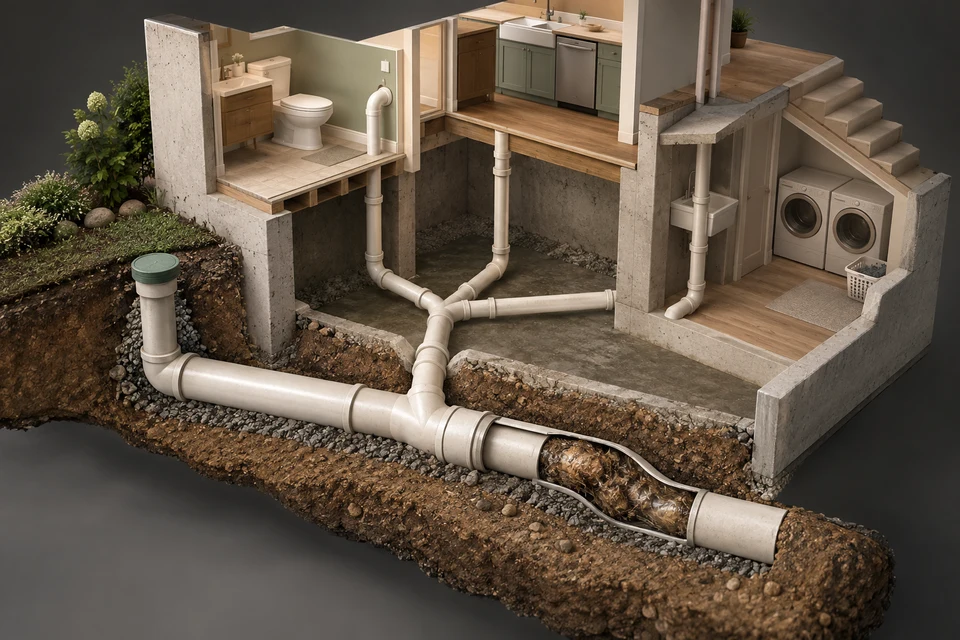
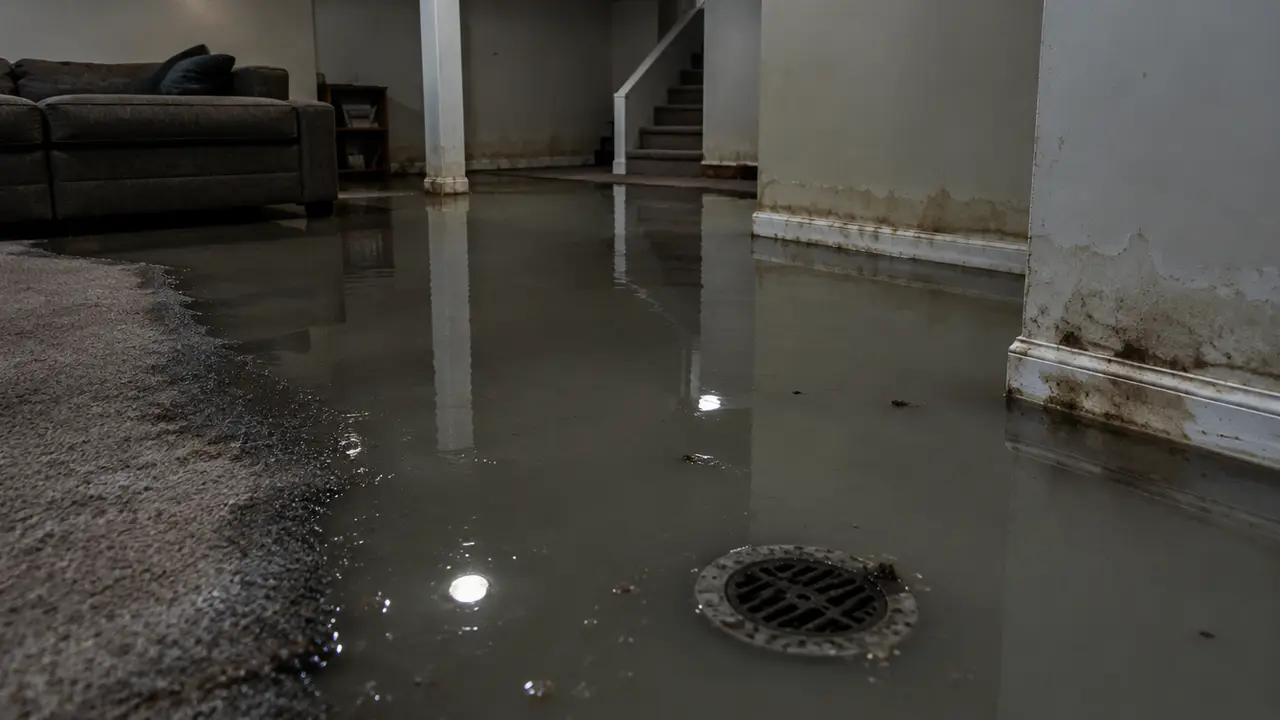
Basement fixtures back up first because water always finds the lowest available opening. Every drain in the house flows down to the building drain under the basement slab, then out through the sewer line to the main. When something restricts that path, the wastewater queues up behind it and rises until it reaches the first opening it can escape from, which is almost always the floor drain, the basement shower or the basement toilet.
That is why a basement shower full of grey water after someone upstairs runs a bath rarely means the shower is at fault. The shower is simply the lowest open door in the system. The useful question is where the restriction sits, and the basement fixtures themselves are the best instrument for answering it.
02 /What is your basement backup telling you?
Watch which basement fixture moves when you use another fixture. The pattern locates the restriction closely enough to decide what to try and whom to call.
| What you see | Likely restriction | First move |
|---|---|---|
| Basement toilet will not flush, nothing else affected | In the toilet's trapway or its short branch | Plunger, then a closet auger |
| Basement shower drains slowly, other fixtures fine | Hair and soap in the shower trap or branch | Clear the strainer and trap; a small hand snake |
| Shower fills with grey water when the washer pumps out | Building drain or sewer line, downstream of where the laundry joins | Stop laundry; clear the main from the cleanout |
| Basement toilet bowl rises or bubbles when an upstairs toilet flushes | Building drain or sewer line | Stop all water use; main line clearing |
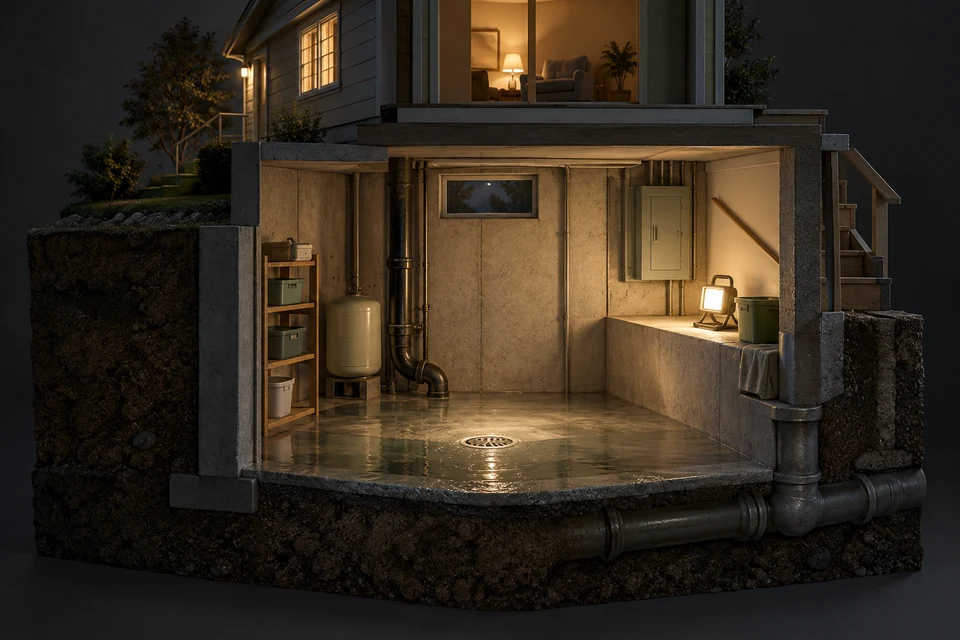
| Water and solids rise in the shower with nothing running anywhere | Sewer line or a surcharged City main | Stop water use; call 311 if raining or neighbours affected |
| Alarm sounding from a sealed basin in the floor or a closet | Sanitary sump pump fault or high level | Stop water use in the basement bathroom; pump service |
| Gurgling in the basement toilet in a deep cold snap only | Frost at the roof vent or a freezing shallow line | See the frozen line guidance before calling |
Rows three to five describe a main line problem, which is the subject of main line clogs in Calgary houses. The last row is seasonal; frozen sewer lines in Calgary explains why cold-snap gurgling is different.
03 /Does your basement bathroom drain by gravity or through a pump?
Most basement bathrooms in Calgary drain by gravity to the building drain under the slab. Some cannot, because the fixture sits below the sewer connection or was added where the existing drain was too shallow. Those fixtures drain into a sealed basin with a pump that lifts the wastewater up into the drain. The City of Calgary's home maintenance guidance distinguishes the two kinds of sump: storm sumps handle groundwater, while sanitary sumps carry sewage from fixtures that cannot drain by gravity to the City sewer.
The City recommends a quick look at a sump every month. For a sanitary sump that means listening for the pump cycling normally, checking the alarm works if one is fitted, and noticing any new smell around the lid. Do not open a sealed sanitary basin yourself: it holds raw sewage and sewer gas, and the pump is wired to the house. Unplug nothing and reach into nothing while it is full; call a plumber who services sewage pumps.
04 /What can you safely try yourself?
You can safely try the tools that match a single-fixture clog. Once more than one basement fixture is involved, household tools stop being useful and start being risky.
- Stop water use first. Nobody runs anything upstairs while you work, or you will be fighting incoming water.
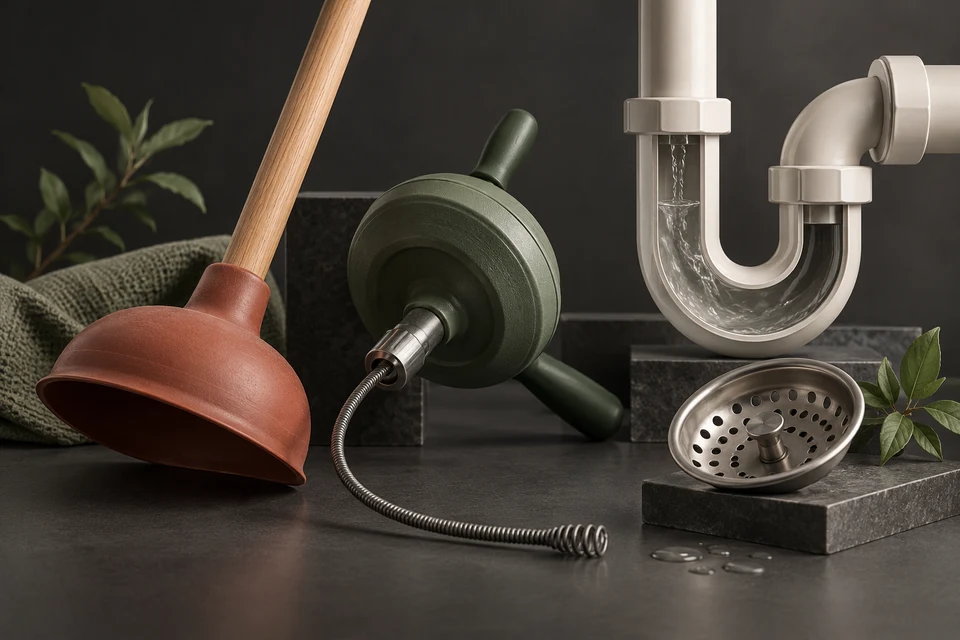
- One toilet, nothing else affected: a flange plunger, then a closet auger that protects the porcelain. Do not pour chemical drain cleaner into a toilet or shower; it sits in the trap and splashes back if the fixture is later plunged or snaked.
- One slow shower: lift the strainer, pull hair out of the trap with a hook tool, and try a small hand snake. The best drain unclogger guide sets out the order of tools.
- Several basement fixtures, or water in the shower when the toilet flushes: stop. Plunging here drives wastewater from one fixture out of the next. The blockage is downstream and has to be cleared from the main cleanout.
- Anything involving a sealed pump basin: leave it to a professional.
Clearing a blockage does not need a permit in Calgary; the City's permit page lists removing a blockage in the drainage among the jobs that do not require one. Adding a bathroom, moving a fixture or installing a pump does, because those alter or extend the plumbing system.
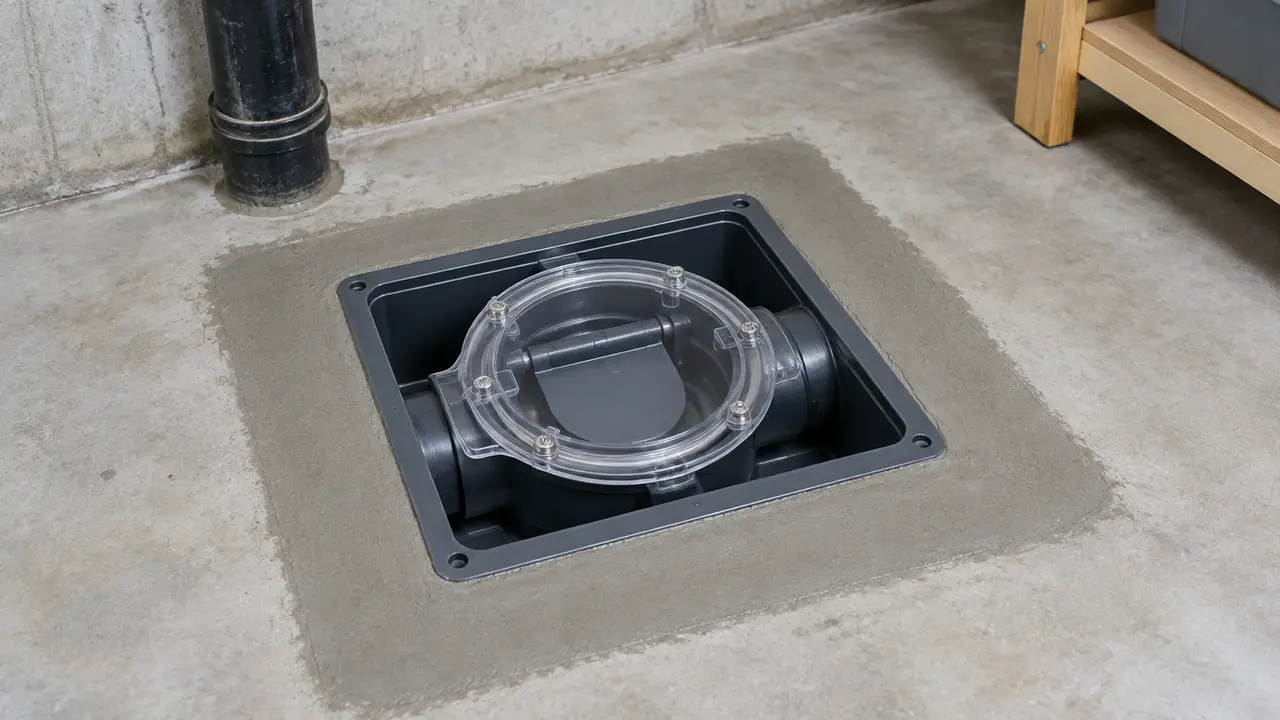
05 /How does backflow protection affect a basement bathroom?
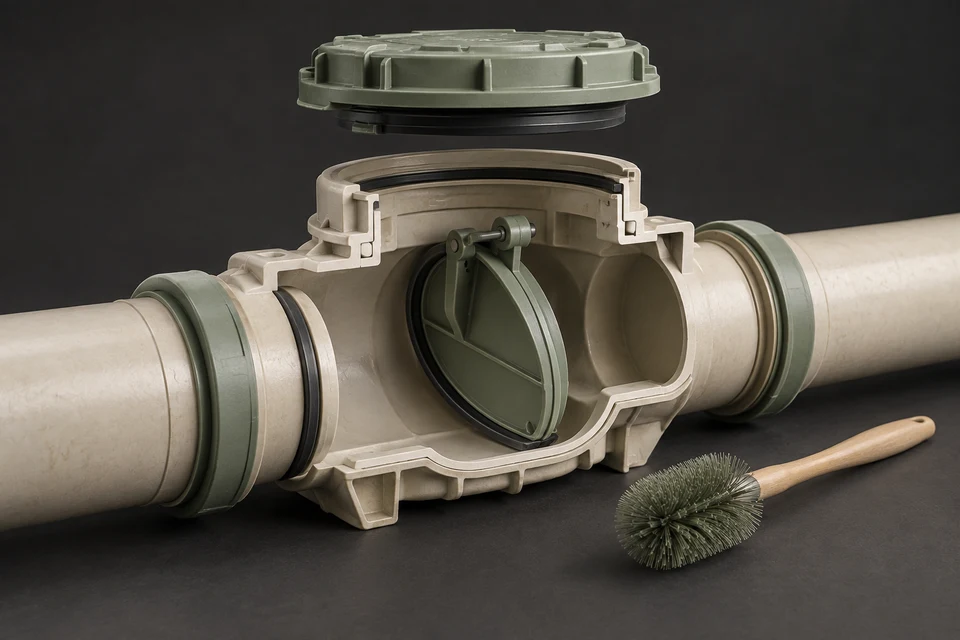
Backflow protection keeps a surcharged City main from pushing sewage up through your lowest fixtures, which in most houses are the basement ones. A mainline valve protects every fixture behind it; branch valves protect only the fixtures on their branch. Neither will stop a backup caused by a clog in your own drain.
There is one trap to understand. When a valve closes during a storm surcharge, the basement bathroom is protected from the main, but wastewater from upstairs also has nowhere to go. It rises in the lowest fixture on your side of the valve, which is again the basement bathroom. That is why the advice to stop water use in a heavy storm matters most for houses with a valve.
The service side of owning a valve, including the City's annual servicing guidance for full port valves, is in backwater valve maintenance in Calgary.
06 /What changes when the basement is a rental suite?
In a house with a basement suite, the suite's bathroom is usually the lowest opening in the building, so the suite takes the backup even when its occupants have used no water. That turns a plumbing problem into a tenancy problem: the upstairs household has to stop using water, the landlord has to arrange the clearing, and the suite's occupants need to know what is happening.
- Post the cleanout location and a drain contractor's number where both households can see them.
- Keep the cleanout reachable from a common area, not locked inside one unit.
- Agree in advance who calls 311 and who calls the contractor, so nobody waits for the other.
- Check how the suite's fixtures are protected from backflow. A 2022 City of Calgary advisory states that a normally open backwater valve should not serve more than one dwelling unit and that a secondary suite is a separate dwelling unit.
At night, the decisions change again; the after-hours sewer emergency guide covers what cannot wait until morning.
07 /When should you call 311 or a drain contractor?
Call 311 when the signs point to the City's side: heavy rain, neighbours affected, water rising in the basement with nothing running, or sewage visible at a manhole. Call a drain contractor when the pattern points to your own drain: one house affected, dry weather, and the shower or toilet rising only when upstairs fixtures run.
Either way, find and clear the cleanout area first. The City or Owner triage tool sorts the common combinations, and the Calgary service call cost page sets out typical ranges for toilet clearing, main line clearing and a camera run. When you want local quotes, request them here and say which basement fixture backed up and when.
FAQQuestions people ask
Why does my basement shower fill with water when the washing machine drains?
The washer pumps out a large volume quickly. If the building drain or sewer line is partly blocked downstream of the laundry connection, that water backs up and surfaces at the lowest opening, which is often the basement shower. Stop laundry and have the main cleared from the cleanout.
Why does the basement toilet bubble when someone flushes upstairs?
Air and water pushed down the stack cannot get past a restriction in the building drain or sewer line, so they escape through the lowest trap. Bubbling or a moving bowl level in the basement toilet points to a main line problem rather than a clog in the toilet itself.
Is a sewage ejector pump the same as a sump pump?
No. The City of Calgary distinguishes storm sumps, which handle groundwater, from sanitary sumps, which carry sewage from fixtures that cannot drain by gravity. A sanitary pump sits in a sealed basin and should be serviced by a plumber.
What should I do if the alarm on my basement bathroom pump goes off?
Stop using the fixtures that drain to it, and cut water use in the rest of the house if any of it feeds the same basin. Do not open the sealed lid. Check for a tripped breaker or power loss, then call a plumber who services sewage pumps.
Do I need a permit to fix a clogged basement toilet in Calgary?
No. The City's permit guidance lists removing a blockage in the drainage among the jobs that do not need a permit. Adding a fixture, moving plumbing or installing a pump does need one.
Can I keep using the upstairs bathroom while the basement toilet is backing up?
Not if the basement toilet rises when upstairs fixtures run. Every litre used upstairs heads for the same blockage and comes out at the lowest opening. If the basement toilet alone is clogged and nothing else moves, upstairs use is fine.
NETWORKGo deeper across the HAUSE Sewer network
Is my main sewer line clogged? Symptoms, causes and a simple test
Main sewer line clog symptoms: floor drain water, gurgling toilets and several slow drains, plus a 10-minute test to tell a main line clog from a branch clog.
DrainAugering.caMain sewer line clog or branch clog? How to tell before you auger
Signs of a main sewer line clog vs a branch clog: which fixtures react, the floor drain test, gurgling, toilet-to-tub tests and what each means for augering.
PipeCleaning.caWashing machine drain pipe: where it is, what size it is and how to clean it
Washing machine drain pipe guide: where the standpipe or laundry tub drain is, what size it should be, why it overflows, and how to clean out lint and scum.