In a Calgary commercial or multi-unit building, the lease or condo bylaws decide who handles which drains, and the City handles its sewer mains. Most shared-line clogs come from grease in kitchens and wipes or paper towels in washrooms. Set a cleaning schedule for the lines that clog, keep cleanouts accessible in every unit, and hire contractors who carry WCB-Alberta coverage, adequate liability insurance and a City business licence.
- Responsibility follows the documents: the lease for commercial space, the bylaws and unit boundaries for condos.
- The City's published service line data excludes large commercial and multi-family services; confirm your connection's details through 311.
- The City names fats, oils and grease as the usual main cause of sewage backups; commercial kitchens are the biggest source.
- Shared lines need a schedule and a log, not a call every time a tenant complains.
- Ask for WCB-Alberta clearance before each payment on recurring contracts, and liability limits that match your lease.
01 /Who is responsible for drains in a Calgary commercial or multi-unit building?
On the private side, the documents decide. In a commercial lease, the repair and maintenance clauses say whether the tenant clears its own branch lines, whether the landlord handles the building drain and service connection, and who pays when one tenant's grease blocks everyone. In a condominium, the corporation's bylaws and the unit boundaries on the registered plan decide what is common property and what is a unit owner's. For residential condos and townhouses, including Alberta's 2026 chargeback rules, see condo and townhouse sewer backups in Calgary.
On the public side, the City of Calgary owns and maintains its mains. For houses, the City publishes a clear split: from the main to the property line is the City's, from the property line to the house is the homeowner's. Its public service line dataset notes that large commercial and multi-family services are not included, so for a larger building, ask 311 how your particular connection is handled rather than assuming the residential pattern applies unchanged.
| Building | Tenant or unit owner | Landlord, manager or board | City (311) |
|---|---|---|---|
| Retail strip or plaza | Own fixtures and branch per lease | Shared building drain and service | Main, and anything on the public side |
| Restaurant tenant | Kitchen lines, grease trap or interceptor per lease | Building drain, service connection | Main; report backups affecting neighbours |
| Office building | Rarely; reports problems | All drains through the property manager | Main |
| Condominium apartment | Fixtures within the unit, per bylaws | Stacks, building drain, service | Main |
| Townhouse condo | Varies widely; read the bylaws | Shared laterals and common lines | Main |
| Rental house or duplex | Reports problems promptly | Owner maintains the line | Main and City-side service |
02 /What clogs commercial and shared lines in Calgary?
Grease, wipes, paper towels and grit, in that order for most buildings. The difference from a house is scale: a shared line carries many users' habits, and one bad habit can block everyone downstream.
| Source | Where it comes from | Where it collects | What reduces it |
|---|---|---|---|
| Fats, oils and grease | Kitchens, cafes, food courts, condo kitchens | Kitchen stacks, building drain, sags | Scraping, interceptor maintenance, scheduled jetting |
| Wipes and paper towels | Public washrooms, daycares, clinics, gyms | Joints, the base of stacks, pumps | Bins and signage in every stall, towel dispensers not above toilets |
| Grit and sand | Auto service, car washes, winter tracking | Floor drains, catch basins, low spots | Sediment interceptors, regular pump-outs |
| Hair | Salons, gyms, spas | Branch drains, traps | Hair catchers, weekly cleaning |
| Roots | Older buildings with jointed service lines | Service connection joints | Scheduled cutting, then lining or repair |
The City's guidance applies to businesses as much as homes: a toilet takes pee, poo and toilet paper and nothing else, and wipes sold as flushable still clog because they do not break down.
03 /How should a Calgary food business manage grease?
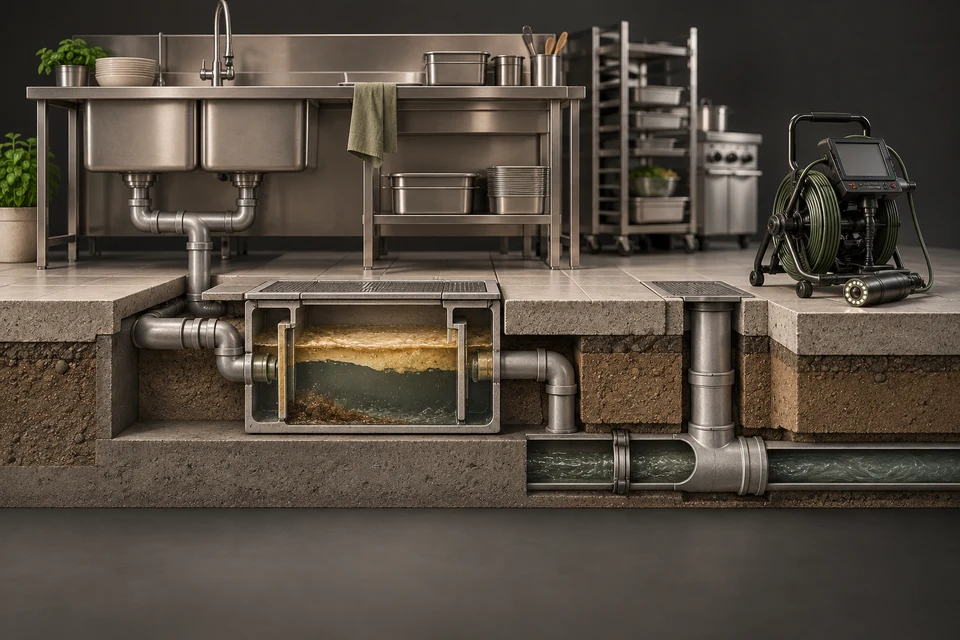
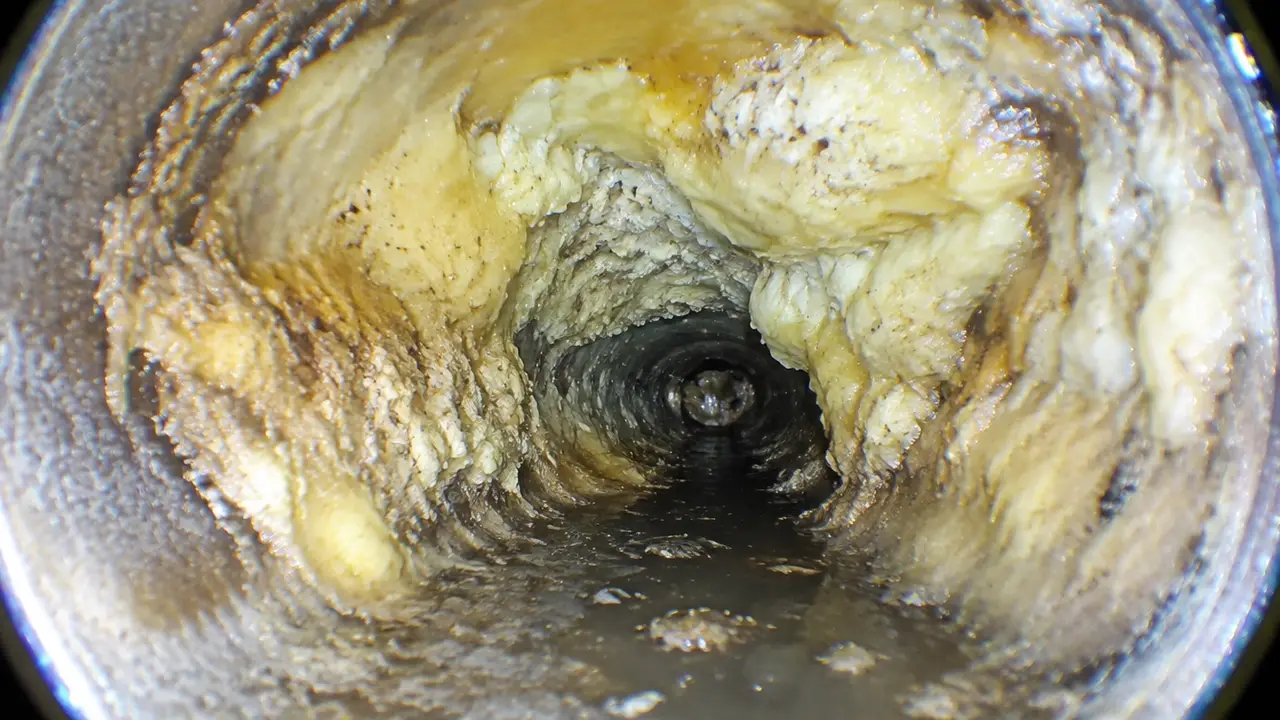
Keep grease out of the drain at the sink, catch what gets past in a properly maintained trap or interceptor, and keep the downstream line on a jetting schedule. The City of Calgary names the accumulation of fats, oil and grease as usually the main cause of sewage backups, and says grease cools, hardens and sticks to the inner walls of sewer pipes.
- Scrape plates and pans before rinsing; wipe fryer and pan residue with paper before washing.
- Pump out and clean the trap or interceptor often enough that the grease layer never reaches the outlet baffle. Keep a dated log.
- Do not use hot water, enzymes or chemicals to push grease through the interceptor; it re-solidifies downstream.
- Jet the kitchen line on a schedule set by camera findings.
- Confirm the City's current wastewater requirements for food service through 311 before renovating or opening, including what interceptor your space needs.
For the mechanics of interceptors and restaurant maintenance in detail, SewerCleaners.ca covers them nationally.
04 /How do you schedule drain work without shutting the building down?
Plan it like any other building service: a known window, notice to occupants, access to every cleanout, and a clear stop-water instruction while the line is open.
- Pick the window
Early morning, evenings or closed days for restaurants and offices; mid-morning on weekdays for residential buildings when fewer people are home.
- Give notice
Tell tenants or owners what will happen, how long water use must stop, and who to call. Post it at entrances and in elevators.
- Arrange access
Cleanouts inside units, mechanical rooms, parkade drains and interceptors. Missing one key can turn a two-hour job into two visits.
- Protect the lowest units
Ground-floor and basement units are where a mistake shows up. Ask the contractor how it will control water at the access point.
- Verify and record
Flow test, camera footage with distances, and a written summary for the building file.
05 /How do you vet a commercial drain contractor in Calgary?
Use the residential checks, then add the ones that matter for recurring and higher-risk work.
- City of Calgary business licence, checked through the City's Licensed Trade Contractor search.
- WCB-Alberta clearance, before the contract and before each payment on recurring service. WCB-Alberta explains that a clearance keeps a contractor's unpaid premiums from landing on you.
- Liability insurance with limits that satisfy your lease or the condo corporation's requirements, and your building named where your lease requires it.
- Journeyperson plumbers for any repair or alteration, and City permits where required.
- Confined space competence for anyone entering manholes, vaults or large interceptors. Alberta occupational health and safety rules apply to that work; do not let untrained staff enter.
- After-hours capability and a clear emergency rate.
- Reporting: dated service logs, camera footage and recommendations you can file.
The full homeowner checklist, which applies here too, is in how to vet a Calgary drain contractor.
06 /What records protect owners, managers and tenants?
A simple drain log settles most disputes and sets the maintenance schedule. Keep one per building, with an entry for every call.
- Date and time, who reported it, and which units or fixtures were affected.
- What the contractor found, with the distance from the access point and a copy of the video.
- The cause: grease, wipes, roots, grit, a defect, or a City-side problem.
- The 311 reference number if the City was involved.
- Interceptor pump-out dates and volumes.
- Recommended next service and whether it happened.
A log turns a vague complaint into a pattern: the same stack every December, the same washroom after events, the same service connection every summer. That pattern is what justifies a schedule, a tenant conversation or a capital repair. When you need a contractor, request a quote and describe the building type, the number of units and the lines involved. For after-hours problems in shared buildings, see the after-hours emergency guide.
FAQQuestions people ask
Who pays for a drain backup in a Calgary commercial building?
The lease decides. Many leases make tenants responsible for their own fixtures and branch lines and landlords responsible for the building drain and service, with cost recovery when one tenant's misuse causes the blockage. The City handles its mains.
Does the City of Calgary's service line data cover apartment buildings?
No. The City's public sanitary service line dataset states that it does not include large commercial and multi-family service lines. Ask 311 about your building's connection.
How often should a restaurant's kitchen line be jetted?
It depends on volume and menu; a busy fryer-heavy kitchen may need it several times a year, a light cafe far less. Use camera findings and the grease layer seen at each interceptor pump-out to set the interval.
Can condo owners hire their own drain cleaner?
For fixtures inside the unit, usually, if the bylaws allow. For stacks and common lines, contact the property manager first, because the corporation usually controls those and may not pay for work it did not authorize.
Should a landlord or condo board keep a contractor on standing instructions?
It helps. A contractor who already knows the building, its cleanouts and its history can respond faster at night and prices more consistently. Put the scope, after-hours rates, insurance and WCB requirements, and reporting expectations in writing, and review the arrangement once a year against the drain log.
What should a commercial drain contractor provide after each visit?
A dated report with what was done, what was found, the distance to any defect, camera video, and the recommended next service. File it in the building's drain log.
NETWORKGo deeper across the HAUSE Sewer network
Condo and multi-unit sewer inspections: who scopes what
Condo and multi-unit sewer inspections: shared vs unit piping, what boards should scope, what buyers should ask for, and access in occupied buildings.
SewerJetting.caCommercial and municipal sewer jetting: combination trucks, interceptors and schedules
Commercial sewer jetting explained: jet-vac combination trucks, high-flow mains cleaning, restaurant grease lines, interceptors and confined space rules.
PipeCleaning.caCondo and apartment drain stack cleaning
Condo and apartment drain stack cleaning: why kitchen stacks back up on lower floors, how stacks are jetted or descaled, and how boards schedule it.